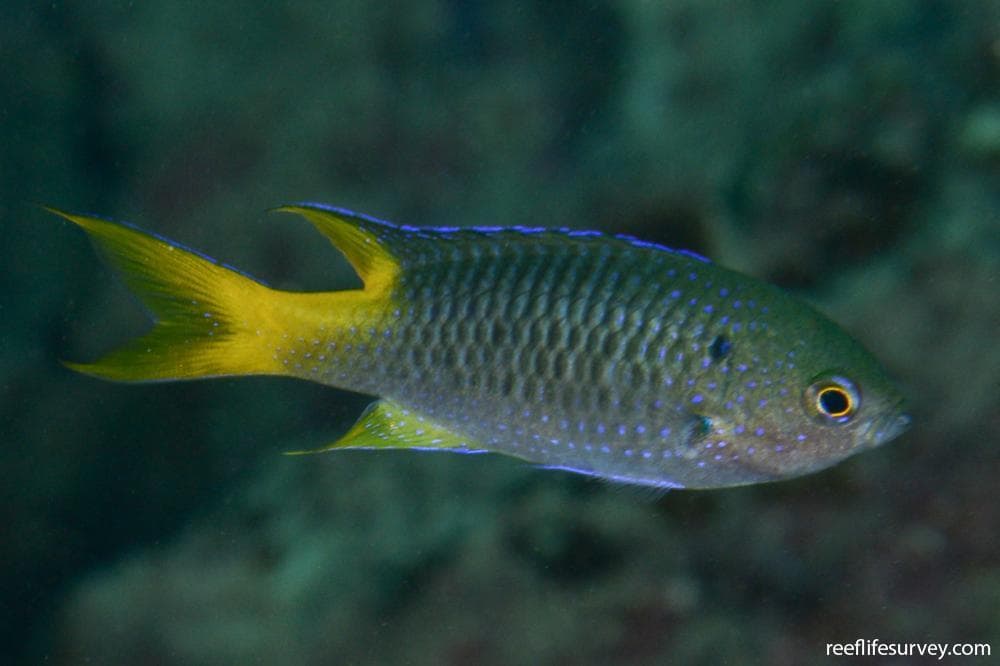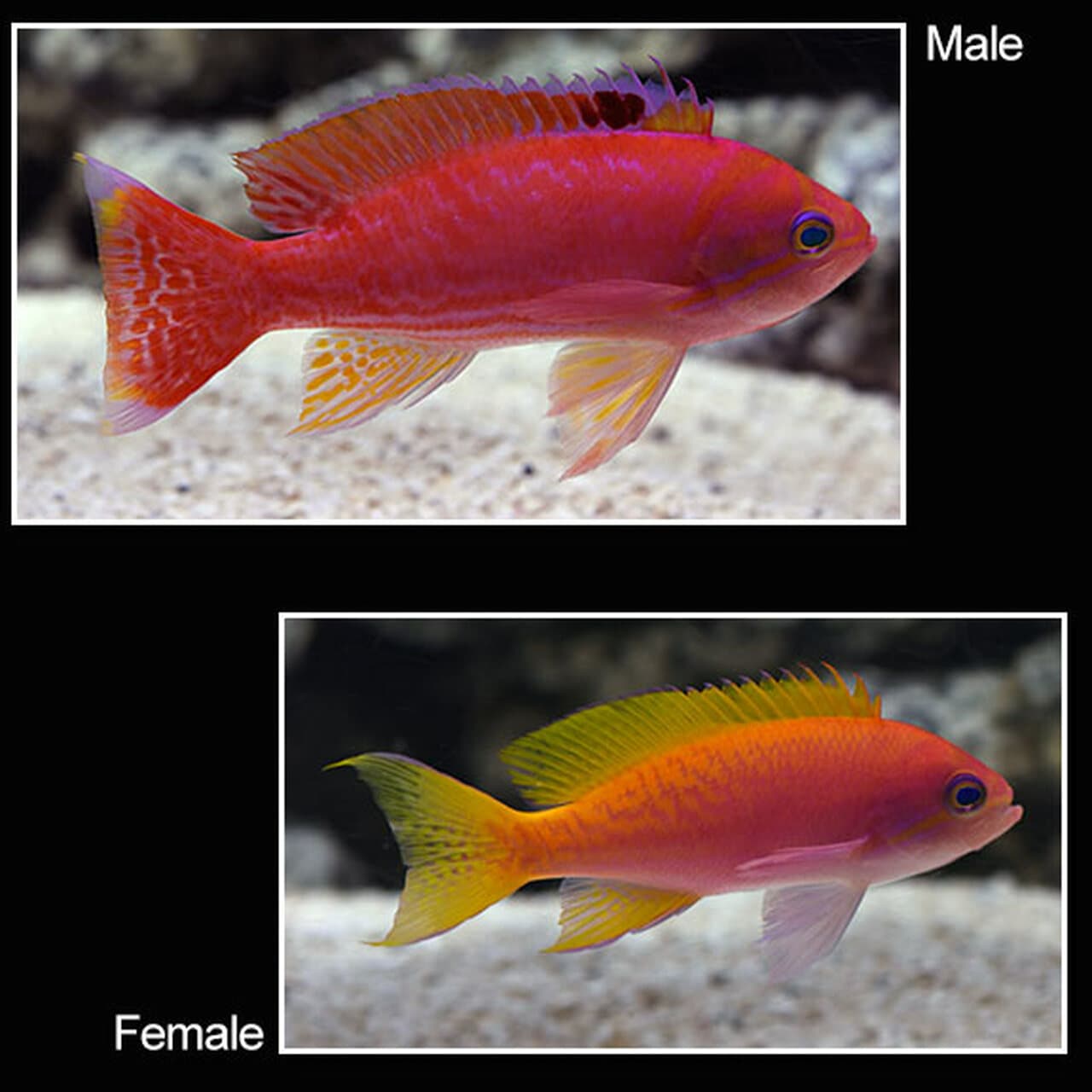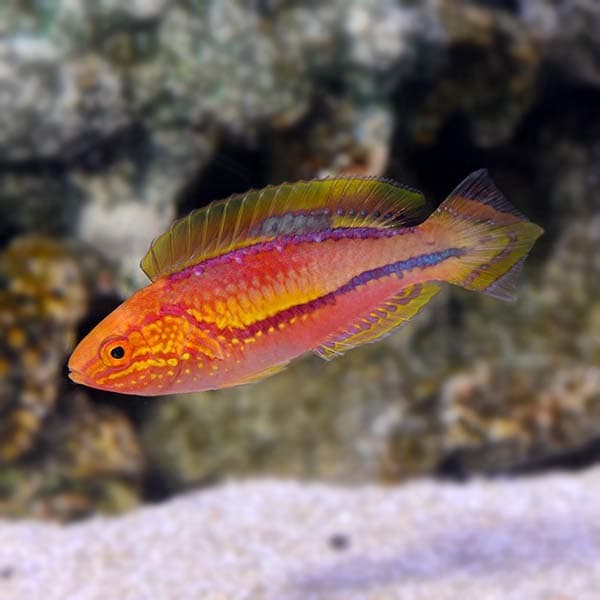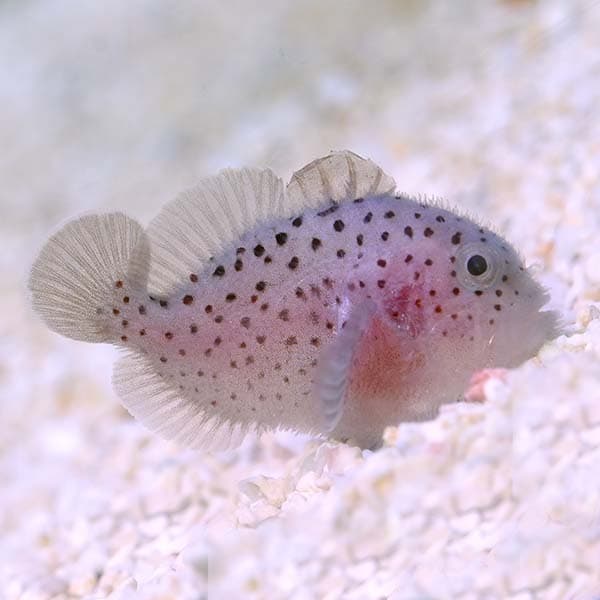
Bluehead Fairy Wrasse
Open Mon–Sat 10am–6pm · Sun 1pm–6pm. Usually ready the same day.
Tell us the size and sex you're after and we'll source this fish from our suppliers, then email you the moment it's in.
Join the waiting list →- Kept in our system until you collect
About this fishWhat do these mean?
Overview
The Bluehead Fairy Wrasse (Cirrhilabrus cyanopleura) — also sold as the Blue-sided, Yellowflanked or Purplehead Fairy Wrasse — is one of the most affordable and rewarding fairy wrasses in the hobby. Males wear a reddish-maroon body washed with electric blue across the head and flanks over a pale belly, while females and younger fish are a more uniform maroon. Colour varies a lot with locale, age and mood, flaring to its most intense when a male is displaying — so no two are quite alike.
Found right across the Indo-West Pacific, including our own Great Barrier Reef, it's a chunky, robust fairy wrasse that's hardy and forgiving.
Active, colourful and constantly on the move, it's a brilliant, budget-friendly splash of movement for a reef — and a great introduction to the fairy wrasses for anyone who can meet its two simple must-haves: frequent feeding and a tightly covered tank.
Compatibility
Toward unrelated tankmates the Bluehead is an easygoing, peaceful community fish that mixes well with anthias, chromis, cardinals, clownfish, gobies and similar species. It's a larger, bolder fairy wrasse than some, though, and that's where the caveats come in: males can be scrappy toward other wrasses, particularly other fairy wrasses and smaller, timid wrasse species.
Keep one male per tank as the safe default. If you can reliably sex them, a single male with a few females works well, and in a large system this naturally shoaling fish can be kept in a group added together. If you want to mix it with other Cirrhilabrus, introduce them all at once. Avoid large, aggressive or predatory fish that could bully or eat this relatively gentle swimmer.
Health & quarantine
The Bluehead Fairy Wrasse is a hardy, forgiving fish and one of the easier wrasses to keep, which makes it a good choice for less experienced reefers. A quiet quarantine period and a slow acclimation are still worthwhile to confirm strong feeding before it joins the display, and it settles fastest in a mature tank with plenty of live rock. Two practical points make the biggest difference to its wellbeing: give it a sandbed to sleep in, as fairy wrasses burrow into the sand or wedge into the rocks inside a mucus cocoon at night, and provide a tight-fitting lid — these are champion jumpers and an open tank is the most common cause of avoidable losses.
Frequently asked questions
Do I really need a lid?
Is it reef safe?
Can I keep more than one, or mix it with other wrasses?
Why does it disappear at night?
Is it a good beginner fish?
Will the male keep his bright colours?
How collection works
Order & pay online
Check out and pay securely. We set it aside and hold it ready for you.
We get it ready
It stays in our system until you come in — usually ready the same day.
Collect in store
Drop in to 280 North Road, Eastwood, and pick it up.