Watanabei Angel
Open Mon–Sat 10am–6pm · Sun 1pm–6pm. Usually ready the same day.
Tell us the size and sex you're after and we'll source this fish from our suppliers, then email you the moment it's in.
Join the waiting list →- Kept in our system until you collect
About this fishWhat do these mean?
Overview
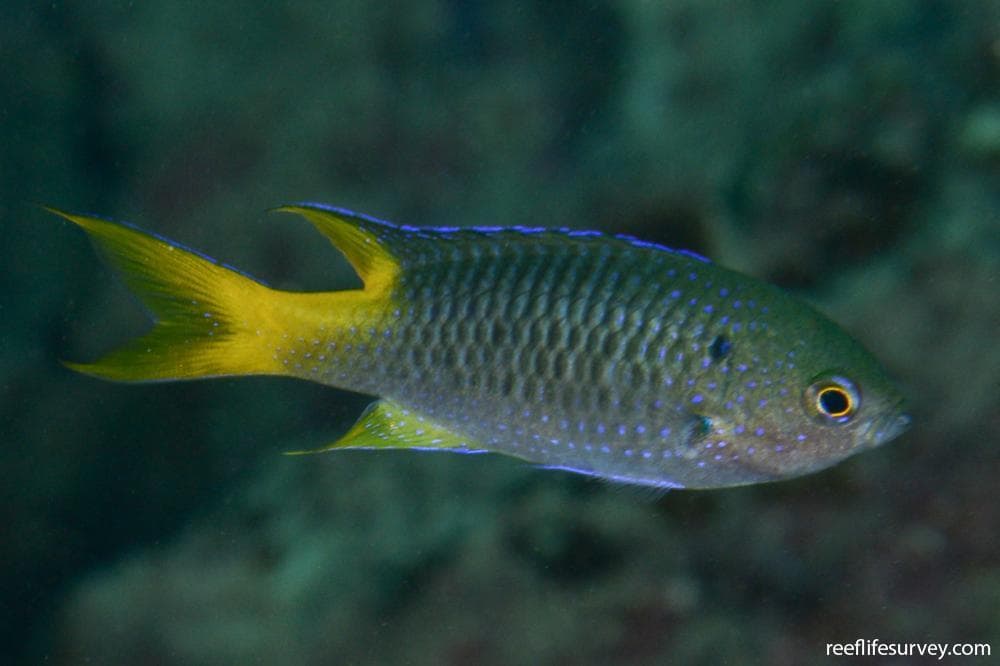
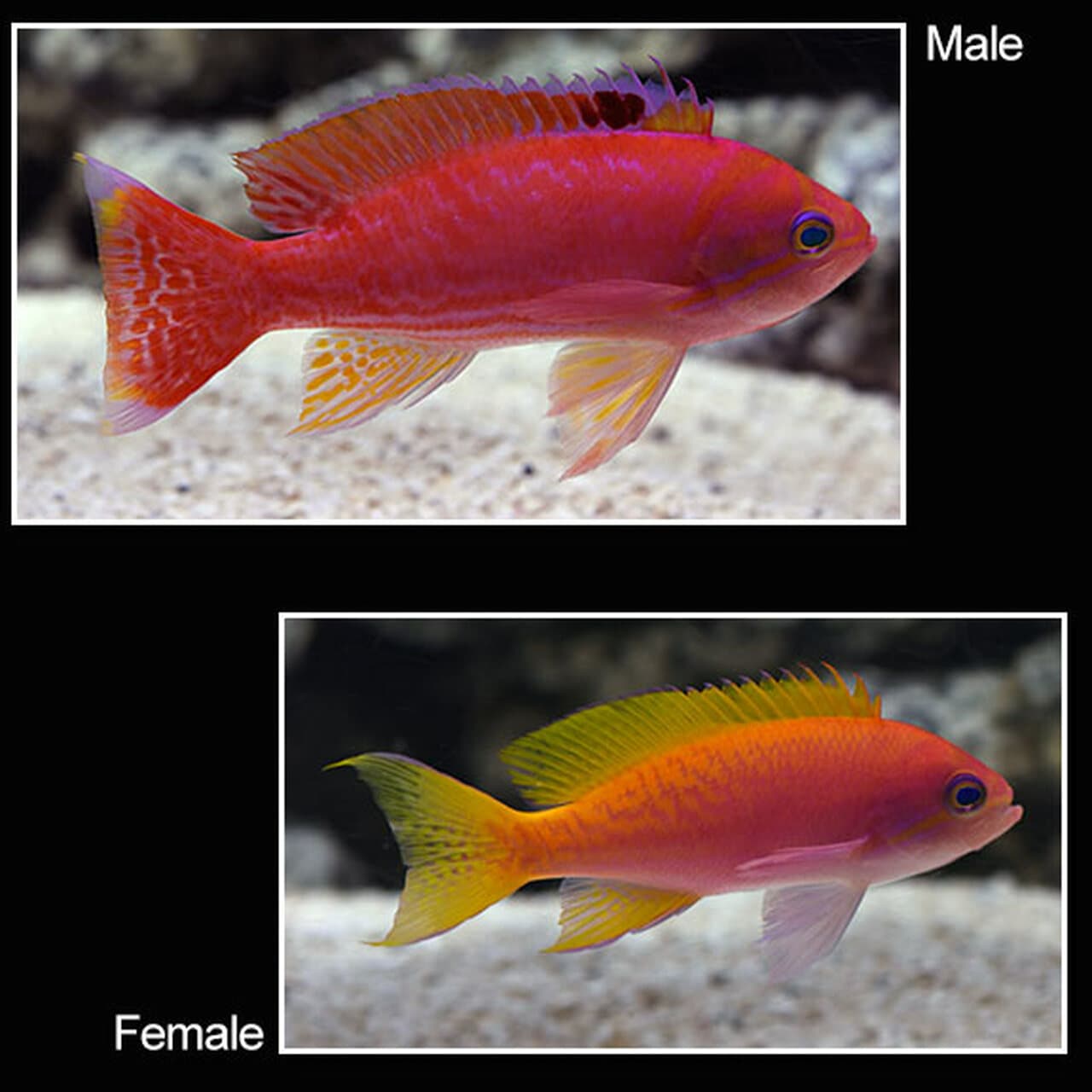
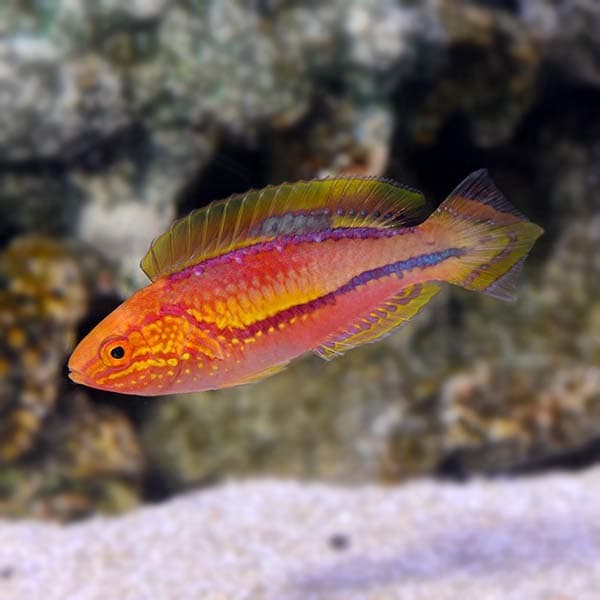
The Watanabei Angel (Genicanthus watanabei) — also called the Blackedged or Watanabe's Lyretail Angelfish — is one of the genuine prizes for a reef keeper who wants an angelfish. It's a swallowtail angel: an elegant, iridescent pale-blue fish with trailing lyre-shaped tail lobes. Males carry fine black horizontal stripes across the lower body and a single orange streak toward the tail, while females are cleaner blue with dark-edged fins — one of the few angels you can reliably sex on sight.
Best of all, Genicanthus angels are the only truly reef-safe angelfish in the hobby. Because they feed on plankton in the water column rather than grazing corals, they leave your soft corals, LPS, SPS and clams alone — the holy grail for anyone who's wanted an angel in a coral tank.
The honest catch is that it's a deep-water fish, and that shapes everything about buying and settling it. We rate it intermediate: peaceful, hardy and long-lived once established, but only if you start with a properly collected, healthy specimen and give it the right introduction.
Compatibility
The Watanabei is a genuinely peaceful, non-confrontational fish — unusually so for an angel. It generally leaves other fish alone, and it even coexists with angels from other genera (Pomacanthus, Centropyge and the like), which is rare in this family. That gentle nature also means it can be intimidated by boisterous tankmates, so peaceful-to-moderate company suits it best.
You can keep it singly, as a male-female pair, or as one male with several females in a large tank — but never two males, which will fight. Compatibility with other Genicanthus is variable, so mix swallowtails only with care and add any group together. One quirk to note: a Watanabei will occasionally chase smaller, docile planktivores such as anthias, since they compete for the same food and water column.
Health & quarantine
This is the crux of keeping a Watanabei. It's collected from deep water, so the biggest risk is decompression and swim-bladder damage during capture — a fish that wasn't handled correctly may show buoyancy problems, a swollen abdomen, or swim awkwardly at the surface. The single most important step is to buy a properly decompressed, healthy specimen that's alert and already feeding (young females tend to adapt best). Give it a dimly lit tank at first, as deep-water fish are sensitive to bright aquarium lighting, and a slow, low-stress acclimation. Genicanthus are also intolerant of ammonia and nitrite spikes, so a mature, stable, pristine system is essential; they even appreciate slightly cooler water. Started right, the Watanabei heals, settles and becomes a hardy, long-lived fish that can reach around 15 years.
Frequently asked questions
Is the Watanabei Angel really reef safe?
Why is careful sourcing so important for this fish?
Can I keep more than one?
Can I tell males from females?
What tank setup does it need?
Is it a good beginner angelfish?
How collection works
Order & pay online
Check out and pay securely. We set it aside and hold it ready for you.
We get it ready
It stays in our system until you come in — usually ready the same day.
Collect in store
Drop in to 280 North Road, Eastwood, and pick it up.