Vlamingii Tang
Open Mon–Sat 10am–6pm · Sun 1pm–6pm. Usually ready the same day.
Tell us the size and sex you're after and we'll source this fish from our suppliers, then email you the moment it's in.
Join the waiting list →- Kept in our system until you collect
About this fishWhat do these mean?
Overview
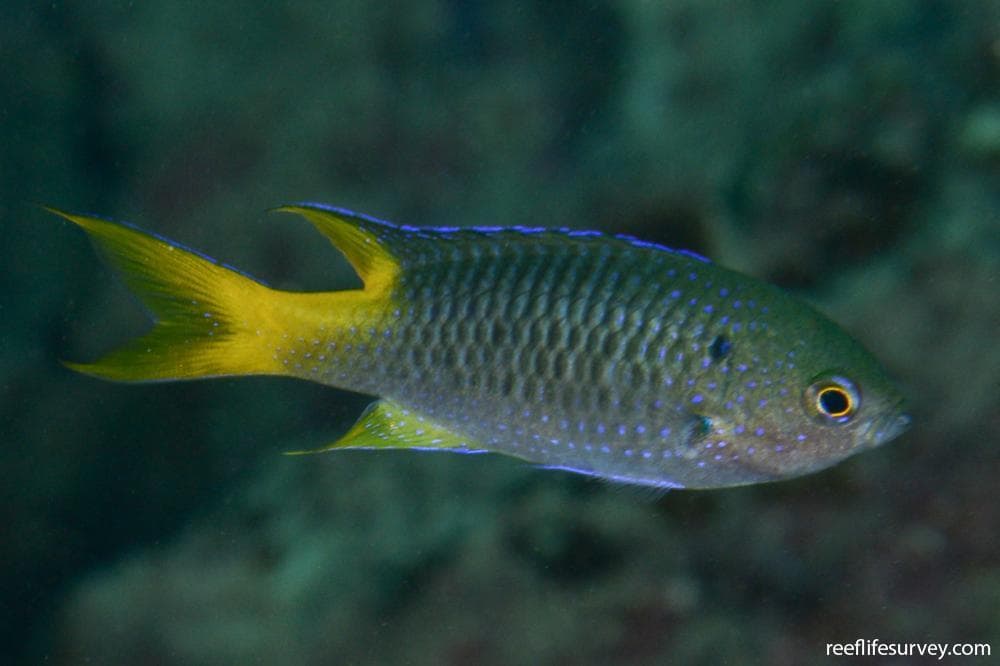
The Vlamingii Tang (Naso vlamingii) — also called the Bignose, Scribbled or Zebra Unicornfish — is one of the most spectacular tangs in the hobby, and one of the biggest. Juveniles start out fairly plain, a blue-grey body dotted with blue speckles, but adults transform into something remarkable: a brown-to-purple body etched with fine electric-blue scribble lines, vivid blue accents on the face, lips and fins, and the rounded 'bignose' bump on the forehead that gives it its name. Mature males can flash their colours dramatically and develop trailing tail streamers.
One of its party tricks is rapid mood-based colour change — a relaxed, displaying Vlamingii will light up its blues and purples in seconds. It's a reef-safe, active, hardworking algae grazer and a genuinely commanding centrepiece.
We'll be straight about the catch: this fish gets enormous. Wild adults approach 60 cm, and even in aquaria they routinely hit 40–45 cm. It's the tank size, not the day-to-day care, that makes this an intermediate-and-up fish — only take one on if you can commit to the space it will eventually demand.
Compatibility
For such a big fish, the Vlamingii is remarkably peaceful toward its tankmates and, unusually for a tang, is often tolerant of other surgeonfish. It won't harm corals or invertebrates, and it generally coexists happily with a wide range of community species. The main flashpoint is its own kind and closely related Naso — it can be territorial toward these, especially in anything but a very large tank.
Keep it singly as a rule. If you want to mix tangs, add them together into a large system (ideally a couple of metres or more of swimming length), and introduce the Vlamingii before more aggressive Zebrasoma or Acanthurus tangs so it settles first. Good tankmates include chromis, clownfish, gobies, blennies, wrasses, angelfish and other peaceful larger fish. Take care with the caudal scalpels when netting.
Health & quarantine
The Vlamingii is a reasonably hardy tang once established, but it carries the usual surgeonfish vulnerabilities: it lacks a heavy body-slime coat and is prone to marine ich, velvet and head-and-lateral-line erosion (HLLE) if diet or water quality slips. A proper quarantine period and a slow, unhurried acclimation are strongly recommended and greatly improve long-term success — a quarantined, already-feeding fish settles far faster. As an active, high-oxygen species it wants strong flow, excellent oxygenation and a good skimmer, and a large adult adds a significant bioload, so plan filtration accordingly. Keep water pristine and stable, feed an algae-rich diet, and it can be exceptionally long-lived — potentially decades.
Frequently asked questions
How big does the Vlamingii Tang actually get, and what tank does it need?
Is it reef safe?
Why does its colour keep changing?
Can I keep it with other tangs?
Does it really have a horn like other unicornfish?
Do I need to quarantine it?
How collection works
Order & pay online
Check out and pay securely. We set it aside and hold it ready for you.
We get it ready
It stays in our system until you come in — usually ready the same day.
Collect in store
Drop in to 280 North Road, Eastwood, and pick it up.