Invertebrates
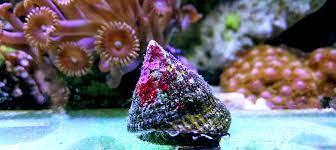
Trochus Snail
Trochus Snail (Trochus sp.) Resides: Rocks and glass Consumes: Film algae, diatoms, hair algae, some species of cyanobacteria Max Size: 1.2" (30 mm) Origin: Australia Warnings: Difficulty righting itself when first introduced Overview The Trochus Snail (Trochus sp.) is a highly effective algae eater, commonly used in marine aquariums to help maintain a clean and balanced environment. These snails are known for consuming film algae, diatoms, hair algae, and even some species of cyanobacteria, making them essential for controlling algae growth on rocks and glass. However, they tend to avoid the sand, focusing more on hard surfaces. Though Trochus snails have the ability to right themselves if they fall or are flipped over, they may struggle when first introduced to the aquarium. To give them the best chance for success, they should be manually righted if necessary during the initial acclimation period. Behaviour & Habitat Trochus snails primarily reside on rocks and glass, where they graze on algae and biofilms. They are peaceful and well-suited for community tanks, and their hard-working nature makes them great for keeping surfaces clean. Despite their industrious behaviour, they may have difficulty flipping themselves over, especially when first introduced to the tank. These snails are very useful for controlling nuisance algae, as they help prevent algae overgrowth that can otherwise cause imbalances in a reef or marine aquarium. Care Requirements Trochus snails thrive in stable water conditions, and their dietary needs are met by the natural algae present in most well-established marine tanks. They are reef-safe, posing no threat to corals or other invertebrates, and are generally hardy if provided with an algae-rich environment. Since they can struggle to right themselves, it’s a good idea to monitor them after placing them in the tank and assist if necessary. This is particularly important during the initial acclimation period. They are compatible with most peaceful tank mates, but care should be taken to avoid introducing aggressive species that may harm them. Summary Trochus snails are an excellent addition to any saltwater aquarium, known for their diligent algae-eating habits. Though they may struggle to right themselves at times, they provide a natural and effective way to control algae on rocks and glass. With their peaceful nature and reef compatibility, they are almost always available and popular among aquarists looking for a dependable cleaner for their marine tank.
Photos
About This Item
Trochus Snail (Trochus sp.)
Resides: Rocks and glass
Consumes: Film algae, diatoms, hair algae, some species of cyanobacteria
Max Size: 1.2" (30 mm)
Origin: Australia
Warnings: Difficulty righting itself when first introduced
Overview
The Trochus Snail (Trochus sp.) is a highly effective algae eater, commonly used in marine aquariums to help maintain a clean and balanced environment. These snails are known for consuming film algae, diatoms, hair algae, and even some species of cyanobacteria, making them essential for controlling algae growth on rocks and glass. However, they tend to avoid the sand, focusing more on hard surfaces.
Though Trochus snails have the ability to right themselves if they fall or are flipped over, they may struggle when first introduced to the aquarium. To give them the best chance for success, they should be manually righted if necessary during the initial acclimation period.
Behaviour & Habitat
Trochus snails primarily reside on rocks and glass, where they graze on algae and biofilms. They are peaceful and well-suited for community tanks, and their hard-working nature makes them great for keeping surfaces clean. Despite their industrious behaviour, they may have difficulty flipping themselves over, especially when first introduced to the tank.
These snails are very useful for controlling nuisance algae, as they help prevent algae overgrowth that can otherwise cause imbalances in a reef or marine aquarium.
Care Requirements
Trochus snails thrive in stable water conditions, and their dietary needs are met by the natural algae present in most well-established marine tanks. They are reef-safe, posing no threat to corals or other invertebrates, and are generally hardy if provided with an algae-rich environment.
Since they can struggle to right themselves, it’s a good idea to monitor them after placing them in the tank and assist if necessary. This is particularly important during the initial acclimation period. They are compatible with most peaceful tank mates, but care should be taken to avoid introducing aggressive species that may harm them.
Summary
Trochus snails are an excellent addition to any saltwater aquarium, known for their diligent algae-eating habits. Though they may struggle to right themselves at times, they provide a natural and effective way to control algae on rocks and glass. With their peaceful nature and reef compatibility, they are almost always available and popular among aquarists looking for a dependable cleaner for their marine tank.
Available Options
RegularSKU: 478537F
$8.50
Out of stock
Want to See This in Person?
Visit our store in Eastwood to see this item and many others. Our team can answer all your questions.