Invertebrates
Blue Linckia Starfish
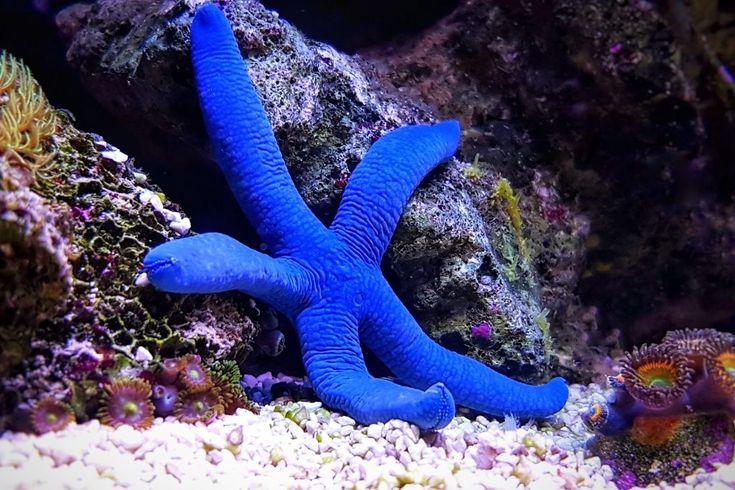
Blue Linckia Sea Star (Linckia laevigata) Common Names: Blue Linckia Sea Star, Comet Sea Star, Blue Sea Star, Blue Starfish Max Size: 12 inches (30 cm) Family: Ophidiasteridae Minimum Tank Size: 150 liters (40 gallons) Reef Compatible: Yes Care Level: Expert Only Temperament: Peaceful Diet: Omnivore Water Conditions: sg 1.023-1.025, 72-78°F (22-26°C), dKH 8-12, pH 8.1-8.4 Supplements: Trace Elements Overview The Blue Linckia Sea Star is an eye-catching species prized by reef enthusiasts for its vibrant blue coloration, often adorned with red or purple spots. This sea star adds a striking visual element to any reef aquarium but is considered suitable only for experienced aquarists due to its specific care requirements. It is also known as the Comet Sea Star or Blue Starfish. In the wild, this sea star is typically found in sunny, shallow reef areas, where it constantly forages for food. It is mostly solitary, though it can coexist peacefully with other starfish and friendly tank mates in an aquarium setting. Habitat & Behavior The Blue Linckia Sea Star thrives in well-lit aquariums with a sandy or coral rubble substrate and plenty of rocky hiding spots. As juveniles, they prefer to hide in caves or under overhangs, showing a blue-green coloration that transitions to the iconic blue as they mature. Larger adults are often seen attached to rocks or the glass, waving their arms in the water to capture microbes and small organic particles. Tank Care This sea star is highly sensitive to sudden changes in salinity, pH, and oxygen levels, and is intolerant of copper-based medications. The drip-acclimation method is strongly recommended to help the starfish adjust to changes in water chemistry. Additionally, it should never be exposed to air during handling, as this can cause fatal damage. Regular monitoring is necessary for parasitic snails like Thyca crystallina, which can harm the sea star. While the Blue Linckia can regenerate limbs in the wild, successful regeneration in home aquariums is much rarer. Diet In its natural environment, the Blue Linckia Sea Star feeds on small algae, detritus, and microorganisms. In the aquarium, it may require supplemental feeding, especially in newer tanks with lower levels of natural food. Small pieces of clam meat or feeding tablets can be placed directly under the starfish to ensure it receives enough nutrition.
Photos
About This Item
Blue Linckia Sea Star (Linckia laevigata)
Common Names: Blue Linckia Sea Star, Comet Sea Star, Blue Sea Star, Blue Starfish
Max Size: 12 inches (30 cm)
Family: Ophidiasteridae
Minimum Tank Size: 150 liters (40 gallons)
Reef Compatible: Yes
Care Level: Expert Only
Temperament: Peaceful
Diet: Omnivore
Water Conditions: sg 1.023-1.025, 72-78°F (22-26°C), dKH 8-12, pH 8.1-8.4
Supplements: Trace Elements
Overview
The Blue Linckia Sea Star is an eye-catching species prized by reef enthusiasts for its vibrant blue coloration, often adorned with red or purple spots. This sea star adds a striking visual element to any reef aquarium but is considered suitable only for experienced aquarists due to its specific care requirements. It is also known as the Comet Sea Star or Blue Starfish.
In the wild, this sea star is typically found in sunny, shallow reef areas, where it constantly forages for food. It is mostly solitary, though it can coexist peacefully with other starfish and friendly tank mates in an aquarium setting.
Habitat & Behavior
The Blue Linckia Sea Star thrives in well-lit aquariums with a sandy or coral rubble substrate and plenty of rocky hiding spots. As juveniles, they prefer to hide in caves or under overhangs, showing a blue-green coloration that transitions to the iconic blue as they mature. Larger adults are often seen attached to rocks or the glass, waving their arms in the water to capture microbes and small organic particles.
Tank Care
This sea star is highly sensitive to sudden changes in salinity, pH, and oxygen levels, and is intolerant of copper-based medications. The drip-acclimation method is strongly recommended to help the starfish adjust to changes in water chemistry. Additionally, it should never be exposed to air during handling, as this can cause fatal damage. Regular monitoring is necessary for parasitic snails like Thyca crystallina, which can harm the sea star.
While the Blue Linckia can regenerate limbs in the wild, successful regeneration in home aquariums is much rarer.
Diet
In its natural environment, the Blue Linckia Sea Star feeds on small algae, detritus, and microorganisms. In the aquarium, it may require supplemental feeding, especially in newer tanks with lower levels of natural food. Small pieces of clam meat or feeding tablets can be placed directly under the starfish to ensure it receives enough nutrition.
Available Options
RegularSKU: 814791S
$35.00
Out of stock
Want to See This in Person?
Visit our store in Eastwood to see this item and many others. Our team can answer all your questions.