IN STOCKInvertebrates
Sand Sifting Starfish
Sand Sifting Sea Star (Astropecten polycanthus) Common Names: Sand Sifting Sea Star, Astropecten Sea Star Max Size: 8 inches (20 cm) Family: Astropectinidae Minimum Tank Size: 285 litres Reef Compatible: Yes Care Level: Easy Temperament: Peaceful Diet: Carnivore Water Conditions: sg 1.023-1.025, 72-78°F (22-26°C), dKH 6-12, pH 7.8-8.4 Supplements: Calcium, Magnesium, Iodine, Trace Elements Overview The Sand Sifting Sea Star (Astropecten polycanthus) may initially seem drab in appearance, but its alternating bands of brown and beige reveal a subtle beauty. Known for its thick, spine-covered arms, this sea star is not just a passive bottom-dweller. It is an efficient cleaner, scouring the substrate for detritus and uneaten food, making it a helpful addition to any aquarium ecosystem. This nocturnal species is most active at night, burrowing through the sand in search of food, while also helping to aerate the substrate. It is a peaceful omnivore that thrives in aquariums with a deep sand bed, where it can sift and forage. Habitat & Behaviour The Sand Sifting Sea Star is ideal for tanks with deep sand beds of several inches, as it needs plenty of space to burrow. As it sifts through the sand, it cleans up leftover food and detritus. However, it is important to note that this sea star will also consume small invertebrates such as shrimp, urchins, mollusks, bivalves, and even other small sea stars. In larger, well-established marine aquariums, it can be self-sufficient, but it may require targeted feeding if the natural food supply is exhausted. Keep this in mind, as a lack of food may lead to starvation and decay, which can affect your tank’s ecosystem. Care Requirements Though relatively easy to care for, the Sand Sifting Sea Star is sensitive to changes in water chemistry. It does not tolerate copper-based medications and is vulnerable to sudden fluctuations in oxygen levels, salinity, and pH. Using the drip acclimation method is essential for introducing this sea star to your tank. Additionally, avoid exposing it to air while handling. It is not advisable to house the Sand Sifting Sea Star with natural predators such as Puffers, as they may attack or consume it. Diet This sea star primarily feeds on detritus and small organisms it finds in the substrate. However, it may also consume small invertebrates, and therefore, it is important to provide a varied diet, especially in tanks where natural food sources are scarce. Supplement its diet with small pieces of shrimp, mollusks, or other marine food to keep it healthy. Breeding Breeding in captivity is extremely difficult, and there are no visible characteristics to distinguish between males and females. Most Sand Sifting Sea Stars in the aquarium trade are wild-caught. Summary The Sand Sifting Sea Star is a wonderful choice for larger aquariums with deep sandy substrates. Its peaceful nature and helpful role in cleaning the substrate make it a valuable member of the tank’s ecosystem. However, it’s essential to monitor its food supply and ensure stable water conditions to maintain its health and longevity.
Photos
About This Item
Sand Sifting Sea Star (Astropecten polycanthus)
Common Names: Sand Sifting Sea Star, Astropecten Sea Star
Max Size: 8 inches (20 cm)
Family: Astropectinidae
Minimum Tank Size: 285 litres
Reef Compatible: Yes
Care Level: Easy
Temperament: Peaceful
Diet: Carnivore
Water Conditions: sg 1.023-1.025, 72-78°F (22-26°C), dKH 6-12, pH 7.8-8.4
Supplements: Calcium, Magnesium, Iodine, Trace Elements
Overview
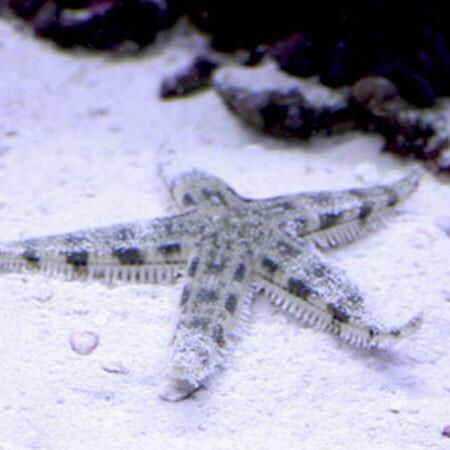
The Sand Sifting Sea Star (Astropecten polycanthus) may initially seem drab in appearance, but its alternating bands of brown and beige reveal a subtle beauty. Known for its thick, spine-covered arms, this sea star is not just a passive bottom-dweller. It is an efficient cleaner, scouring the substrate for detritus and uneaten food, making it a helpful addition to any aquarium ecosystem.
This nocturnal species is most active at night, burrowing through the sand in search of food, while also helping to aerate the substrate. It is a peaceful omnivore that thrives in aquariums with a deep sand bed, where it can sift and forage.
Habitat & Behaviour
The Sand Sifting Sea Star is ideal for tanks with deep sand beds of several inches, as it needs plenty of space to burrow. As it sifts through the sand, it cleans up leftover food and detritus. However, it is important to note that this sea star will also consume small invertebrates such as shrimp, urchins, mollusks, bivalves, and even other small sea stars.
In larger, well-established marine aquariums, it can be self-sufficient, but it may require targeted feeding if the natural food supply is exhausted. Keep this in mind, as a lack of food may lead to starvation and decay, which can affect your tank’s ecosystem.
Care Requirements
Though relatively easy to care for, the Sand Sifting Sea Star is sensitive to changes in water chemistry. It does not tolerate copper-based medications and is vulnerable to sudden fluctuations in oxygen levels, salinity, and pH. Using the drip acclimation method is essential for introducing this sea star to your tank. Additionally, avoid exposing it to air while handling.
It is not advisable to house the Sand Sifting Sea Star with natural predators such as Puffers, as they may attack or consume it.
Diet
This sea star primarily feeds on detritus and small organisms it finds in the substrate. However, it may also consume small invertebrates, and therefore, it is important to provide a varied diet, especially in tanks where natural food sources are scarce. Supplement its diet with small pieces of shrimp, mollusks, or other marine food to keep it healthy.
Breeding
Breeding in captivity is extremely difficult, and there are no visible characteristics to distinguish between males and females. Most Sand Sifting Sea Stars in the aquarium trade are wild-caught.
Summary
The Sand Sifting Sea Star is a wonderful choice for larger aquariums with deep sandy substrates. Its peaceful nature and helpful role in cleaning the substrate make it a valuable member of the tank’s ecosystem. However, it’s essential to monitor its food supply and ensure stable water conditions to maintain its health and longevity.
Common Names: Sand Sifting Sea Star, Astropecten Sea Star
Max Size: 8 inches (20 cm)
Family: Astropectinidae
Minimum Tank Size: 285 litres
Reef Compatible: Yes
Care Level: Easy
Temperament: Peaceful
Diet: Carnivore
Water Conditions: sg 1.023-1.025, 72-78°F (22-26°C), dKH 6-12, pH 7.8-8.4
Supplements: Calcium, Magnesium, Iodine, Trace Elements
Overview
The Sand Sifting Sea Star (Astropecten polycanthus) may initially seem drab in appearance, but its alternating bands of brown and beige reveal a subtle beauty. Known for its thick, spine-covered arms, this sea star is not just a passive bottom-dweller. It is an efficient cleaner, scouring the substrate for detritus and uneaten food, making it a helpful addition to any aquarium ecosystem.
This nocturnal species is most active at night, burrowing through the sand in search of food, while also helping to aerate the substrate. It is a peaceful omnivore that thrives in aquariums with a deep sand bed, where it can sift and forage.
Habitat & Behaviour
The Sand Sifting Sea Star is ideal for tanks with deep sand beds of several inches, as it needs plenty of space to burrow. As it sifts through the sand, it cleans up leftover food and detritus. However, it is important to note that this sea star will also consume small invertebrates such as shrimp, urchins, mollusks, bivalves, and even other small sea stars.
In larger, well-established marine aquariums, it can be self-sufficient, but it may require targeted feeding if the natural food supply is exhausted. Keep this in mind, as a lack of food may lead to starvation and decay, which can affect your tank’s ecosystem.
Care Requirements
Though relatively easy to care for, the Sand Sifting Sea Star is sensitive to changes in water chemistry. It does not tolerate copper-based medications and is vulnerable to sudden fluctuations in oxygen levels, salinity, and pH. Using the drip acclimation method is essential for introducing this sea star to your tank. Additionally, avoid exposing it to air while handling.
It is not advisable to house the Sand Sifting Sea Star with natural predators such as Puffers, as they may attack or consume it.
Diet
This sea star primarily feeds on detritus and small organisms it finds in the substrate. However, it may also consume small invertebrates, and therefore, it is important to provide a varied diet, especially in tanks where natural food sources are scarce. Supplement its diet with small pieces of shrimp, mollusks, or other marine food to keep it healthy.
Breeding
Breeding in captivity is extremely difficult, and there are no visible characteristics to distinguish between males and females. Most Sand Sifting Sea Stars in the aquarium trade are wild-caught.
Summary
The Sand Sifting Sea Star is a wonderful choice for larger aquariums with deep sandy substrates. Its peaceful nature and helpful role in cleaning the substrate make it a valuable member of the tank’s ecosystem. However, it’s essential to monitor its food supply and ensure stable water conditions to maintain its health and longevity.
Available Options
RegularSKU: K273665
$25.00
1 in stock
Want to See This in Person?
Visit our store in Eastwood to see this item and many others. Our team can answer all your questions.