Lyretail Anthias
Open Mon–Sat 10am–6pm · Sun 1pm–6pm. Usually ready the same day.
- Kept in our system until you collect
About this fishWhat do these mean?
Overview
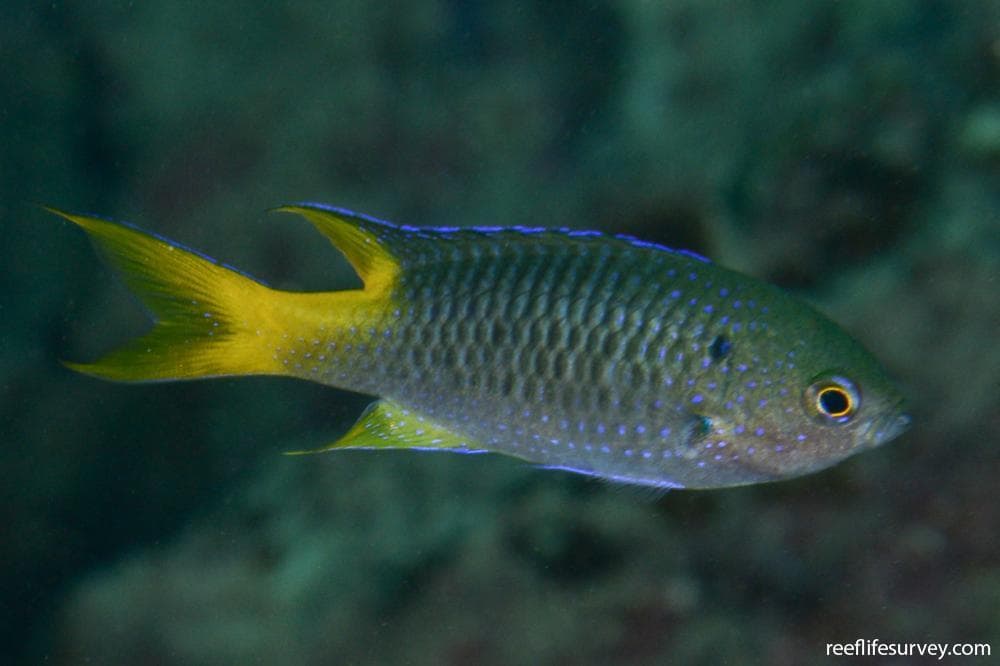
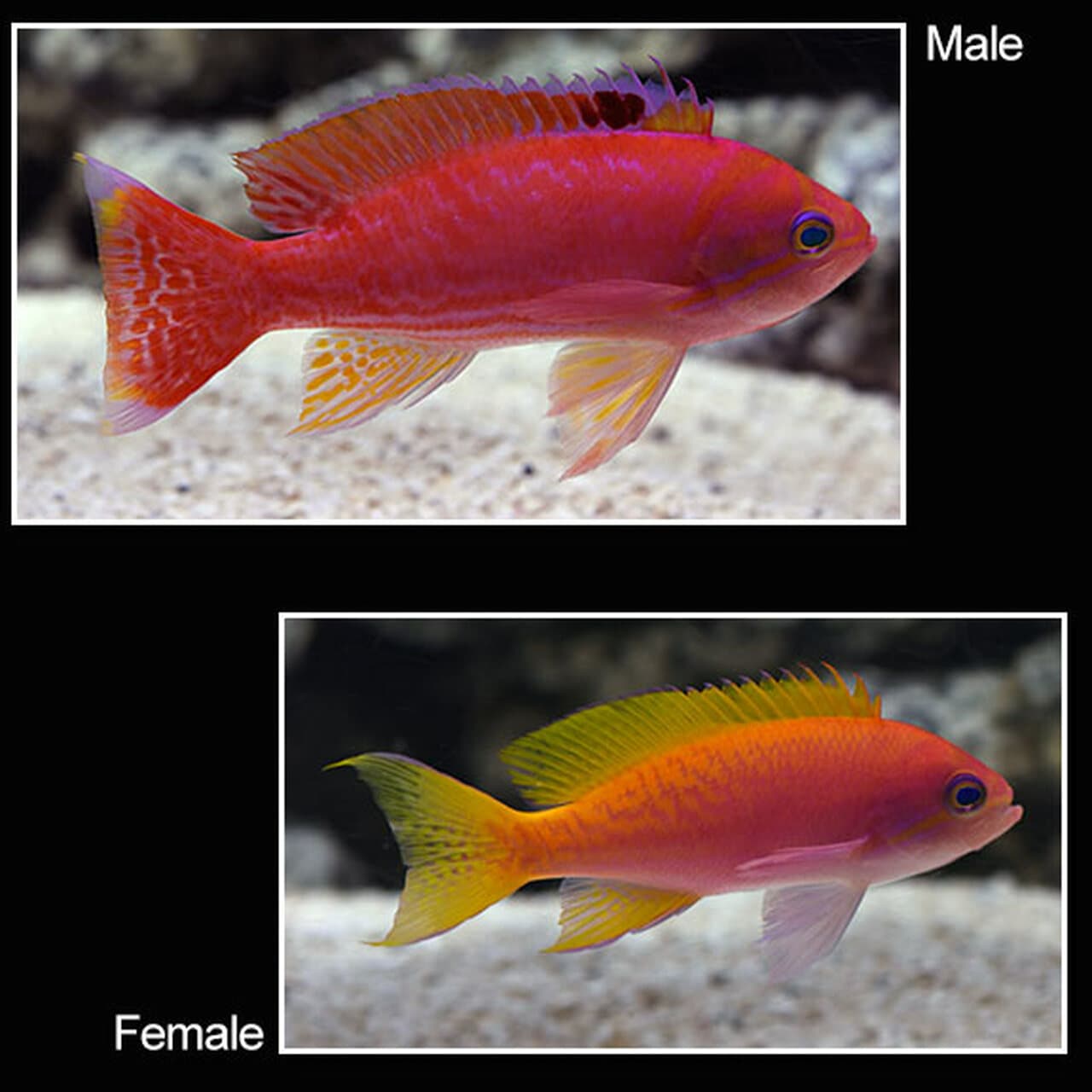
The Lyretail Anthias (Pseudanthias squamipinnis) — also called the Sea Goldie, Scalefin Anthias or Orange Basslet — is the classic anthias, and the one most keepers picture when they think of the group. A shoal of them hovering over the reef, catching the light, is one of the great sights in the hobby. Females are a warm gold-orange with a violet stripe streaking back from the eye, while the larger males colour up in vivid red-to-fuchsia with a lyre-shaped tail and an elongated dorsal spine.
It's a wonderfully active, sociable fish — a genuine 'social butterfly' that swims out in the open and helps coax shyer fish into view.
We rate it intermediate, but here's the honest good news: this is the hardiest and most forgiving anthias, and the best one to start with. The catch is that it's still an anthias — it feeds constantly on plankton in the wild, needs frequent small meals and pristine water, and goes downhill fast if underfed. Meet those needs and few fish reward you with as much colour and movement.
Compatibility
Toward the broader community the Lyretail is peaceful and mixes beautifully with most reef fish — its bold, active nature even draws timid tankmates out of hiding. The territorial side is reserved for its own kind: males can be aggressive toward other males and similar fish, so the golden rule is one male per tank.
You can keep it as a single female, a group of females, or a proper harem of one male with several females (five or more) added together. Never house two males — it leads to serious fighting. If you start with a group of females, the dominant one will usually transition to male over the following weeks. House it only with peaceful-to-robust tankmates that won't out-compete it at feeding time or bully this otherwise gentle, busy fish.
Health & quarantine
As the hardiest anthias, the Lyretail is the most forgiving of the group — but it still demands the anthias essentials. It's most vulnerable during collection and settling, so a quiet quarantine and a slow acclimation pay off, and it's prone to marine ich and velvet under stress. The two non-negotiables are pristine, stable, well-oxygenated water and frequent feeding: with a fast metabolism and little fat reserve, an underfed anthias declines quickly, so buy a plump fish you've seen eating and get it onto regular meals promptly. Provide strong flow, good filtration and a skimmer, keep it with peaceful company, and it's a rewarding, relatively robust fish that can live several years.
Frequently asked questions
Is the Lyretail a good first anthias?
How should I stock them — one or a group?
How do I tell males from females?
Is it reef safe?
Why does feeding matter so much?
Do I need a lid?
How collection works
Order & pay online
Check out and pay securely. We set it aside and hold it ready for you.
We get it ready
It stays in our system until you come in — usually ready the same day.
Collect in store
Drop in to 280 North Road, Eastwood, and pick it up.