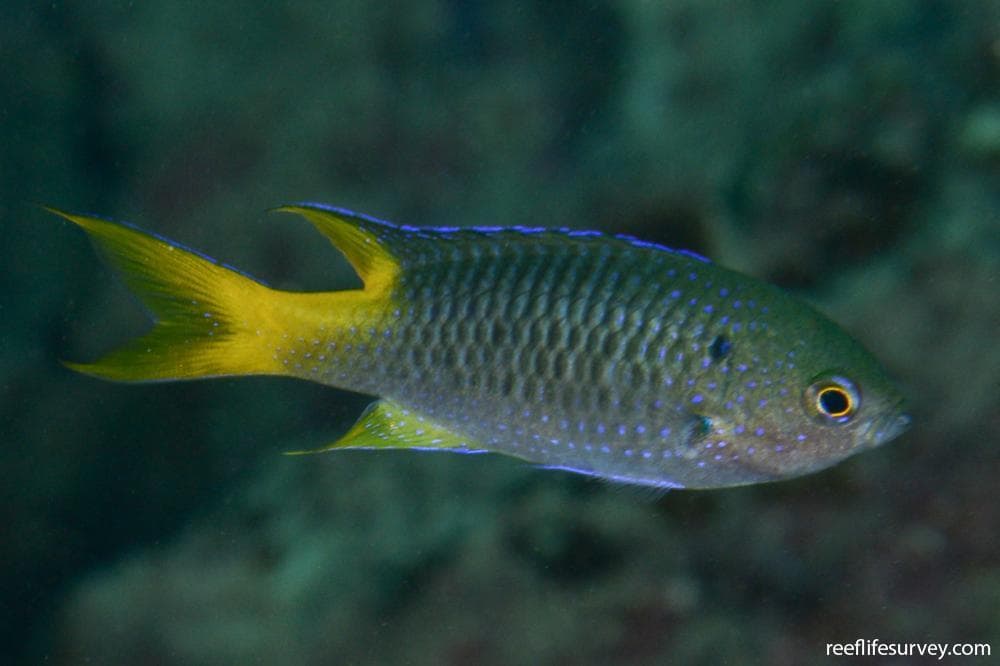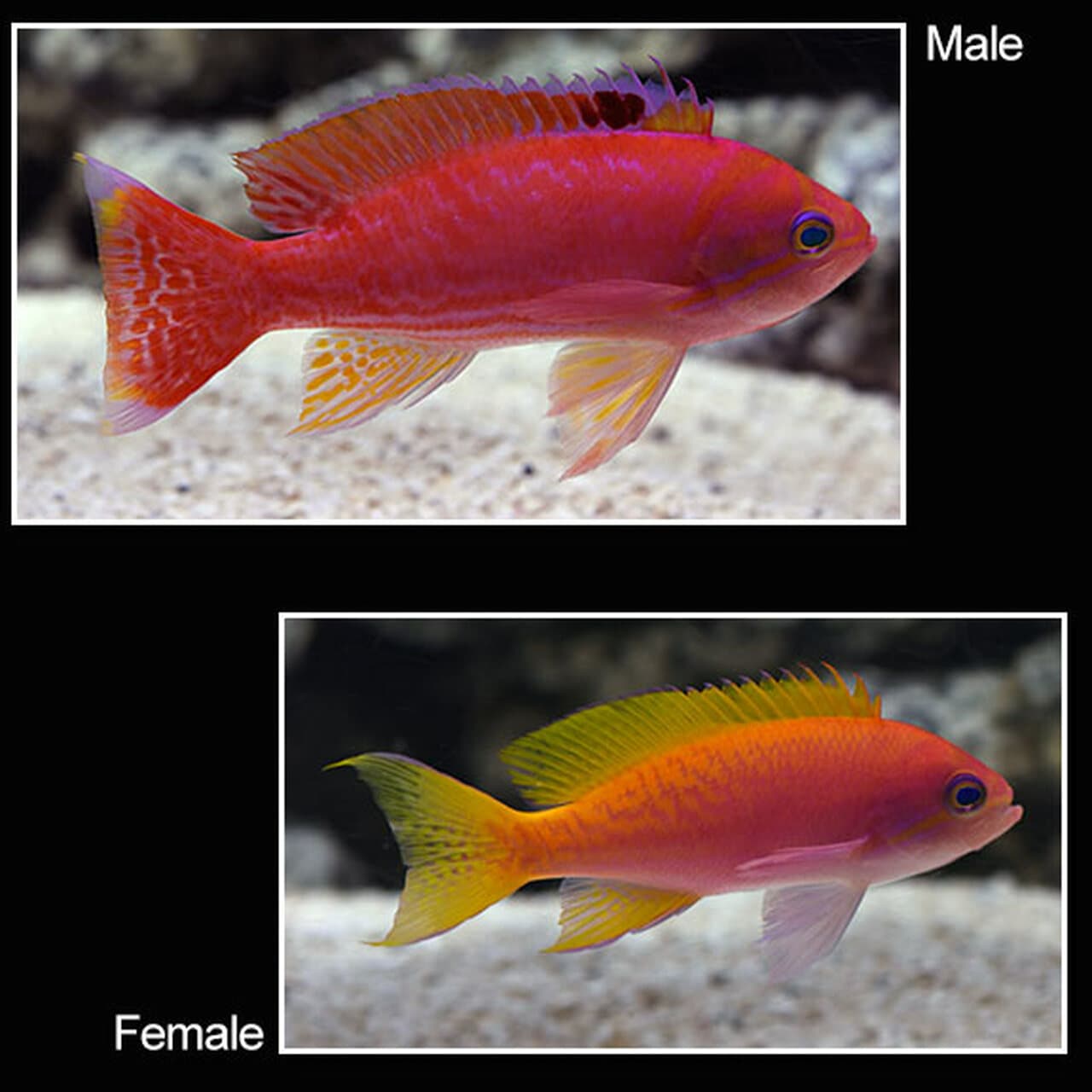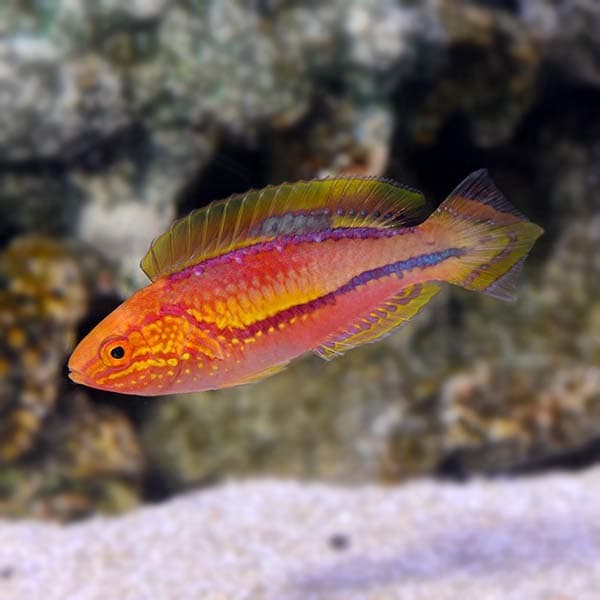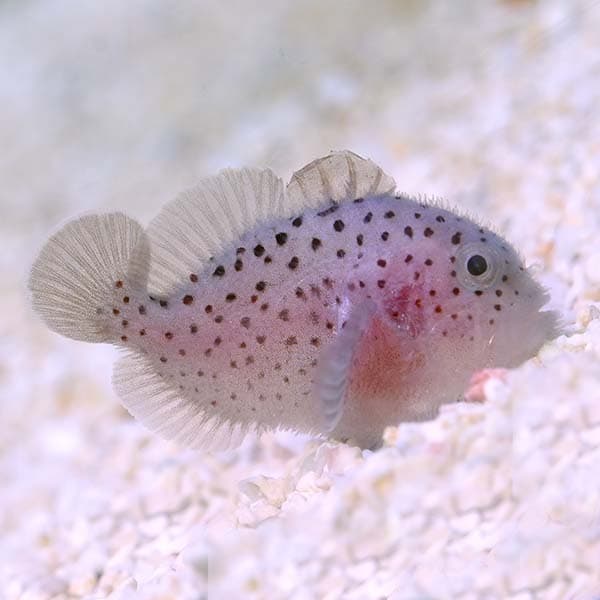
Leopard Wrasse
Open Mon–Sat 10am–6pm · Sun 1pm–6pm. Usually ready the same day.
Tell us the size and sex you're after and we'll source this fish from our suppliers, then email you the moment it's in.
Join the waiting list →- Kept in our system until you collect
About this fishWhat do these mean?
Overview
Leopard Wrasses are a group of small, strikingly patterned wrasses covered in fine spotting reminiscent of a leopard's coat, prized for their colour but also well known for being genuinely difficult to keep long-term in captivity. The core challenge across the group is feeding: these fish rely heavily on hunting small live invertebrates such as copepods and amphipods in a mature sand bed.
Many individuals are reluctant to accept prepared foods, particularly in the weeks after collection, leading to a real risk of slow starvation even in otherwise well-run reef tanks with good water quality.
This is a species best suited to experienced reef keepers with a large, well-established tank and a deep, mature sand bed already supporting a healthy natural pod population, rather than a casual or first-time purchase.
Compatibility
Leopard Wrasses are peaceful and fully reef safe, posing no risk to corals or invertebrates. They can occasionally be outcompeted for food by more assertive fish, so tankmates should be chosen with this species' feeding challenges in mind.
They generally do best alone or with calm, non-competing tankmates that won't reduce their access to the limited natural food supply in the sand bed.
Health & quarantine
This species carries a genuine risk of slow starvation in captivity, since many individuals are reluctant to accept anything beyond live or very fresh natural foods, especially soon after collection. A long, patient quarantine and feeding trial period is strongly recommended before purchase, and buyers should confirm with the supplier that the specific fish is eating reliably on prepared or frozen foods rather than only live pods.
Frequently asked questions
Why are Leopard Wrasses considered difficult?
What should I check before buying a Leopard Wrasse?
Is the Leopard Wrasse reef safe?
What kind of sand bed does a Leopard Wrasse need?
Why does my Leopard Wrasse bury itself in the sand?
How collection works
Order & pay online
Check out and pay securely. We set it aside and hold it ready for you.
We get it ready
It stays in our system until you come in — usually ready the same day.
Collect in store
Drop in to 280 North Road, Eastwood, and pick it up.