Harlequin Tusk
Open Mon–Sat 10am–6pm · Sun 1pm–6pm. Usually ready the same day.
Tell us the size and sex you're after and we'll source this fish from our suppliers, then email you the moment it's in.
Join the waiting list →- Kept in our system until you collect
About this fishWhat do these mean?
Overview
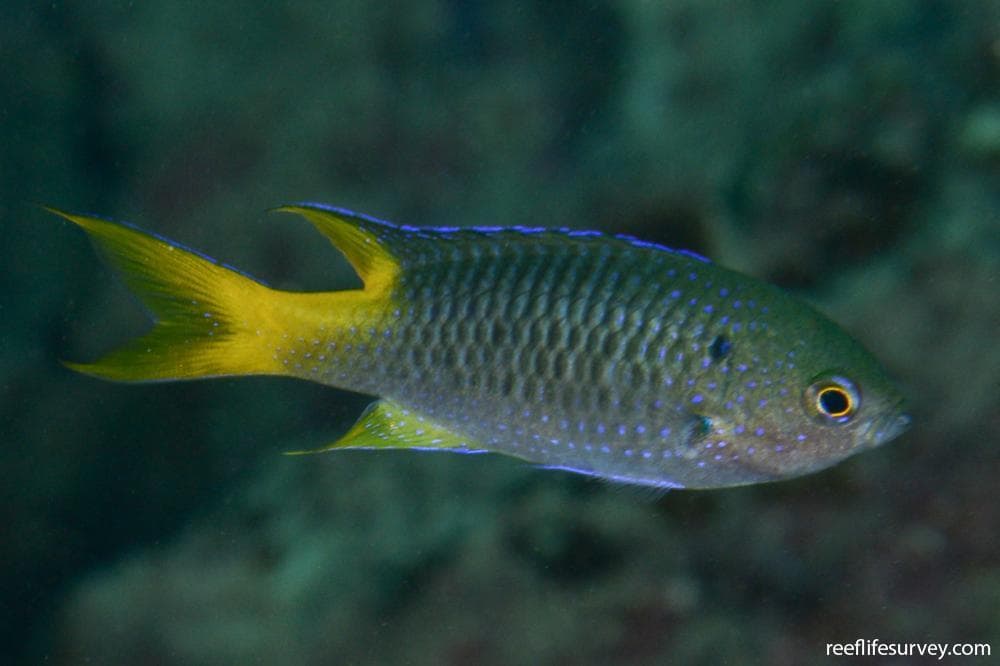
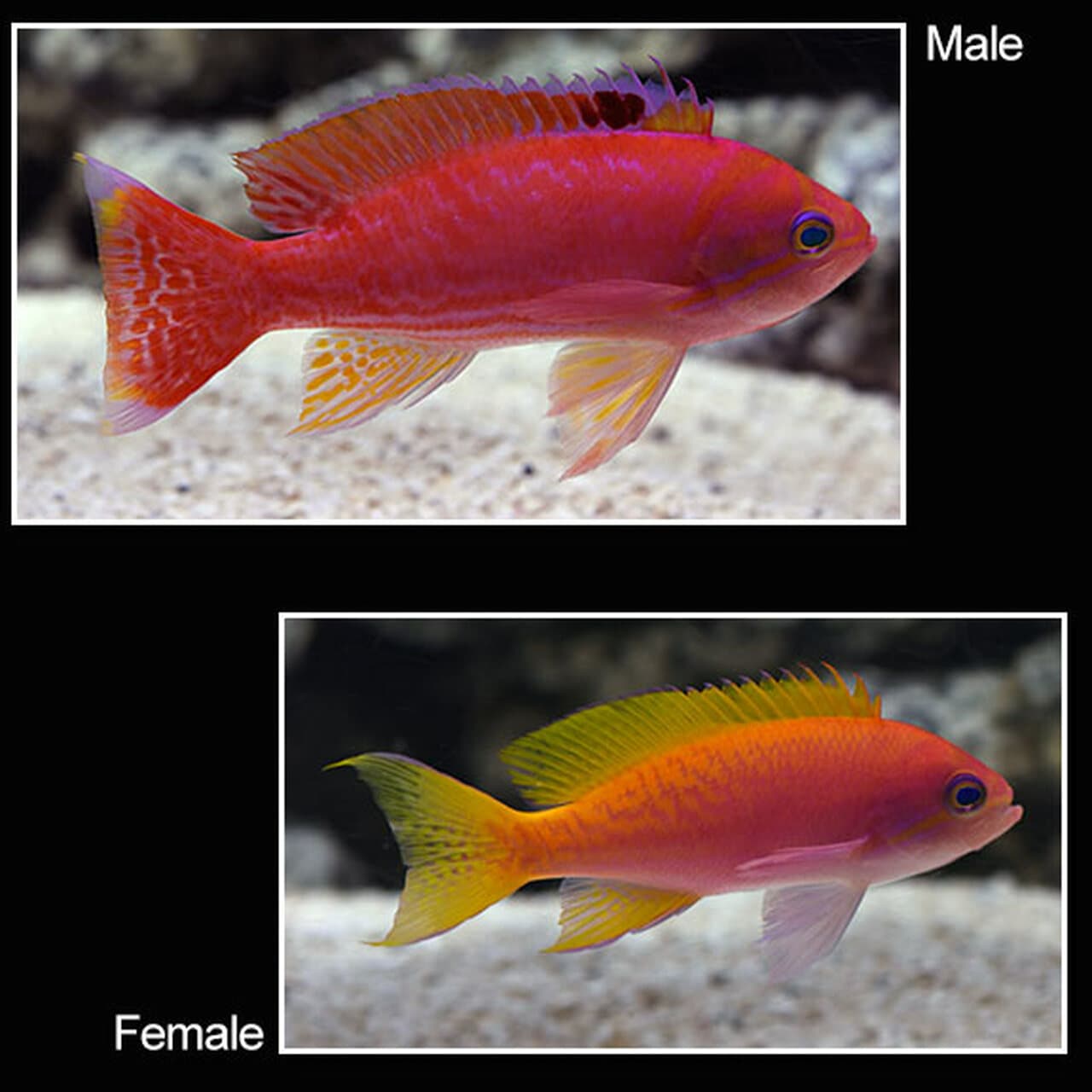
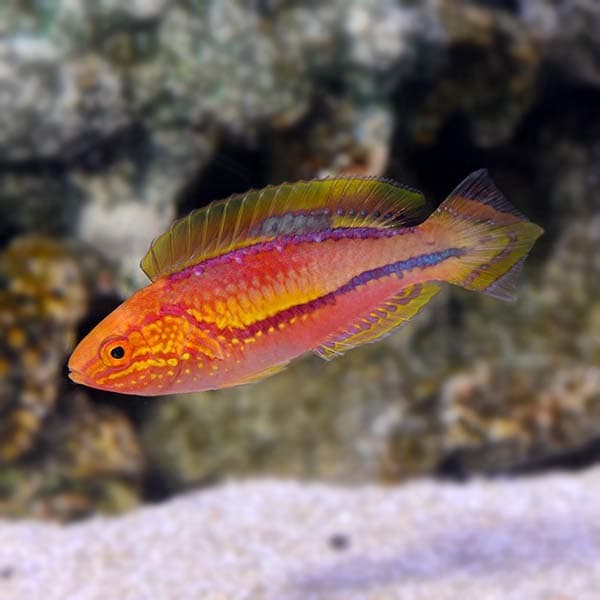
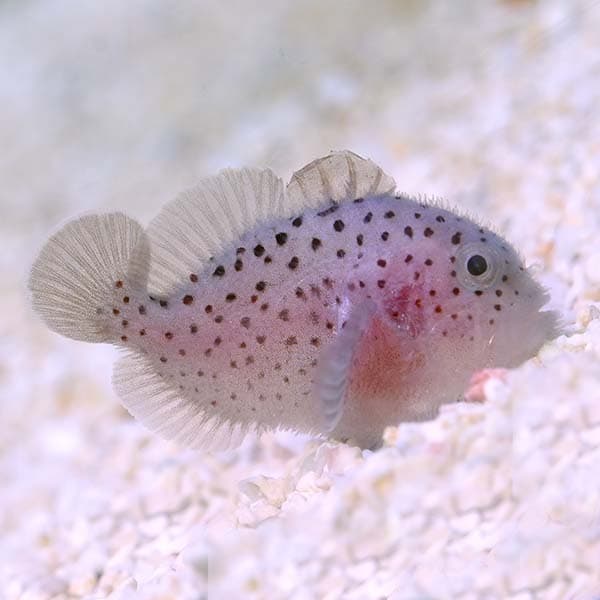
The Harlequin Tusk is a strikingly coloured Australian native wrasse with a deep blue-black body crossed by bold orange horizontal bands, and distinctive tusk-like protruding teeth used for prying prey out of rock crevices. It's a genuine showpiece fish for a reef or fish-only tank, combining vivid colour with an active, engaging personality.
It's a hardy, confident feeder once settled, generally adapting well to aquarium life and readily accepting a wide range of prepared foods.
Given its adult size and predatory feeding habits toward small invertebrates, it does best in a larger, well-established tank with careful thought given to smaller crustacean tankmates.
Compatibility
Harlequin Tusks can be semi-aggressive, particularly toward other wrasses of similar size and shape, and may become territorial as they mature. They generally coexist well with tangs, angelfish, and other robust community fish.
This species is rated reef safe with caution — it won't touch stony or soft coral, but its tusk-like teeth are well suited to hunting small crustaceans and snails, posing a risk to ornamental shrimp and similar invertebrates.
Health & quarantine
This is a hardy, adaptable wrasse with few chronic health issues, though like most wrasses it's a capable jumper, so a secure lid is important. A minimum four-week quarantine is recommended good practice, and this species generally acclimates and feeds confidently without major issues.
Frequently asked questions
Is the Harlequin Tusk reef safe?
How big does a Harlequin Tusk get?
Is the Harlequin Tusk aggressive?
Is the Harlequin Tusk an Australian native?
Does a Harlequin Tusk need a sand bed?
How collection works
Order & pay online
Check out and pay securely. We set it aside and hold it ready for you.
We get it ready
It stays in our system until you come in — usually ready the same day.
Collect in store
Drop in to 280 North Road, Eastwood, and pick it up.