Evansi Anthias
Open Mon–Sat 10am–6pm · Sun 1pm–6pm. Usually ready the same day.
Tell us the size and sex you're after and we'll source this fish from our suppliers, then email you the moment it's in.
Join the waiting list →- Kept in our system until you collect
About this fishWhat do these mean?
Overview
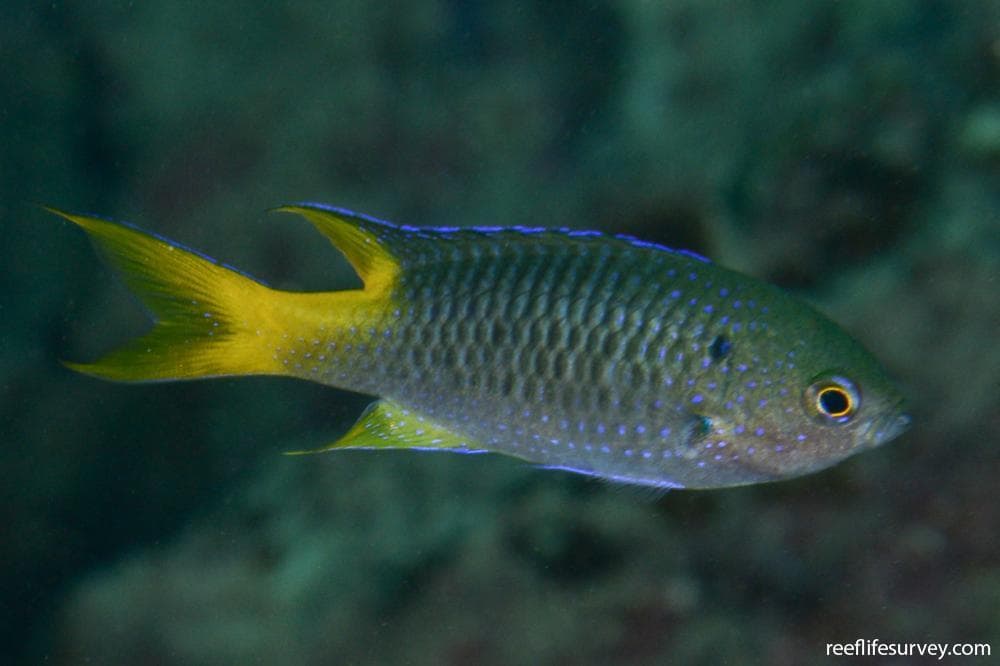
The Evansi Anthias (Pseudanthias evansi) — also called the Yellowtail, Yellowback or Evan's Anthias — is one of the most elegant anthias in the hobby. Its body is a rich violet-purple, dusted with fine yellow speckling and lit by a bright yellow streak running along the upper back into the fins and tail, with an orange line tracing from the eye to the pectoral fin. Unusually for an anthias, males and females look much alike, so a shoal reads as a uniform wash of purple and gold.
Native to the Indian Ocean, it lives in shoals over reef slopes, hovering in the current to feed on plankton, and it brings that same restless, shimmering movement to a reef.
We'll be straight with you: this is a beautiful fish but a demanding one, and we rate it advanced. It's among the more sensitive anthias — often shy at first and frequently reluctant to accept prepared foods — so success hinges on careful selection and a serious commitment to feeding. In the right, experienced hands it's a spectacular shoaling centrepiece.
Compatibility
The Evansi is a genuinely peaceful, sociable fish that does best in company and won't trouble its tankmates. In the wild it lives in shoals, and in the aquarium it's happiest kept as a small group — a mated pair, a group of females, or a single male leading several females. The one hard rule is to never keep two males together, as it leads to serious aggression; add the group at the same time to keep the peace.
Because it's easily intimidated, it should only be housed with other calm, peaceful species — anything boisterous will keep it hiding, where a sensitive anthias quickly goes downhill. It's fully reef-safe, ignoring corals and invertebrates entirely, so it slots neatly into a peaceful mixed reef alongside gentle tankmates like other anthias (of the same species), fairy wrasses, gobies and firefish.
Health & quarantine
This is where the Evansi earns its advanced rating. It's one of the more sensitive anthias — prone to stress during collection and acclimation, and notoriously variable about accepting frozen and prepared foods. The single most important step is to buy a fish (ideally a group) you've watched feeding confidently; a well-started Evansi already eating mysis and calanus is far more forgiving than a freshly imported one. Give it a quiet, low-stress quarantine and a slow acclimation, keep water pristine and stable, and house it only with peaceful company. Its fast metabolism and small fat reserve mean an underfed fish declines rapidly, so consistent, frequent feeding is the backbone of keeping it healthy.
Frequently asked questions
Why is the Evansi considered difficult?
How should I keep them — singly or in a group?
Is it reef safe?
How do I get a shy new Evansi to eat?
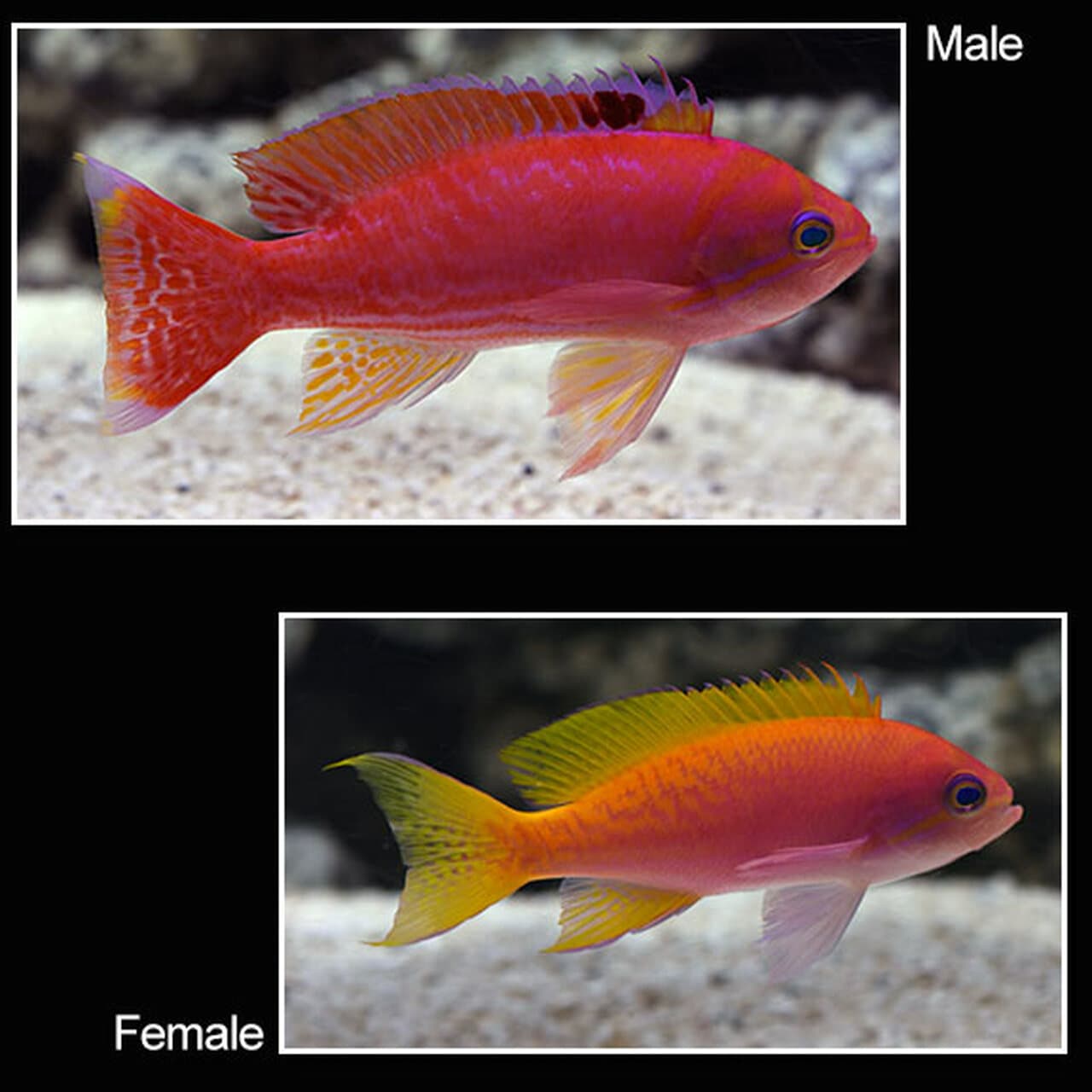
Can males and females be told apart?
Is it a good beginner anthias?
How collection works
Order & pay online
Check out and pay securely. We set it aside and hold it ready for you.
We get it ready
It stays in our system until you come in — usually ready the same day.
Collect in store
Drop in to 280 North Road, Eastwood, and pick it up.