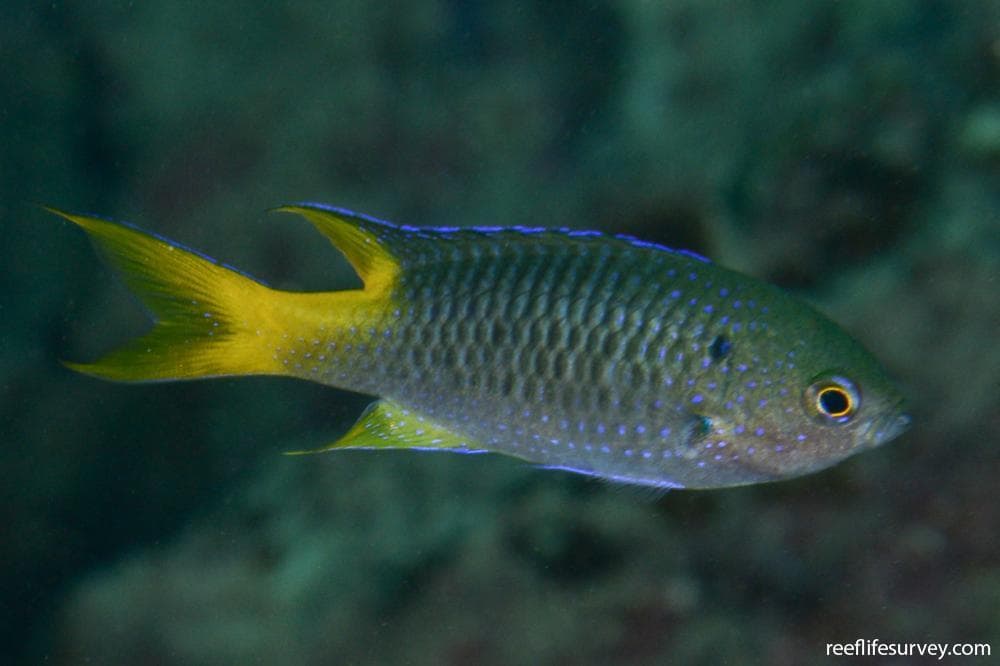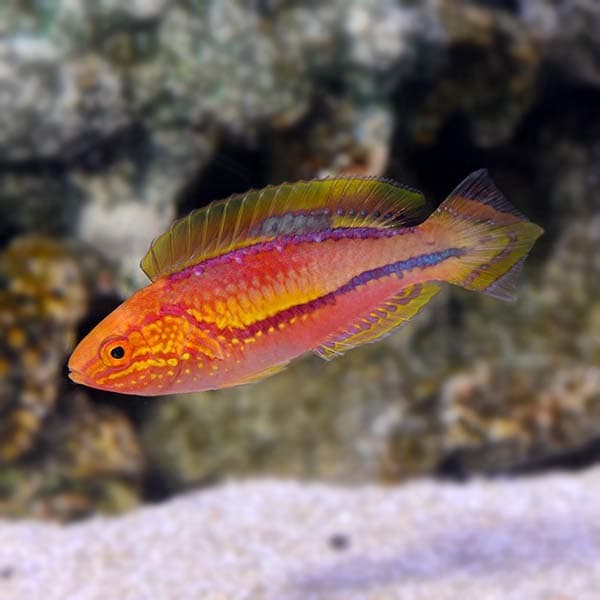
Cleaner Wrasse
Open Mon–Sat 10am–6pm · Sun 1pm–6pm. Usually ready the same day.
- Kept in our system until you collect
About this fishWhat do these mean?
Overview
The Cleaner Wrasse is a slender, distinctively striped fish with a black horizontal band running the length of its pale-to-blue body, famous in the wild for running "cleaning stations" where it picks parasites and dead skin off other fish. In the wild this behaviour is central to its diet and survival, which is precisely why it's one of the more difficult marine fish to keep successfully long-term in a home aquarium.
Many Cleaner Wrasses struggle to adapt to prepared foods because their natural diet relies so heavily on live parasites and mucus picked from other fish, and a genuine proportion of specimens slowly starve in captivity even in otherwise well-run tanks. This has led many experienced hobbyists and some retailers to move away from stocking this species due to the poor survival outcomes typically seen in aquariums.
Given the significant feeding challenges and ethical considerations involved, this is a species that should only be considered by very experienced keepers prepared for a demanding, uncertain feeding transition, and many keepers now choose captive-bred cleaner shrimp or gobies as a lower-risk alternative for natural parasite control.
Compatibility
Cleaner Wrasses are peaceful and fully reef safe, posing no risk to corals or invertebrates, and in a tank with other fish they may perform natural cleaning behaviour, picking at parasites or dead skin from tankmates. This can be a genuinely beneficial behaviour when it occurs, though it isn't guaranteed to happen consistently in captivity.
They generally get along with the wider fish community and rarely show aggression, though their wellbeing depends heavily on whether they successfully transition to eating enough prepared food.
Health & quarantine
This species carries a well-documented and serious risk of slow starvation in captivity, since its natural diet is so specifically tied to live parasite and mucus feeding on other fish. A long, closely monitored quarantine and feeding trial period is essential, and buyers should only consider this species from a supplier who can demonstrate the specific individual is already eating a variety of prepared foods reliably.
Frequently asked questions
Why is the Cleaner Wrasse considered difficult to keep?
Is there a safer alternative to a true Cleaner Wrasse?
What should I check before buying a Cleaner Wrasse?
Is the Cleaner Wrasse reef safe?
Will a Cleaner Wrasse clean my other fish?
How collection works
Order & pay online
Check out and pay securely. We set it aside and hold it ready for you.
We get it ready
It stays in our system until you come in — usually ready the same day.
Collect in store
Drop in to 280 North Road, Eastwood, and pick it up.