Blue Flasher Wrasse
Open Mon–Sat 10am–6pm · Sun 1pm–6pm. Usually ready the same day.
Tell us the size and sex you're after and we'll source this fish from our suppliers, then email you the moment it's in.
Join the waiting list →- Kept in our system until you collect
About this fishWhat do these mean?
Overview
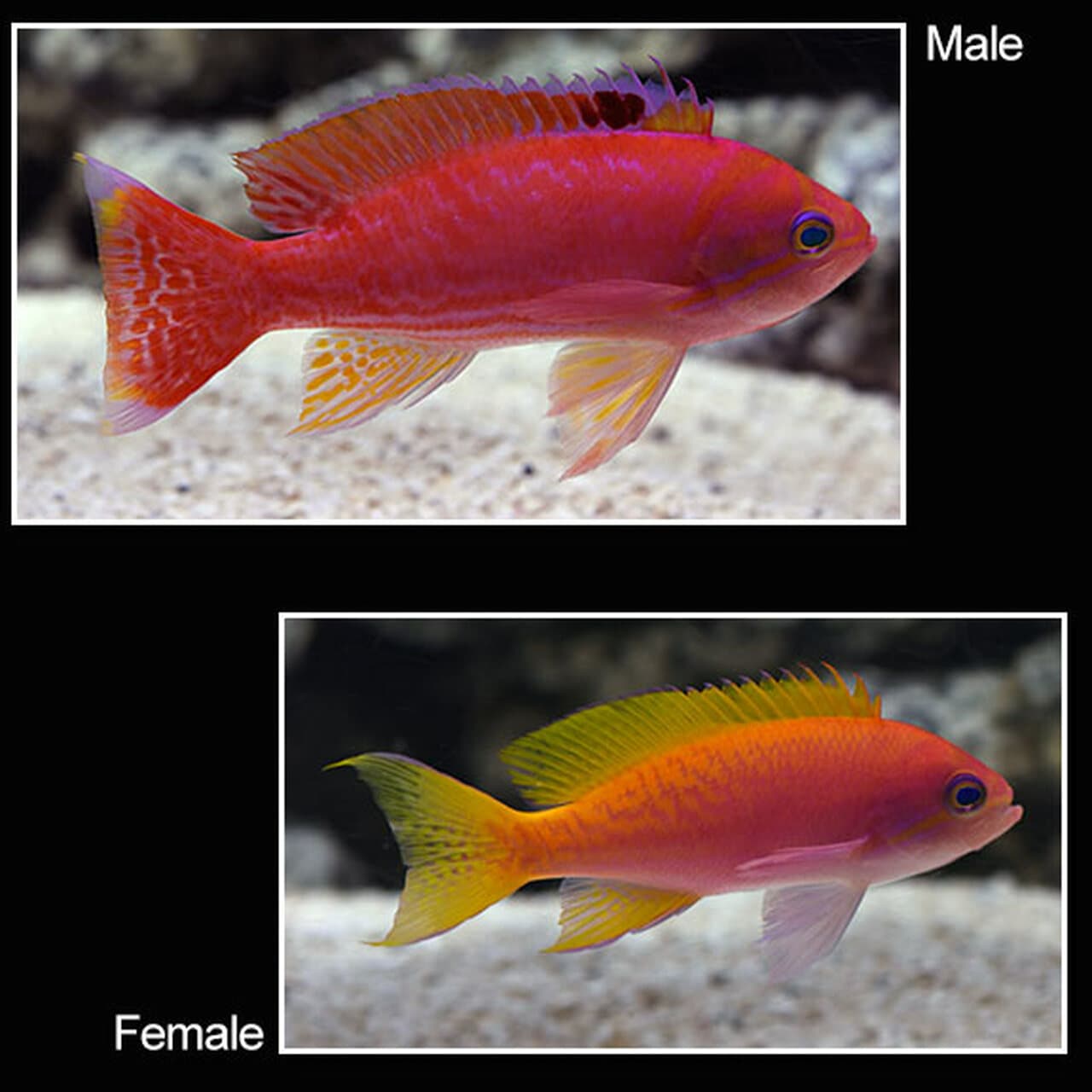
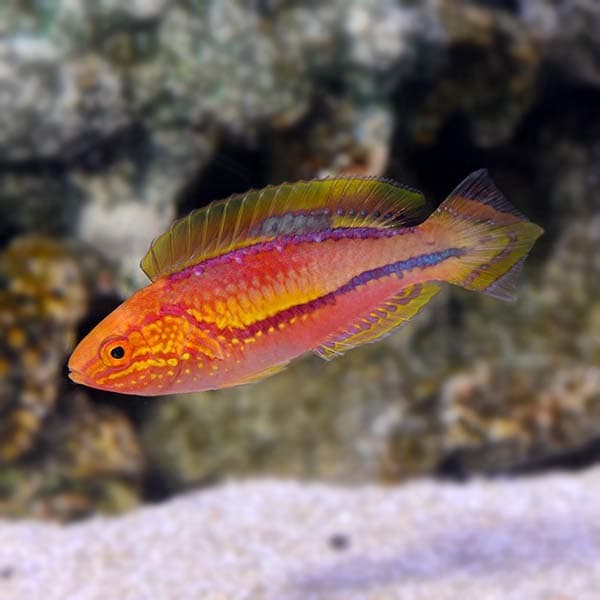
The Blue Flasher Wrasse (Paracheilinus cyaneus) is a small, dazzling reef fish that punches well above its size for colour and movement. Males are the showstoppers — vivid red and blue, with elongated dorsal filaments and trailing tail streamers they throw into a spectacular 'flashing' display, especially when courting females. Females are more understated but shoal beautifully alongside them.
It's a peaceful, active fish that spends its day out in the water column, and it's fully reef-safe, making it a natural fit for a mixed reef. As flasher wrasses go, it's one of the more accessible and hardy options — a great introduction to the group for anyone who can meet its two main needs: frequent feeding and a tightly covered tank.
Ask any keeper who's watched a male flash at full tilt and they'll tell you it's one of the most captivating displays in the hobby — and it's brought out at its best when the fish is kept in a small group with females to show off to.
Compatibility
This is a peaceful, easygoing wrasse that's no bother to unrelated tankmates and is happiest in company. It does best in a small group — ideally one male with several females, which draws out the male's full flashing display. When stocking, introduce the females first and add the male last to keep aggression to a minimum.
It pairs well with other calm community fish such as anthias, chromis, cardinals, clownfish and gobies. Take a little care mixing it with other wrasses — particularly other flashers or fairy wrasses — as males can spar; simultaneous introduction into a large tank helps. Avoid boisterous or aggressive tankmates that will outcompete it at feeding time or keep it hiding in the rocks.
Health & quarantine
The Blue Flasher Wrasse is generally hardy, but it's a small, fast-metabolising fish, so condition can slip quickly if it isn't feeding well — buy a fish you've seen eating and get it onto regular meals promptly. A quiet quarantine period and slow, unhurried acclimation help it settle and let you confirm strong feeding before it joins the display. Because it's fed so frequently, good nutrient management pays off; a protein skimmer and a mature tank with some live pods to pick at both help. Above all, provide a tightly fitted lid from day one — flasher wrasses are notorious jumpers and losses this way are entirely avoidable.
Frequently asked questions
Do I really need a lid?
One or a group?
Is it genuinely reef safe?
How often does it need feeding?
Is it a good beginner wrasse?
Will the males keep their bright colours?
How collection works
Order & pay online
Check out and pay securely. We set it aside and hold it ready for you.
We get it ready
It stays in our system until you come in — usually ready the same day.
Collect in store
Drop in to 280 North Road, Eastwood, and pick it up.