Bicolour Anthias
Open Mon–Sat 10am–6pm · Sun 1pm–6pm. Usually ready the same day.
Tell us the size and sex you're after and we'll source this fish from our suppliers, then email you the moment it's in.
Join the waiting list →- Kept in our system until you collect
About this fishWhat do these mean?
Overview
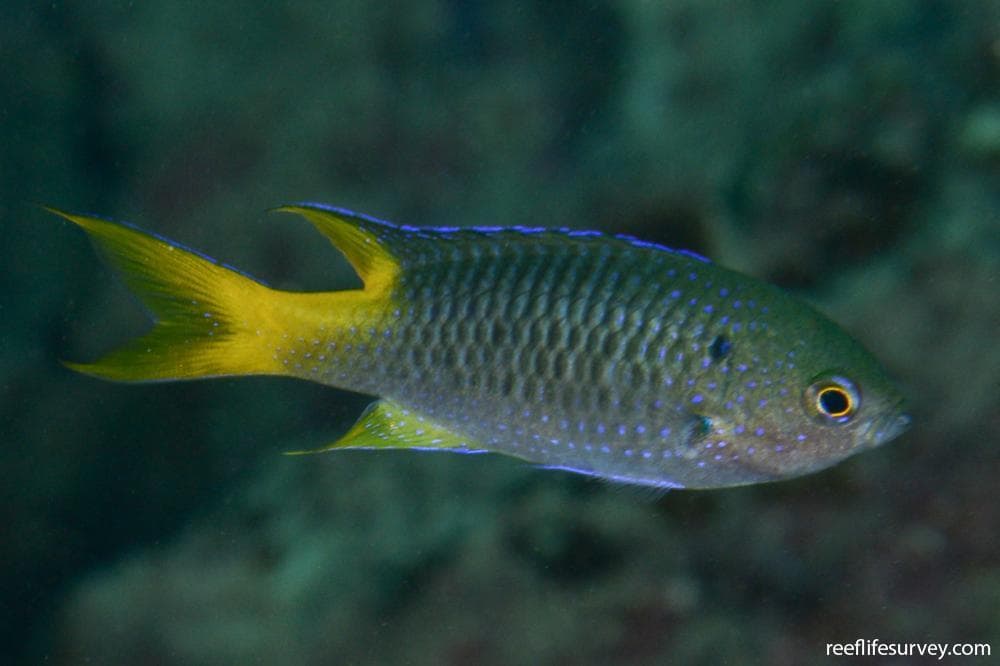
The Bicolour Anthias (Pseudanthias bicolor) is a dazzling reef fish with a warm orange-yellow front half that melts into a purple-to-violet rear — a two-tone split that catches the light beautifully as the fish hovers in the current. Native to the Indo-Pacific, it lives in shoals over reef slopes and drop-offs, and it brings that same constant, shimmering movement to the aquarium.
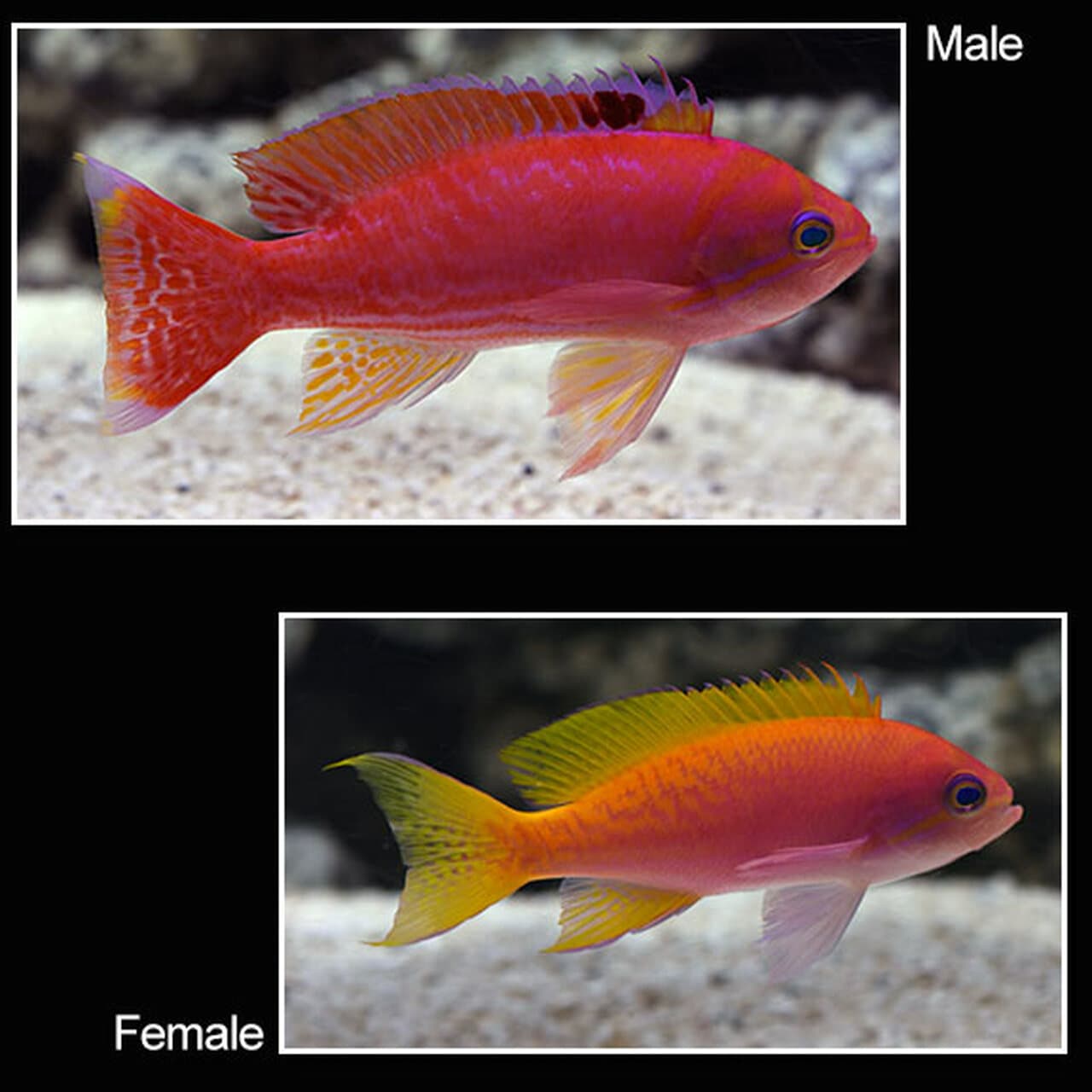
It's peaceful and fully reef-safe, which makes it a superb centrepiece for a settled community reef. Males are the showier sex and flash their colours during display, while females carry a softer version of the same palette.
Like all anthias, it asks for a bit more commitment than a hardy clownfish — stable water and frequent feeding are non-negotiable — which is why we rate it intermediate. Meet those needs, though, and few fish add as much life and colour to the mid-water as a healthy Bicolour.
Compatibility
This is a peaceful, active shoaling fish that spends its day out in the open water rather than picking fights. In the wild it lives in groups led by a dominant male, and it's happiest recreating that in the aquarium. It can turn shy and hide if housed with pushy or boisterous tankmates, so the company you keep matters.
Keep it as a single fish or, better, a small harem of one male to several females — added together to keep the peace. Like all anthias it's a protogynous hermaphrodite: every fish starts female, and the dominant individual becomes male. Good tankmates include other calm-to-semi-aggressive community species such as gobies, blennies, wrasses, clownfish and tangs. Avoid aggressive fish and large predators that will intimidate it into permanent hiding or treat it as a meal.
Health & quarantine
The Bicolour Anthias is reasonably hardy once settled, but its long-term success hinges on two things: stable, pristine water and getting it feeding well from the start. Buy a fish you've seen eating, and give it a quiet quarantine period with a slow, unhurried acclimation so it can find its confidence before joining the display. Anthias have fast metabolisms and little fat reserve, so a fish that isn't eating enough goes downhill quickly — frequent feeding and consistent parameters are the best insurance. A mature tank with good water quality and some live pods to pick at helps enormously.
Frequently asked questions
How many should I keep?
Is it reef safe?
Why does feeding matter so much for anthias?
Is it a good beginner fish?
Do the females really turn into males?
My Bicolour is hiding all the time — what's wrong?
How collection works
Order & pay online
Check out and pay securely. We set it aside and hold it ready for you.
We get it ready
It stays in our system until you come in — usually ready the same day.
Collect in store
Drop in to 280 North Road, Eastwood, and pick it up.