Bellus Angel
Open Mon–Sat 10am–6pm · Sun 1pm–6pm. Usually ready the same day.
Tell us the size and sex you're after and we'll source this fish from our suppliers, then email you the moment it's in.
Join the waiting list →- Kept in our system until you collect
About this fishWhat do these mean?
Overview
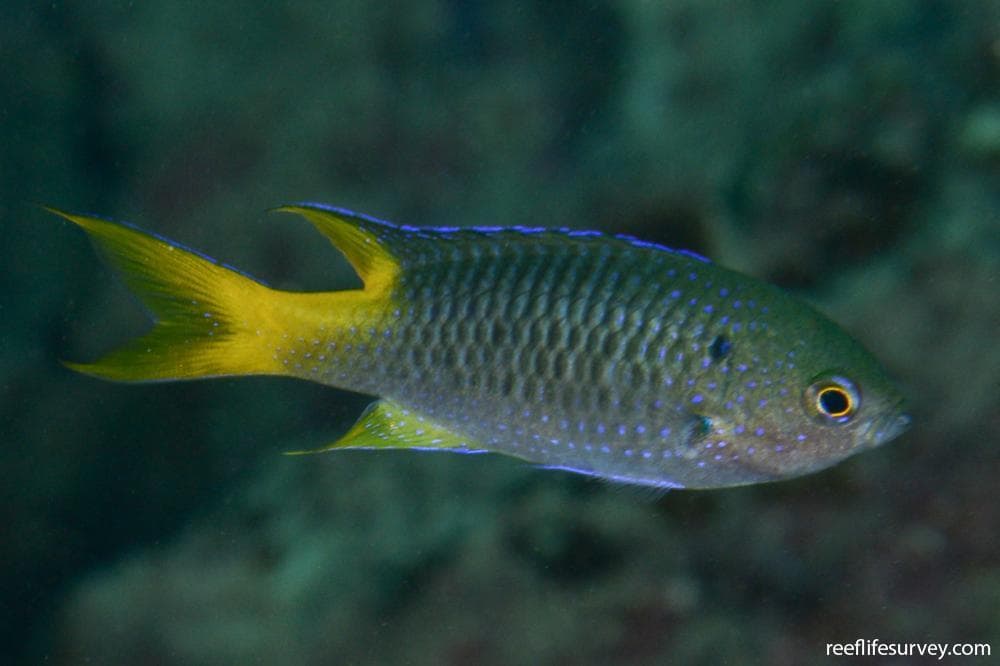
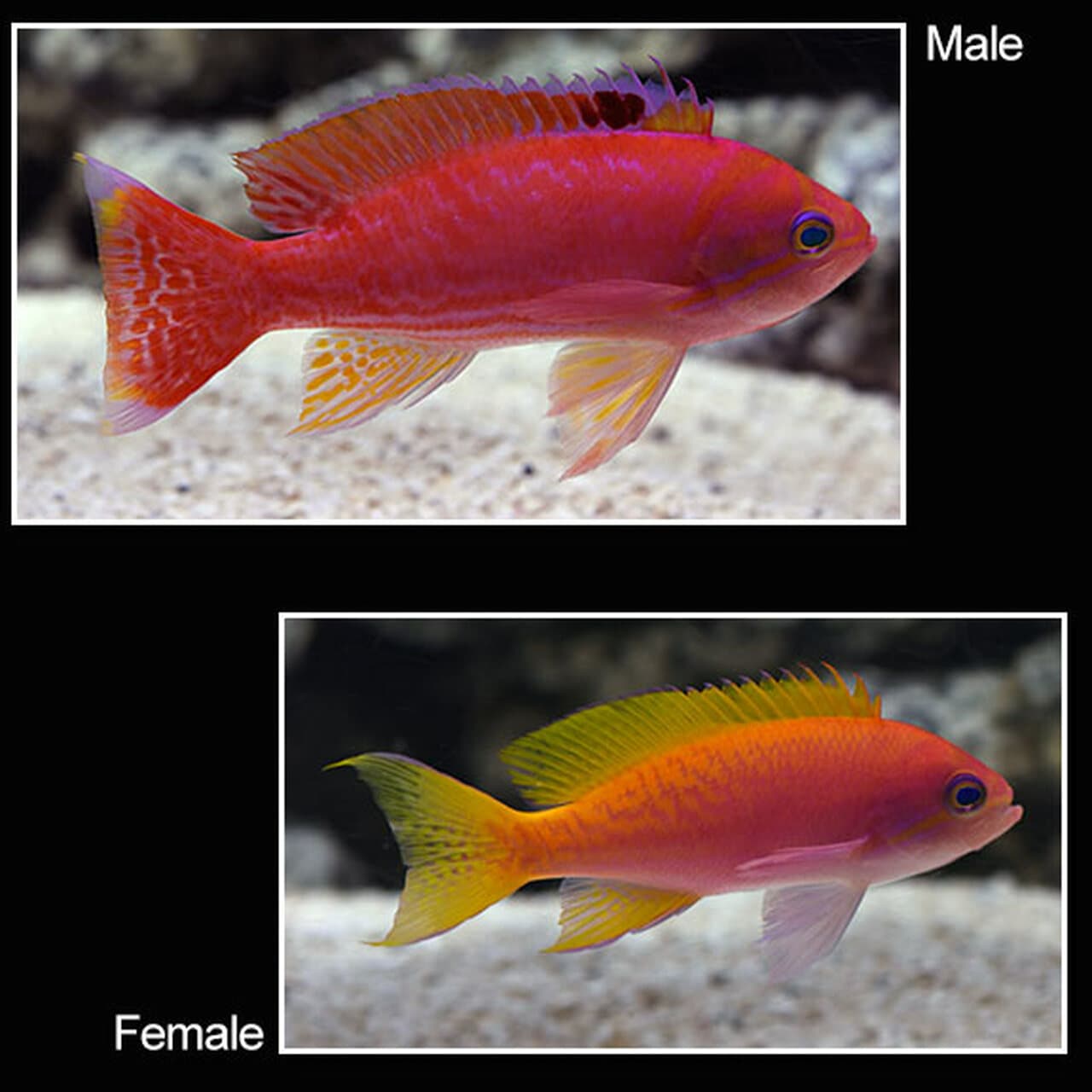
The Bellus Angel (Genicanthus bellus), also known as the Ornate or Bellus Lyretail Angelfish, is one of the fabled 'reef-safe angels'. It belongs to the swallowtail genus Genicanthus — graceful, streamlined open-water swimmers with lyre-shaped tails that hunt plankton above the reef rather than picking at corals like their Pomacanthus cousins. It's strongly sexually dimorphic: females wear a pale white-and-blue body ruled with bold black striping and warm dorsal accents, while males are a smoother grey with a yellow lateral stripe and blue markings on the face and fins.
It's a deep-water fish, collected from outer reef drop-offs well below recreational diving depth, which is why it commands a premium and needs to be selected with real care.
Given that peaceful nature, genuine reef compatibility and elegant swimming, it's a dream angel for a mixed reef — but it's an intermediate fish for two honest reasons: it demands frequent feeding and pristine water, and because of its depth of collection it can arrive with decompression-related problems. Buy a healthy, properly decompressed specimen and it rewards you with a decade or more of graceful company.
Compatibility
The Bellus is genuinely peaceful, even a little shy — it's not territorial toward other fish and mixes beautifully with a wide range of calm community species such as tangs, wrasses, gobies, blennies, chromis, clownfish and butterflies. That easygoing temperament is a big part of its appeal, since most angels are anything but.
The one firm rule concerns its own kind: never keep two males together, as it triggers serious aggression. Keep it singly, as a bonded pair, or as one male with a harem of several females — and if you're stocking a group, add them all at once to a large tank (ideally a metre and a half or longer). It's also generally best not to mix it with other Genicanthus species unless the system is very large.
Health & quarantine
This is where Bellus keeping is won or lost, and it starts at the point of purchase. Because they're collected from depth, Genicanthus angels are prone to swim bladder overinflation from decompression — a fish that floats at the surface, swims at odd angles, can't dive or has a swollen abdomen should be avoided outright. Juveniles and females adapt far better than wild adult males, so start with a healthy, well-decompressed, already-feeding fish. From there, give it a proper quarantine and a slow acclimation; angels are prone to ich and velvet, so a UV steriliser and a good protein skimmer are both strongly recommended. Stable, pristine water and frequent feeding do the rest — treated well, it's a long-lived fish.
Frequently asked questions
Is the Bellus Angel really reef safe?
How do I tell a male from a female?
Why is buying carefully so important with this fish?
Can I keep more than one?
What kind of tank layout does it prefer?
Is it a good fish for beginners?
How collection works
Order & pay online
Check out and pay securely. We set it aside and hold it ready for you.
We get it ready
It stays in our system until you come in — usually ready the same day.
Collect in store
Drop in to 280 North Road, Eastwood, and pick it up.