IN STOCKLPS
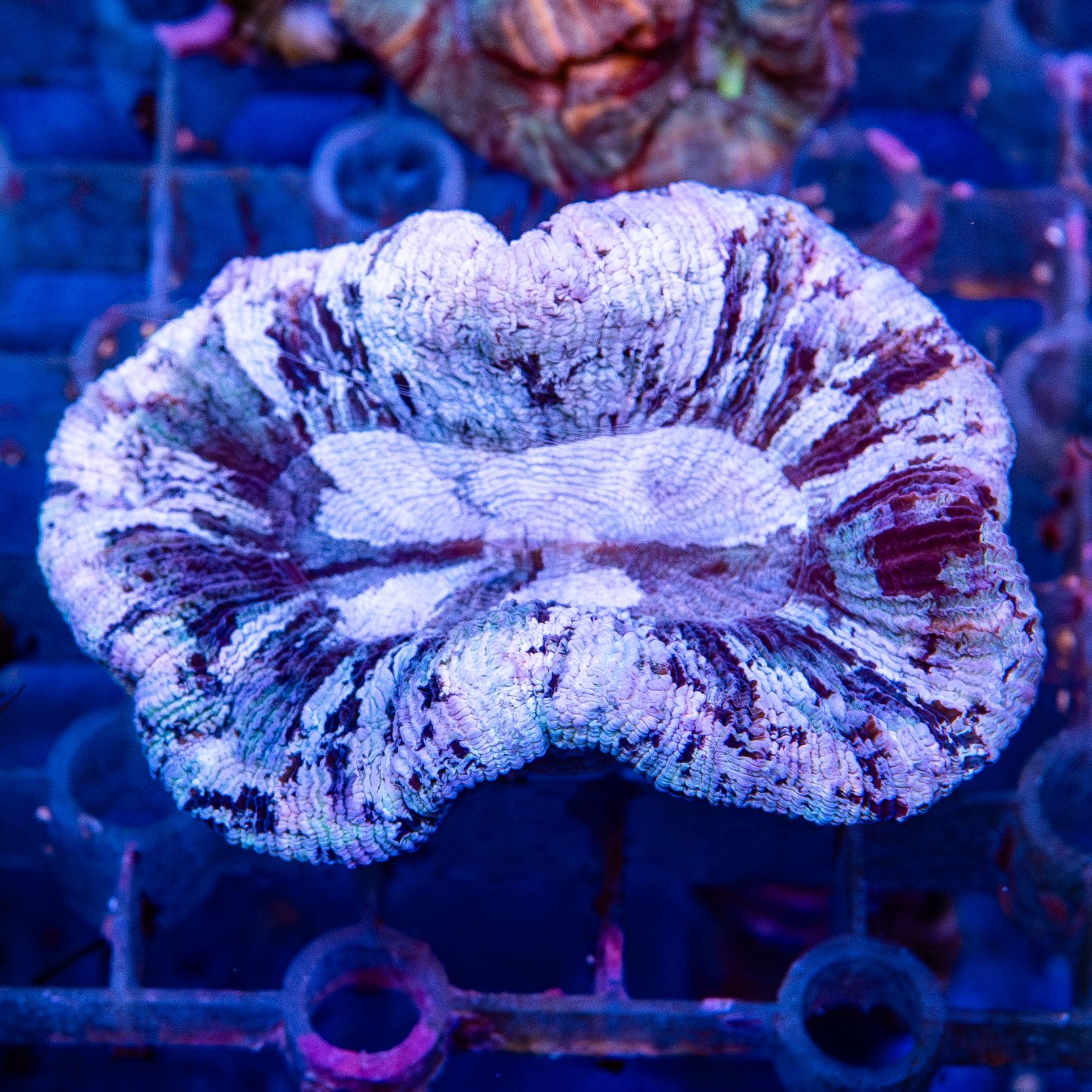
Trachy (EA#184)
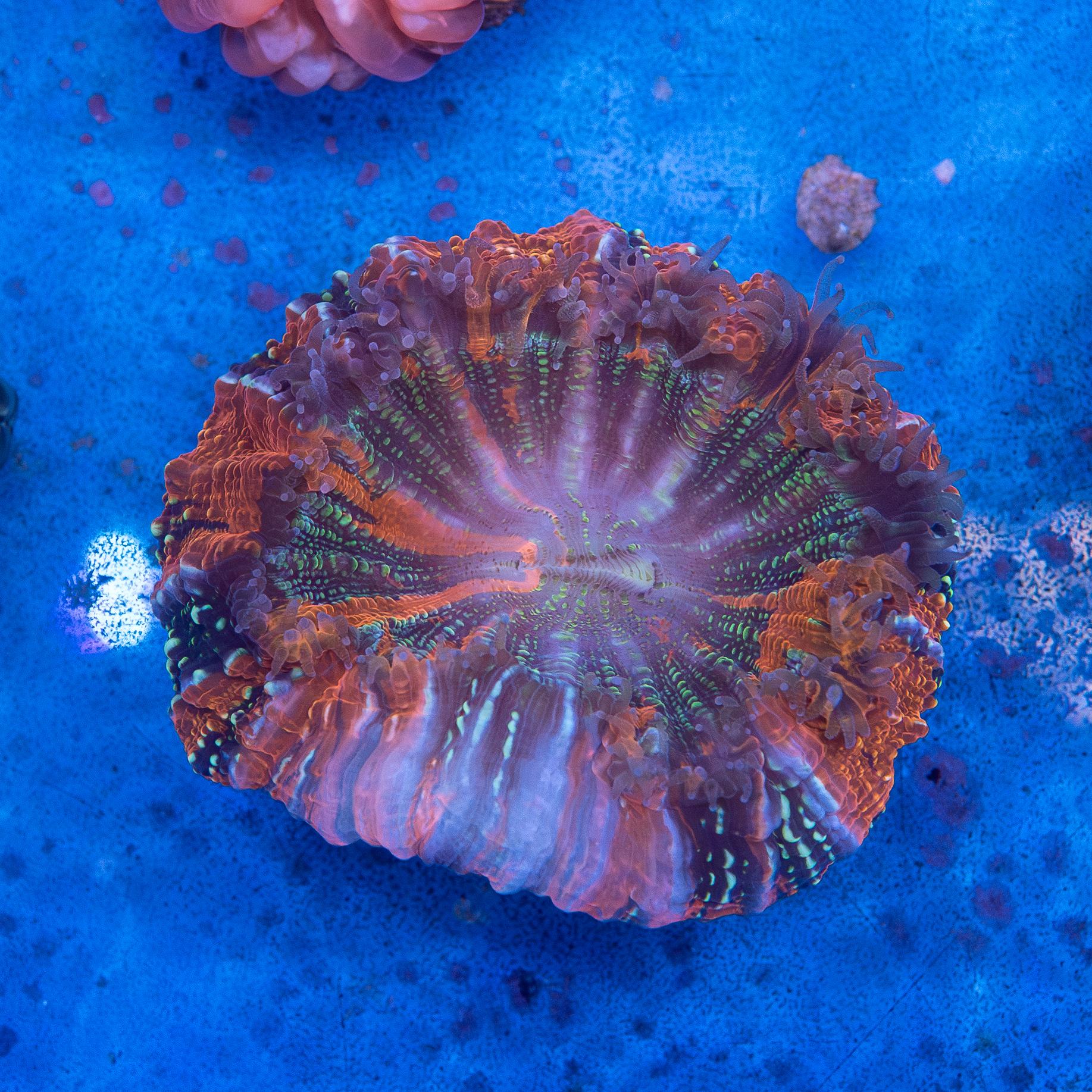
Trachyphyllia Coral (Trachyphyllia geoffroyi) Common Names: Trachy, Open Brain Coral, Crater Coral Care Level: Easy to Moderate Temperament: Peaceful Colour Form: Red, Green, Orange, Multicoloured, Metallic Variants Diet: Photosynthetic and Carnivorous Reef Compatible: Yes Water Conditions: 24-27°C, dKH 6-10, pH 7.8-8.4, sg 1.023-1.025 Max Size: Up to 20 cm across Family: Merulinidae Overview The Trachyphyllia Coral, often referred to simply as "Trachy," is a large polyp stony (LPS) coral that boasts vibrant colours and a striking fleshy appearance. Found in sandy or rubble zones of lagoons and reef slopes in the Indo-Pacific, Trachyphyllia corals are relatively hardy and popular among both beginner and experienced reef aquarists. Their undulating folds and bright hues make them a captivating centrepiece in reef aquariums. Behaviour and Habitat Trachyphyllia corals are peaceful and do not have aggressive sweeper tentacles, making them an excellent choice for mixed reef tanks. They expand their fleshy tissues during the day, often appearing larger than their skeletal structure, and can retract if disturbed. In the wild, they are often found resting on sandy substrates, where their shape helps to stabilise them. Tank Requirements Lighting: Low to moderate lighting, such as LED or T5, as intense lighting can cause bleaching. Water Flow: Low to moderate flow to avoid tissue damage while ensuring nutrient exchange. Placement: Ideal for placement on a sandy substrate or in low-rock crevices. Avoid sharp or rough surfaces that could damage their delicate tissue. Diet While Trachyphyllia corals obtain most of their energy from photosynthetic zooxanthellae, they benefit from supplemental feeding. Food Types: Mysis shrimp Brine shrimp Powdered or liquid coral food Finely chopped seafood Feeding Frequency: 1-2 times per week, preferably at night or during low-light conditions when feeding tentacles are extended. Reef Compatibility Trachyphyllia corals are entirely reef-safe and will not harm other corals. However, they should be given adequate space to prevent damage from nearby corals with long sweepers. Compatibility These corals thrive with peaceful tank mates, such as: Gobies Blennies Clownfish Reef-safe invertebrates like snails and shrimp Avoid housing them with aggressive or coral-picking fish, such as large angelfish, triggers, or puffers. Care Tips Regularly monitor calcium (380-450 ppm), magnesium (1250-1350 ppm), and alkalinity (6-10 dKH) to support skeletal growth. Avoid direct, strong water flow or high-intensity lighting. Provide a stable tank environment with consistent water parameters. Periodically clean the coral to remove detritus and debris. Final Thoughts The Trachyphyllia Coral is a standout addition to any reef aquarium, offering a vibrant display and relatively simple care requirements. Its peaceful nature, unique form, and dazzling colours make it a favourite for aquarists looking to enhance the aesthetic appeal of their tank. With proper care, this coral will thrive and become a focal point in your underwater ecosystem. If you're looking to enhance your tank further, browse our collection of LPS Corals, SPS Corals, or Soft Corals.
Photos
About This Item
Trachyphyllia Coral (Trachyphyllia geoffroyi)
- Common Names: Trachy, Open Brain Coral, Crater Coral
- Care Level: Easy to Moderate
- Temperament: Peaceful
- Colour Form: Red, Green, Orange, Multicoloured, Metallic Variants
- Diet: Photosynthetic and Carnivorous
- Reef Compatible: Yes
- Water Conditions: 24-27°C, dKH 6-10, pH 7.8-8.4, sg 1.023-1.025
- Max Size: Up to 20 cm across
- Family: Merulinidae
Overview
The Trachyphyllia Coral, often referred to simply as "Trachy," is a large polyp stony (LPS) coral that boasts vibrant colours and a striking fleshy appearance. Found in sandy or rubble zones of lagoons and reef slopes in the Indo-Pacific, Trachyphyllia corals are relatively hardy and popular among both beginner and experienced reef aquarists. Their undulating folds and bright hues make them a captivating centrepiece in reef aquariums.
Behaviour and Habitat
Trachyphyllia corals are peaceful and do not have aggressive sweeper tentacles, making them an excellent choice for mixed reef tanks. They expand their fleshy tissues during the day, often appearing larger than their skeletal structure, and can retract if disturbed. In the wild, they are often found resting on sandy substrates, where their shape helps to stabilise them.
Tank Requirements
- Lighting: Low to moderate lighting, such as LED or T5, as intense lighting can cause bleaching.
- Water Flow: Low to moderate flow to avoid tissue damage while ensuring nutrient exchange.
- Placement: Ideal for placement on a sandy substrate or in low-rock crevices. Avoid sharp or rough surfaces that could damage their delicate tissue.
Diet
While Trachyphyllia corals obtain most of their energy from photosynthetic zooxanthellae, they benefit from supplemental feeding.
Food Types:
- Mysis shrimp
- Brine shrimp
- Powdered or liquid coral food
- Finely chopped seafood
- Feeding Frequency: 1-2 times per week, preferably at night or during low-light conditions when feeding tentacles are extended.
Reef Compatibility
Trachyphyllia corals are entirely reef-safe and will not harm other corals. However, they should be given adequate space to prevent damage from nearby corals with long sweepers.
Compatibility
These corals thrive with peaceful tank mates, such as:
Avoid housing them with aggressive or coral-picking fish, such as large angelfish, triggers, or puffers.
Care Tips
- Regularly monitor calcium (380-450 ppm), magnesium (1250-1350 ppm), and alkalinity (6-10 dKH) to support skeletal growth.
- Avoid direct, strong water flow or high-intensity lighting.
- Provide a stable tank environment with consistent water parameters.
- Periodically clean the coral to remove detritus and debris.
Final Thoughts
The Trachyphyllia Coral is a standout addition to any reef aquarium, offering a vibrant display and relatively simple care requirements. Its peaceful nature, unique form, and dazzling colours make it a favourite for aquarists looking to enhance the aesthetic appeal of their tank. With proper care, this coral will thrive and become a focal point in your underwater ecosystem.
If you're looking to enhance your tank further, browse our collection of LPS Corals, SPS Corals, or Soft Corals.
Available Options
RegularSKU: EA#184
$95.00
1 in stock
Want to See This in Person?
Visit our store in Eastwood to see this item and many others. Our team can answer all your questions.