LPS
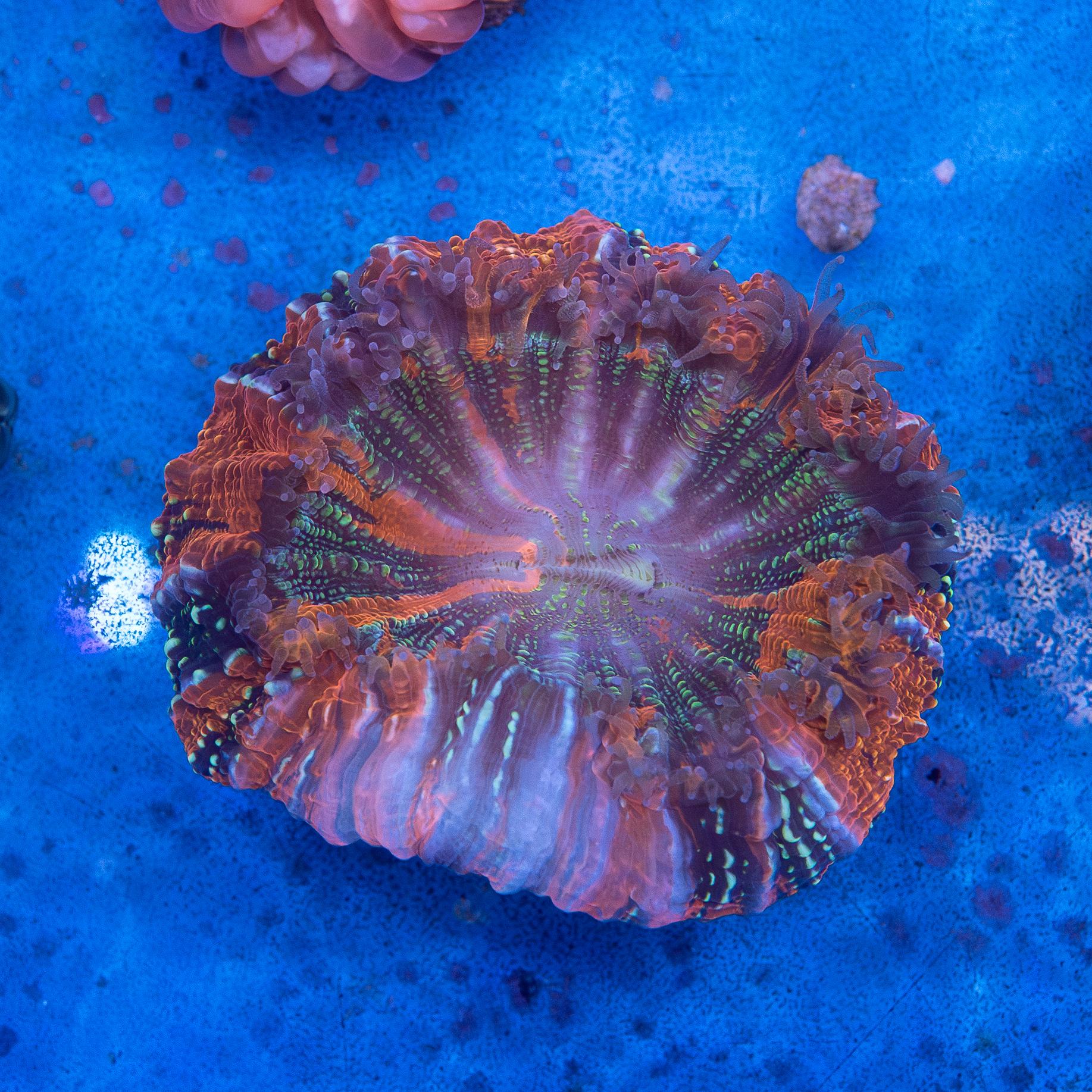
Acanthophyllia Deshayesiana (EA#206)
Acanthophyllia Coral Care Level: Moderate Temperament: Peaceful Colour Form: Red, Green, Orange, Yellow, Blue, Multicolour Diet: Photosynthetic and Carnivorous Reef Compatible: Yes Water Conditions: 24-26°C, dKH 6-10, pH 7.8-8.4, sg 1.023-1.025 Placement: Bottom to Mid-Level Lighting: Moderate to Low Flow: Low to Moderate Overview The Acanthophyllia Coral, also known as the Doughnut Coral or Meat Coral, is a striking large-polyp stony (LPS) coral prized for its vibrant colours and unique, fleshy appearance. Its ridged and often multicoloured surface adds a stunning focal point to any reef aquarium. Found in the waters of the Indo-Pacific, Acanthophyllia corals are solitary species that thrive in soft substrate areas with low flow. Behaviour and Habitat Acanthophyllia Corals are peaceful and can coexist with other non-aggressive corals, making them ideal for community reef tanks. They are primarily nocturnal, extending their feeding tentacles during the night to capture plankton and other small food particles. During the day, they rely on their symbiotic zooxanthellae for energy through photosynthesis. They prefer to be placed on sandy substrates or low on rockwork to prevent damage to their delicate flesh. Tank Requirements Placement: Bottom or low areas of the tank with a sandy substrate. Avoid sharp rocks to prevent tissue damage. Lighting: Moderate to low. Too much light can cause bleaching, so position them in shaded areas if using high-intensity lighting systems. Water Flow: Low to moderate, avoiding direct flow to prevent the coral from retracting its polyps. Diet While Acanthophyllia Corals derive much of their nutrition from photosynthesis, supplemental feeding is essential for optimal health and growth. Feedings can include: Mysis shrimp Brine shrimp Marine plankton Finely chopped seafood LPS coral pellets or frozen foods Target feeding 2-3 times per week is recommended, especially in lower-light setups. Care Tips Maintain stable water parameters to avoid stress or tissue recession. Avoid placing them near aggressive corals to prevent chemical warfare or physical damage. Inspect regularly for tissue damage or receding edges, which can indicate poor conditions or hunger. Use a high-quality protein skimmer to maintain excellent water quality. Final Thoughts The Acanthophyllia Coral is a show-stopping addition to any reef aquarium, offering a combination of vibrant colouration and unique texture. With proper care and attention, it can thrive and become a long-term centrepiece in your marine tank. Its peaceful nature and ability to adapt to various lighting and flow conditions make it a rewarding choice for both novice and experienced reef keepers. If you're looking to enhance your tank further, browse our collection of LPS Corals, SPS Corals, or Soft Corals.
Photos
About This Item
Acanthophyllia Coral
Care Level: Moderate
Temperament: Peaceful
Colour Form: Red, Green, Orange, Yellow, Blue, Multicolour
Diet: Photosynthetic and Carnivorous
Reef Compatible: Yes
Water Conditions: 24-26°C, dKH 6-10, pH 7.8-8.4, sg 1.023-1.025
Placement: Bottom to Mid-Level
Lighting: Moderate to Low
Flow: Low to Moderate
Overview
The Acanthophyllia Coral, also known as the Doughnut Coral or Meat Coral, is a striking large-polyp stony (LPS) coral prized for its vibrant colours and unique, fleshy appearance. Its ridged and often multicoloured surface adds a stunning focal point to any reef aquarium. Found in the waters of the Indo-Pacific, Acanthophyllia corals are solitary species that thrive in soft substrate areas with low flow.
Behaviour and Habitat
Acanthophyllia Corals are peaceful and can coexist with other non-aggressive corals, making them ideal for community reef tanks. They are primarily nocturnal, extending their feeding tentacles during the night to capture plankton and other small food particles. During the day, they rely on their symbiotic zooxanthellae for energy through photosynthesis.
They prefer to be placed on sandy substrates or low on rockwork to prevent damage to their delicate flesh.
Tank Requirements
- Placement: Bottom or low areas of the tank with a sandy substrate. Avoid sharp rocks to prevent tissue damage.
- Lighting: Moderate to low. Too much light can cause bleaching, so position them in shaded areas if using high-intensity lighting systems.
- Water Flow: Low to moderate, avoiding direct flow to prevent the coral from retracting its polyps.
Diet
While Acanthophyllia Corals derive much of their nutrition from photosynthesis, supplemental feeding is essential for optimal health and growth. Feedings can include:
- Mysis shrimp
- Brine shrimp
- Marine plankton
- Finely chopped seafood
- LPS coral pellets or frozen foods
Target feeding 2-3 times per week is recommended, especially in lower-light setups.
Care Tips
- Maintain stable water parameters to avoid stress or tissue recession.
- Avoid placing them near aggressive corals to prevent chemical warfare or physical damage.
- Inspect regularly for tissue damage or receding edges, which can indicate poor conditions or hunger.
- Use a high-quality protein skimmer to maintain excellent water quality.
Final Thoughts
The Acanthophyllia Coral is a show-stopping addition to any reef aquarium, offering a combination of vibrant colouration and unique texture. With proper care and attention, it can thrive and become a long-term centrepiece in your marine tank. Its peaceful nature and ability to adapt to various lighting and flow conditions make it a rewarding choice for both novice and experienced reef keepers.
If you're looking to enhance your tank further, browse our collection of LPS Corals, SPS Corals, or Soft Corals.
Available Options
RegularSKU: EA#206
$320.00
Out of stock
Want to See This in Person?
Visit our store in Eastwood to see this item and many others. Our team can answer all your questions.