Fish
Leopard Wrasse
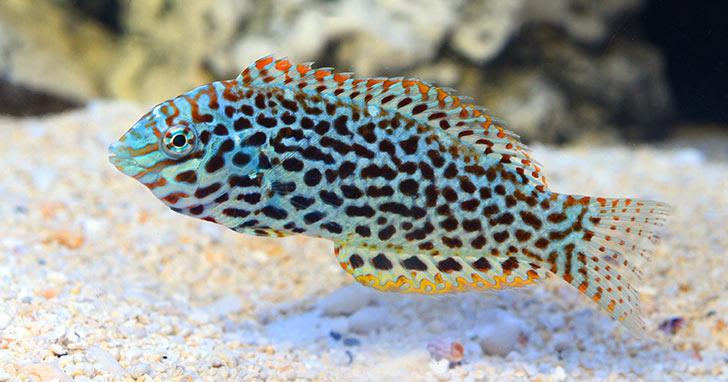
Leopard Wrasse (Macropharyngodon meleagris) Care Level: Advanced Temperament: Peaceful Colour Form: Green, Blue, Red Spots Diet: Carnivore Reef Compatible: Yes Water Conditions: 23-27°C, dKH 6-12, pH 7.8-8.4, sg 1.020-1.025 Max Size: 15 cm Family: Labridae Minimum Tank Size: 200 litres Overview The Leopard Wrasse (Macropharyngodon meleagris), also known as the Black-Spotted Wrasse or Guinea Fowl Wrasse, is admired for its intricate patterning of spots and vibrant colours, which vary slightly between males and females. Native to coral reefs of the Indo-Pacific, this species spends much of its time foraging along the substrate and rockwork, picking at small invertebrates. Its stunning colours and dynamic swimming patterns make it a prized addition, though it can be challenging to care for due to its specialized dietary and environmental needs. Behaviour and Habitat This peaceful wrasse spends its day hunting for small crustaceans in the sand and rock crevices. At night, or when feeling threatened, it buries itself in the substrate, making a sandy bed an essential feature for a healthy habitat. Leopard Wrasses prefer established, stable aquariums with plenty of live rock and substrate to hide in and forage, as they rely heavily on natural food sources. They’re generally peaceful and thrive in a peaceful community tank environment. Tank Requirements The Leopard Wrasse requires a tank of at least 200 litres with a well-established sand bed and plenty of live rock for grazing and hiding. This fish is sensitive to water quality, so a stable, well-maintained environment is essential. A secure lid is also recommended since they may jump when startled. Diet This wrasse has a specialized diet, primarily feeding on small crustaceans, copepods, amphipods, and other tiny invertebrates found in a mature reef tank. Supplemental feeding with frozen mysis shrimp, brine shrimp, and finely chopped seafood is essential to meet its nutritional needs, but newly introduced Leopard Wrasses may struggle to adapt to prepared foods, making them better suited to a well-established aquarium with an abundant natural food source. Care Tips Provide a soft sand bed where it can bury itself at night and when feeling threatened. Maintain high water quality with stable parameters. Ideal for advanced aquarists due to dietary and environmental requirements. Acclimate slowly, as this species can be sensitive to changes in water conditions. Compatibility Leopard Wrasses are best kept with other peaceful or moderately peaceful species. They’re compatible with various reef-safe fish like clownfish, tangs, and other peaceful wrasses but may not fare well with more aggressive species. Their peaceful nature and interest in small invertebrates make them reef-compatible, though care should be taken if housing them with very small crustaceans. Final Thoughts The Leopard Wrasse is a stunning and active species, bringing unique colour and beauty to established marine tanks. However, due to its specific care needs, including a mature tank with a robust pod population, it’s best suited for experienced aquarists who can provide the proper conditions. Its peaceful temperament and exceptional colour pattern make it a rewarding but challenging addition to a saltwater aquarium.
Photos
About This Item
Leopard Wrasse (Macropharyngodon meleagris)
- Care Level: Advanced
- Temperament: Peaceful
- Colour Form: Green, Blue, Red Spots
- Diet: Carnivore
- Reef Compatible: Yes
- Water Conditions: 23-27°C, dKH 6-12, pH 7.8-8.4, sg 1.020-1.025
- Max Size: 15 cm
- Family: Labridae
- Minimum Tank Size: 200 litres
Overview
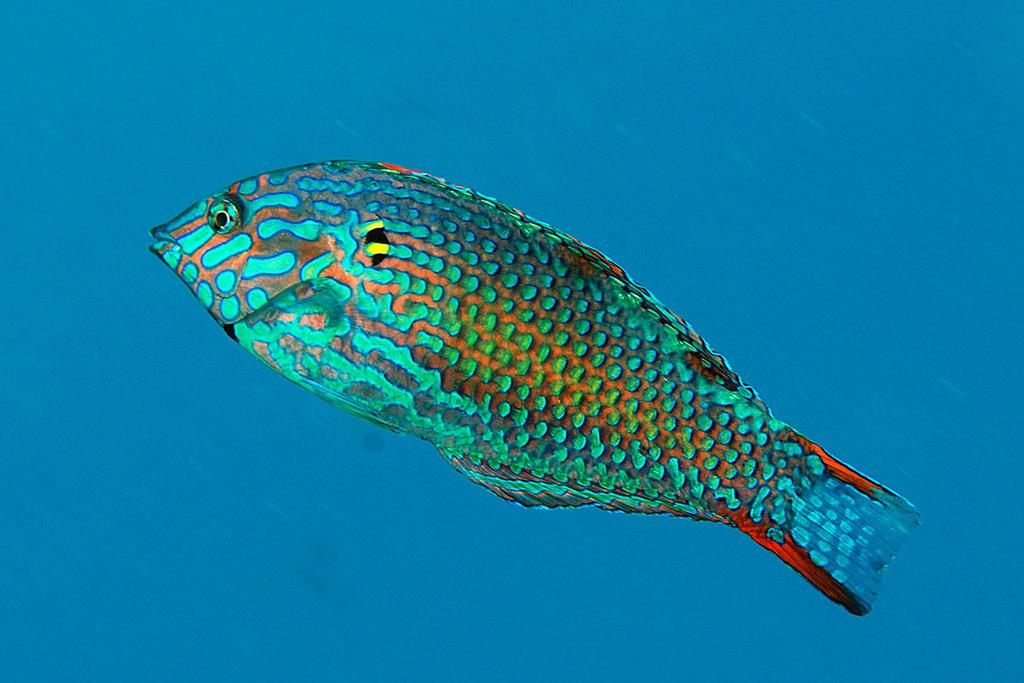
The Leopard Wrasse (Macropharyngodon meleagris), also known as the Black-Spotted Wrasse or Guinea Fowl Wrasse, is admired for its intricate patterning of spots and vibrant colours, which vary slightly between males and females. Native to coral reefs of the Indo-Pacific, this species spends much of its time foraging along the substrate and rockwork, picking at small invertebrates. Its stunning colours and dynamic swimming patterns make it a prized addition, though it can be challenging to care for due to its specialized dietary and environmental needs.
Behaviour and Habitat
This peaceful wrasse spends its day hunting for small crustaceans in the sand and rock crevices. At night, or when feeling threatened, it buries itself in the substrate, making a sandy bed an essential feature for a healthy habitat. Leopard Wrasses prefer established, stable aquariums with plenty of live rock and substrate to hide in and forage, as they rely heavily on natural food sources. They’re generally peaceful and thrive in a peaceful community tank environment.
Tank Requirements
The Leopard Wrasse requires a tank of at least 200 litres with a well-established sand bed and plenty of live rock for grazing and hiding. This fish is sensitive to water quality, so a stable, well-maintained environment is essential. A secure lid is also recommended since they may jump when startled.
Diet
This wrasse has a specialized diet, primarily feeding on small crustaceans, copepods, amphipods, and other tiny invertebrates found in a mature reef tank. Supplemental feeding with frozen mysis shrimp, brine shrimp, and finely chopped seafood is essential to meet its nutritional needs, but newly introduced Leopard Wrasses may struggle to adapt to prepared foods, making them better suited to a well-established aquarium with an abundant natural food source.
Care Tips
- Provide a soft sand bed where it can bury itself at night and when feeling threatened.
- Maintain high water quality with stable parameters.
- Ideal for advanced aquarists due to dietary and environmental requirements.
- Acclimate slowly, as this species can be sensitive to changes in water conditions.
Compatibility
Leopard Wrasses are best kept with other peaceful or moderately peaceful species. They’re compatible with various reef-safe fish like clownfish, tangs, and other peaceful wrasses but may not fare well with more aggressive species. Their peaceful nature and interest in small invertebrates make them reef-compatible, though care should be taken if housing them with very small crustaceans.
Final Thoughts
The Leopard Wrasse is a stunning and active species, bringing unique colour and beauty to established marine tanks. However, due to its specific care needs, including a mature tank with a robust pod population, it’s best suited for experienced aquarists who can provide the proper conditions. Its peaceful temperament and exceptional colour pattern make it a rewarding but challenging addition to a saltwater aquarium.
Available Options
FemaleSKU: 286595N
$65.00
Out of stock
MaleSKU: W246426
$65.00
Out of stock
Want to See This in Person?
Visit our store in Eastwood to see this item and many others. Our team can answer all your questions.