Fish
Harlequin Tusk
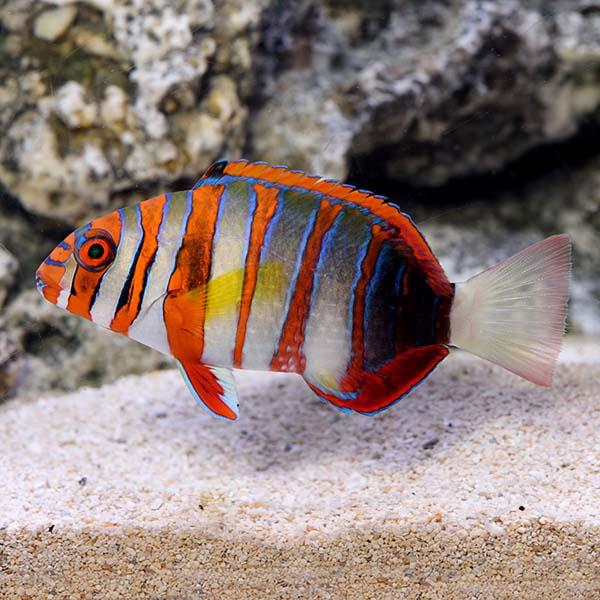
Scientific Name: Choerodon fasciatus (Harlequin Tusk) Care Level: Moderate Temperament: Semi-aggressive Reef Compatible: With Caution Diet: Carnivore Max. Size: 25 cm Family: Labridae Minimum Tank Size: 475 litres Overview The Harlequin Tusk is a strikingly beautiful species found in the reefs of the Indian Ocean and Australia. Its orange stripes, vivid blue margins, and characteristic blue "tusks" make it a standout in fish-only with live rock (FOWLR) setups. The Indian Ocean variant has orange stripes with white margins, while the Australian form has brighter blue margins that start from the pectoral fin. As the fish matures, its shy nature gives way to a bold and confident personality. The Harlequin Tusk requires a large aquarium of at least 475 litres, with ample live rock for hiding spots. It does well with other semi-aggressive, active tankmates like Angels, Tangs, and smaller Triggers. While the Tusk won't harm corals, it will prey on small invertebrates such as snails and crabs, making it unsuitable for a reef tank with such livestock. Diet The Harlequin Tusk's diet should include vitamin-enriched frozen mysis shrimp, frozen brine shrimp, and other meaty foods. High-quality marine flake and pellet foods are also suitable additions.
Photos
About This Item
Scientific Name: Choerodon fasciatus (Harlequin Tusk)
Care Level: Moderate
Temperament: Semi-aggressive
Reef Compatible: With Caution
Diet: Carnivore
Max. Size: 25 cm
Family: Labridae
Minimum Tank Size: 475 litres
Overview
The Harlequin Tusk is a strikingly beautiful species found in the reefs of the Indian Ocean and Australia. Its orange stripes, vivid blue margins, and characteristic blue "tusks" make it a standout in fish-only with live rock (FOWLR) setups. The Indian Ocean variant has orange stripes with white margins, while the Australian form has brighter blue margins that start from the pectoral fin. As the fish matures, its shy nature gives way to a bold and confident personality.
The Harlequin Tusk requires a large aquarium of at least 475 litres, with ample live rock for hiding spots. It does well with other semi-aggressive, active tankmates like Angels, Tangs, and smaller Triggers. While the Tusk won't harm corals, it will prey on small invertebrates such as snails and crabs, making it unsuitable for a reef tank with such livestock.
Diet
The Harlequin Tusk's diet should include vitamin-enriched frozen mysis shrimp, frozen brine shrimp, and other meaty foods. High-quality marine flake and pellet foods are also suitable additions.
Available Options
JuvenileSKU: M674314
$150.00
Out of stock
Want to See This in Person?
Visit our store in Eastwood to see this item and many others. Our team can answer all your questions.