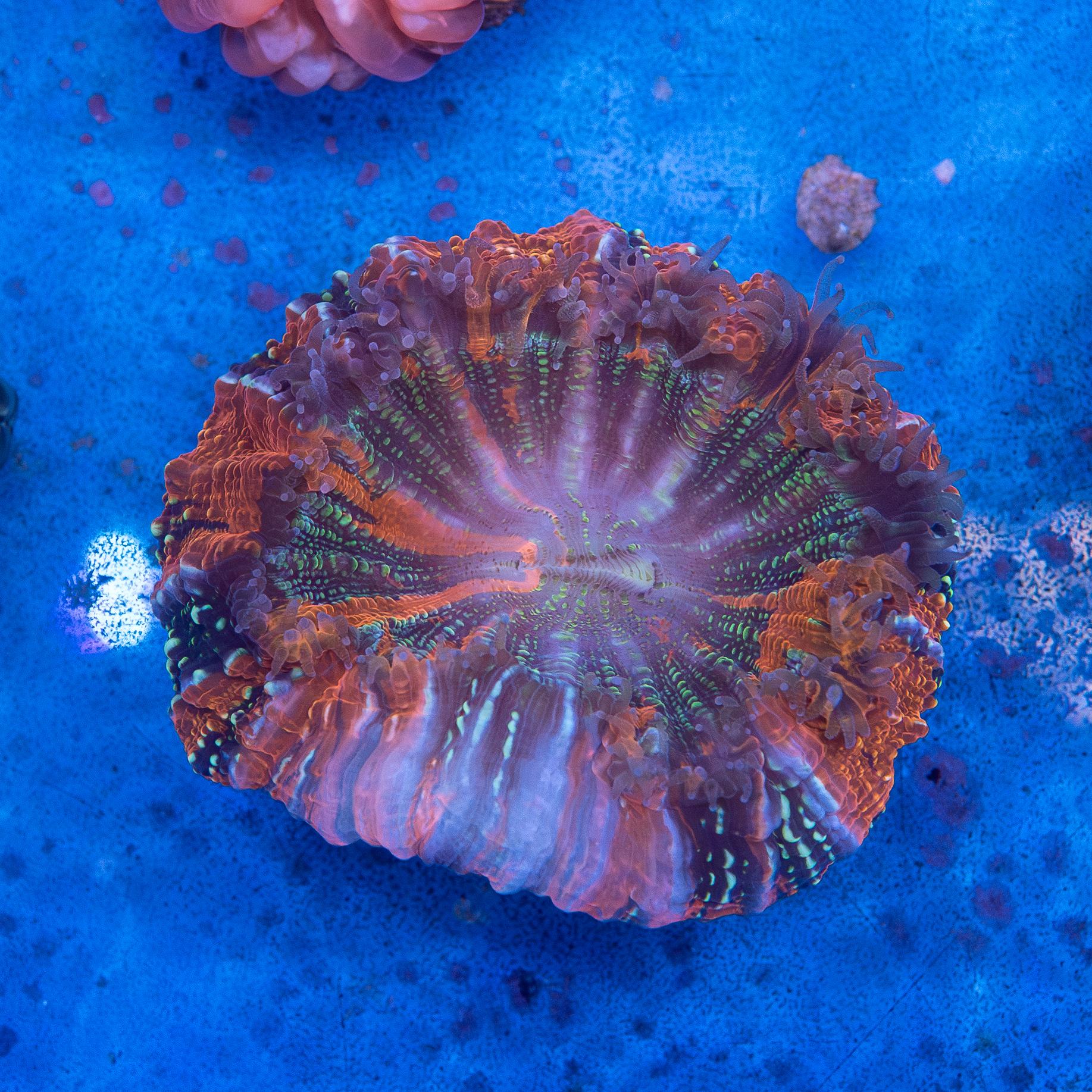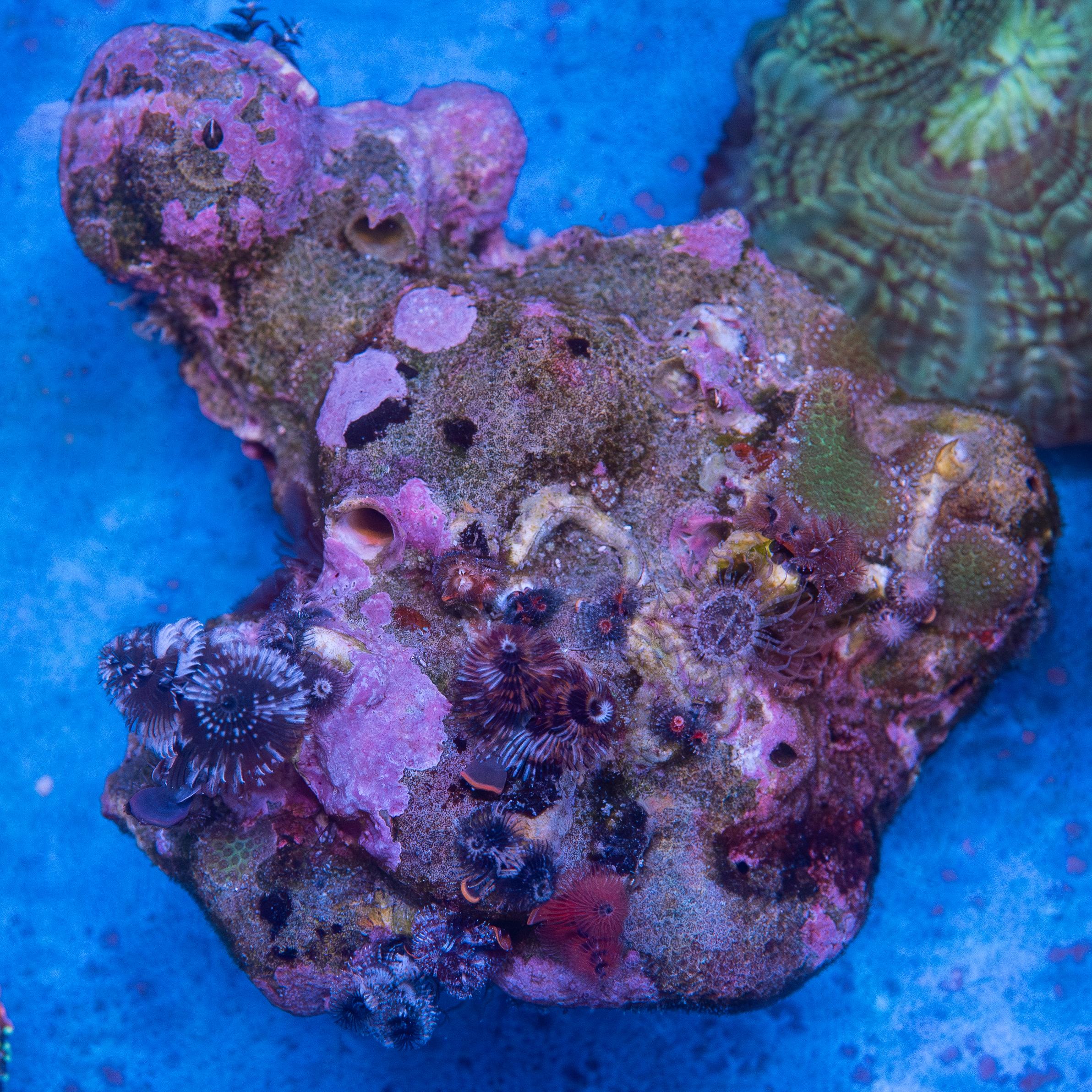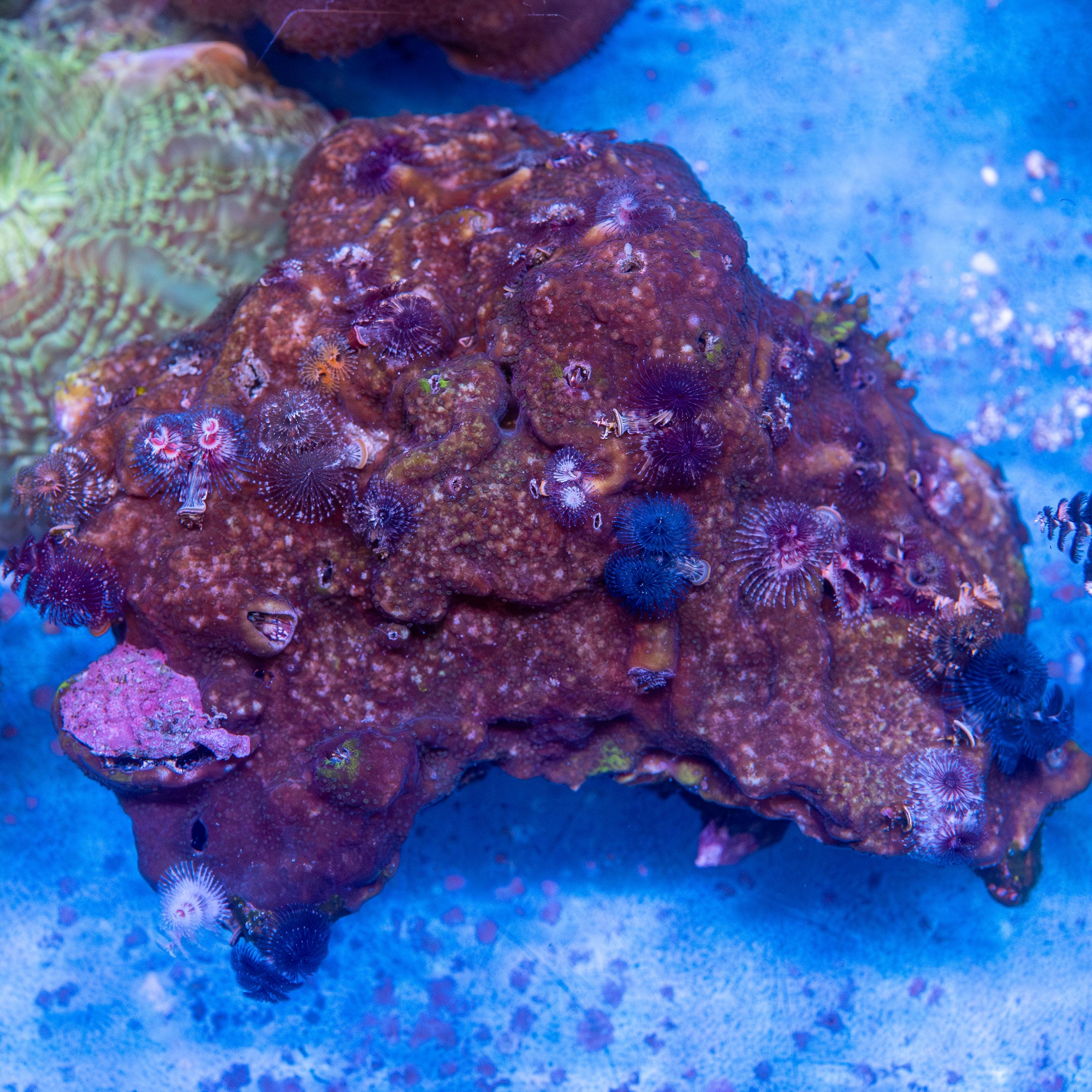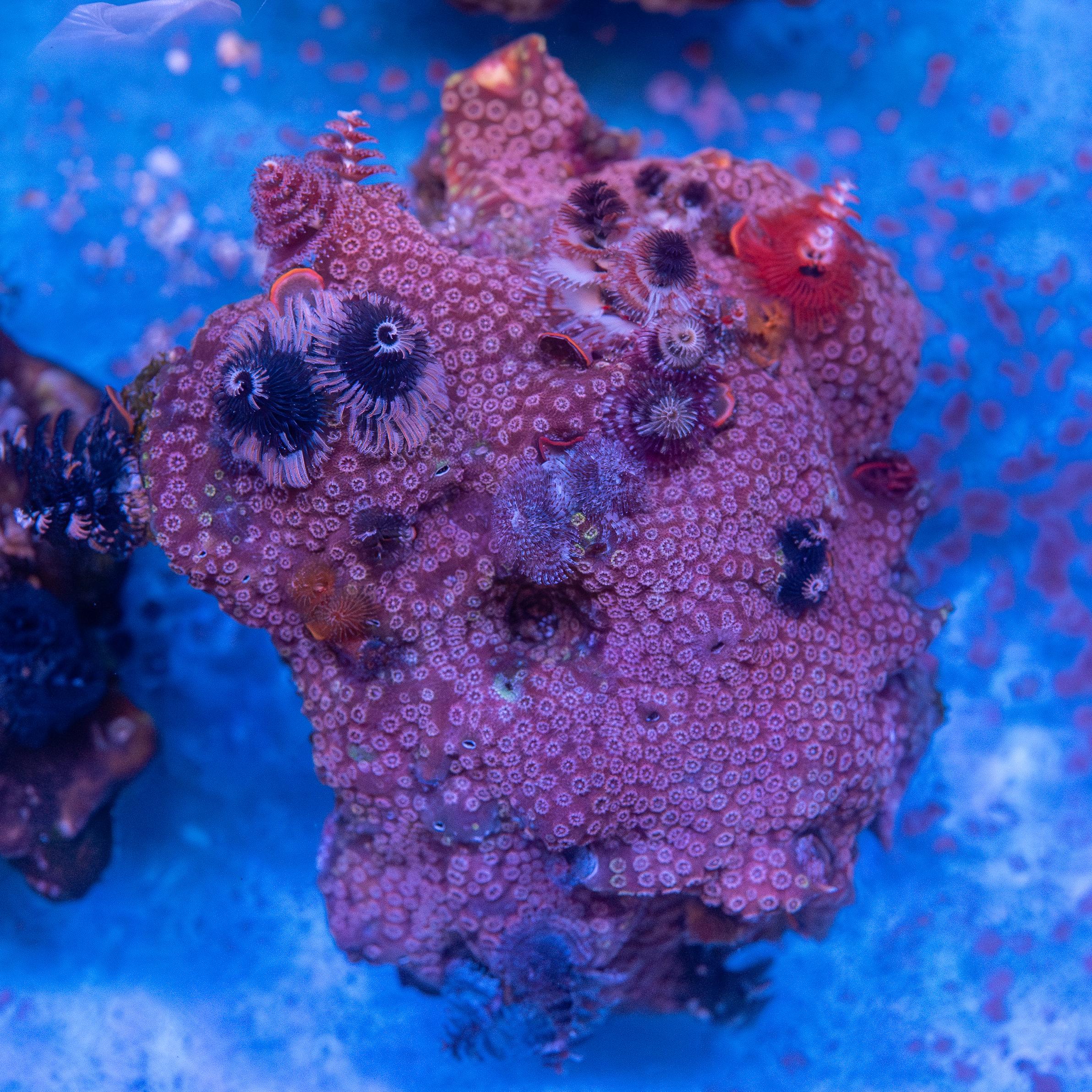
LPS
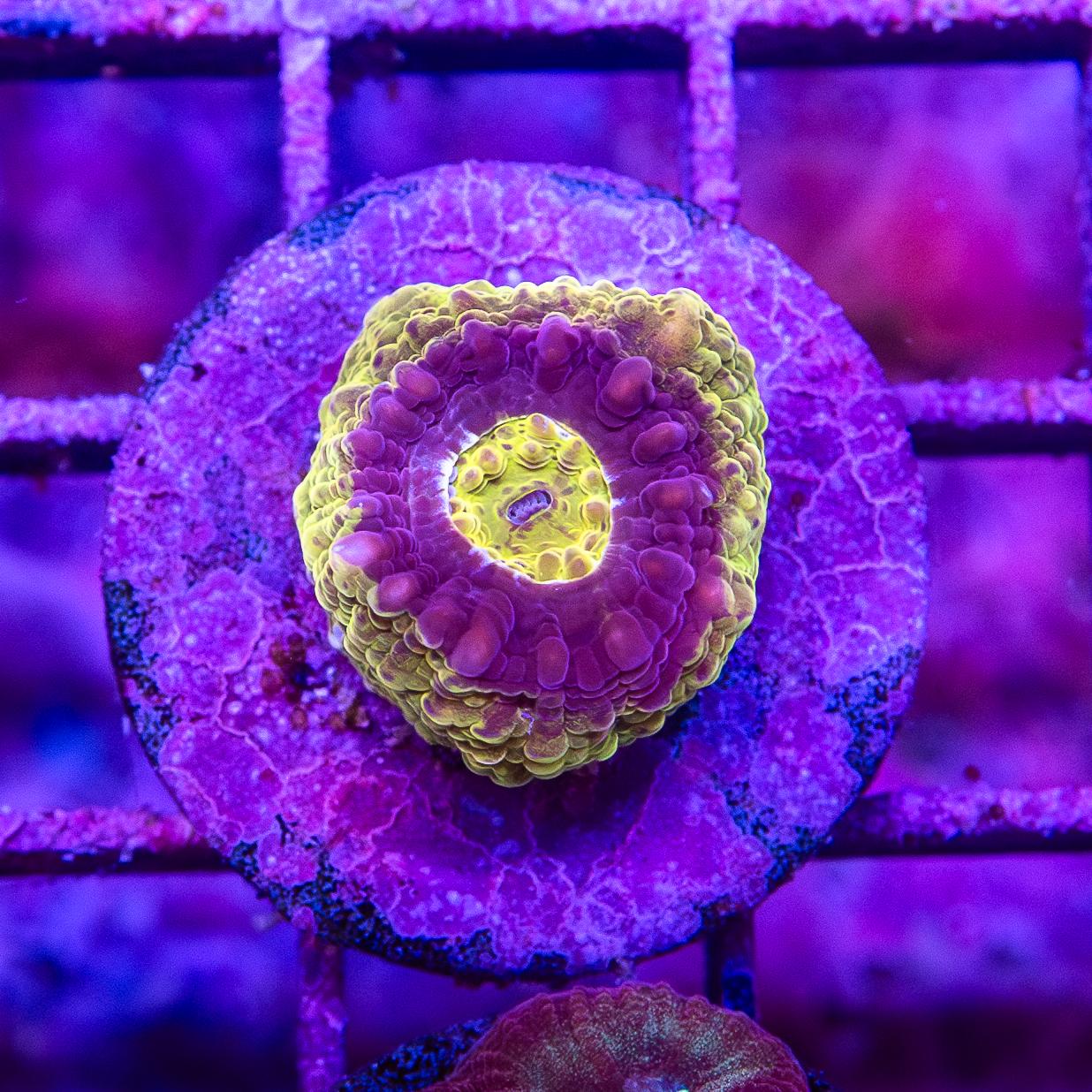
Frag - Chalice
Care Level: Moderate Temperament: Peaceful to Semi-aggressive Colour Form: Wide variety including Red, Pink, Blue, Green, Orange, and Multicoloured Diet: Photosynthetic and Carnivorous Reef Compatible: Yes Water Conditions: 24-27°C, dKH 6-10, pH 7.8-8.4, sg 1.023-1.025 Max Size: Variable (commonly 15-30 cm across) Family: Pectiniidae or Merulinidae (depending on species) Overview Chalice Coral is a name used to describe a diverse group of large polyp stony (LPS) corals from genera such as Echinophyllia, Oxypora, and Mycedium. Renowned for their vivid colours and unique growth patterns, Chalice Corals often display a combination of vibrant hues with intricate patterns. They are native to the Indo-Pacific, typically found on reefs and slopes, where they thrive under low to moderate light and flow conditions. Behaviour and Habitat Chalice Corals are typically peaceful but can exhibit semi-aggressive behaviour through sweeper tentacles or chemical warfare. They extend feeding tentacles at night to capture food, making them most active after lights out. In the aquarium, they prefer shaded or low-light areas, mimicking their natural environment. Tank Requirements Lighting: Low to moderate lighting, such as LED or T5 systems, to enhance colours and prevent bleaching. Water Flow: Low to moderate water movement to avoid tissue damage while promoting nutrient exchange. Placement: Place on flat surfaces or inclined rockwork, ensuring no neighbouring corals are within reach of its sweeper tentacles. Diet Although Chalice Corals rely on photosynthetic zooxanthellae, they benefit greatly from supplemental feeding. Food Types: Mysis shrimp Powdered or liquid coral food Finely chopped seafood or planktonic foods Feeding Frequency: Feed 1-2 times per week using target feeding methods during its active nighttime period. Reef Compatibility Chalice Corals are generally reef-safe but can harm nearby corals with their sweeper tentacles, especially at night. Give them ample space to prevent aggressive interactions. Compatibility Chalice Corals pair well with peaceful tank mates such as: Gobies Blennies Clownfish Reef-safe shrimp and snails Avoid housing them with aggressive or coral-picking fish like large angelfish or butterflyfish. Care Tips Regularly monitor calcium (380-450 ppm), magnesium (1250-1350 ppm), and alkalinity (6-10 dKH) for optimal growth. Avoid strong lighting to prevent bleaching; shaded areas often work best. Keep away from corals with aggressive sweepers to avoid damage. Maintain stable water parameters, as Chalice Corals are sensitive to fluctuations. Final Thoughts Chalice Corals are a favourite among aquarists for their striking colours, unique shapes, and manageable care requirements. With proper lighting, feeding, and placement, they thrive in reef aquariums and become a vibrant focal point. Their diverse colouration and growth forms make them a stunning addition to any coral collection. If you're looking to enhance your tank further, browse our collection of LPS Corals, SPS Corals, or Soft Corals.
Photos
About This Item
- Care Level: Moderate
- Temperament: Peaceful to Semi-aggressive
- Colour Form: Wide variety including Red, Pink, Blue, Green, Orange, and Multicoloured
- Diet: Photosynthetic and Carnivorous
- Reef Compatible: Yes
- Water Conditions: 24-27°C, dKH 6-10, pH 7.8-8.4, sg 1.023-1.025
- Max Size: Variable (commonly 15-30 cm across)
- Family: Pectiniidae or Merulinidae (depending on species)
Overview
Chalice Coral is a name used to describe a diverse group of large polyp stony (LPS) corals from genera such as Echinophyllia, Oxypora, and Mycedium. Renowned for their vivid colours and unique growth patterns, Chalice Corals often display a combination of vibrant hues with intricate patterns. They are native to the Indo-Pacific, typically found on reefs and slopes, where they thrive under low to moderate light and flow conditions.
Behaviour and Habitat
Chalice Corals are typically peaceful but can exhibit semi-aggressive behaviour through sweeper tentacles or chemical warfare. They extend feeding tentacles at night to capture food, making them most active after lights out. In the aquarium, they prefer shaded or low-light areas, mimicking their natural environment.
Tank Requirements
- Lighting: Low to moderate lighting, such as LED or T5 systems, to enhance colours and prevent bleaching.
- Water Flow: Low to moderate water movement to avoid tissue damage while promoting nutrient exchange.
- Placement: Place on flat surfaces or inclined rockwork, ensuring no neighbouring corals are within reach of its sweeper tentacles.
Diet
Although Chalice Corals rely on photosynthetic zooxanthellae, they benefit greatly from supplemental feeding.
- Food Types:
- Mysis shrimp
- Powdered or liquid coral food
- Finely chopped seafood or planktonic foods
- Feeding Frequency: Feed 1-2 times per week using target feeding methods during its active nighttime period.
Reef Compatibility
Chalice Corals are generally reef-safe but can harm nearby corals with their sweeper tentacles, especially at night. Give them ample space to prevent aggressive interactions.
Compatibility
Chalice Corals pair well with peaceful tank mates such as:
Avoid housing them with aggressive or coral-picking fish like large angelfish or butterflyfish.
Care Tips
- Regularly monitor calcium (380-450 ppm), magnesium (1250-1350 ppm), and alkalinity (6-10 dKH) for optimal growth.
- Avoid strong lighting to prevent bleaching; shaded areas often work best.
- Keep away from corals with aggressive sweepers to avoid damage.
- Maintain stable water parameters, as Chalice Corals are sensitive to fluctuations.
Final Thoughts
Chalice Corals are a favourite among aquarists for their striking colours, unique shapes, and manageable care requirements. With proper lighting, feeding, and placement, they thrive in reef aquariums and become a vibrant focal point. Their diverse colouration and growth forms make them a stunning addition to any coral collection.
If you're looking to enhance your tank further, browse our collection of LPS Corals, SPS Corals, or Soft Corals.
Available Options
RegularSKU: 721117Y
$55.00
Out of stock
Want to See This in Person?
Visit our store in Eastwood to see this item and many others. Our team can answer all your questions.