Fish
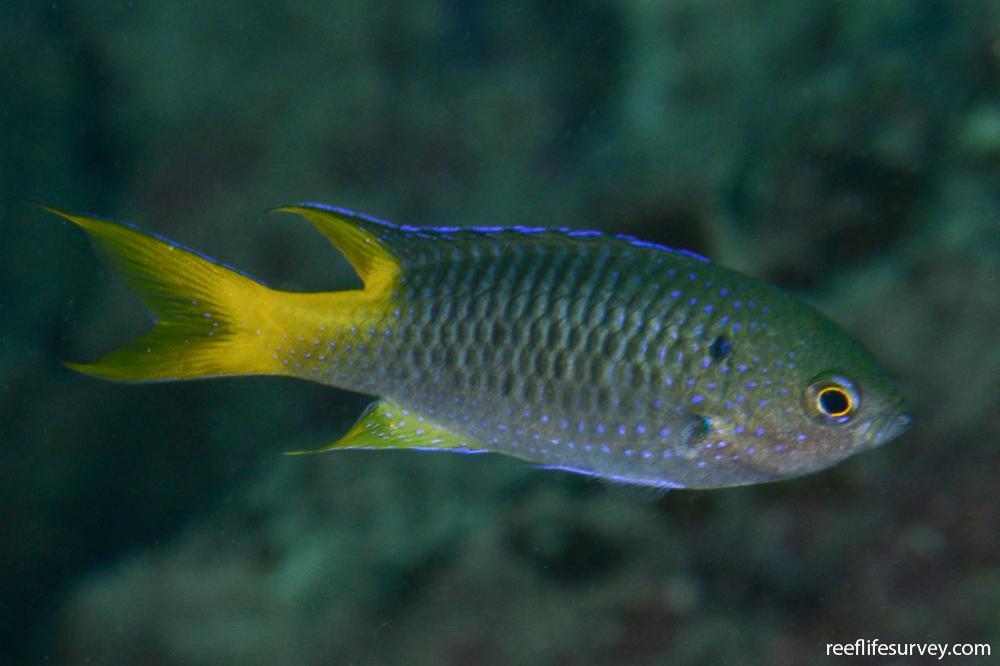
Coral Damsel
Scientific Name: Neopomacentrus nemurus (Coral Damsel) Care Level: Easy Temperament: Aggressive Colour Form: Blue, Grey, Yellow Diet: Omnivore Reef Compatible: Yes Water Conditions: sg 1.020-1.025, 23-26°C, dKH 6-12, pH 7.8-8.4 Max. Size: 8 cm Family: Pomacanthidae Minimum Tank Size: 200 litres Overview The Coral Damsel, also known as the Yellow-tipped Damsel, is found in regions across the western-central Pacific, including Indonesia, Philippines, Papua New Guinea, and Australia. Due to its wide distribution, this species exhibits variations in body colour, ranging from light to dark blue-grey, often featuring a prominent yellow caudal fin. A minimum tank size of 200 litres is necessary, as this species can become territorial and aggressive if not given enough space. Multiple specimens can be kept together, but they should be introduced simultaneously to reduce aggression. In the wild, Coral Damsels are omnivores, feeding on small crustaceans, zooplankton, and algae. In captivity, their diet should include a variety of flaked foods, as well as small crustaceans and other meaty items.
Photos
About This Item
Scientific Name: Neopomacentrus nemurus (Coral Damsel)
Care Level: Easy
Temperament: Aggressive
Colour Form: Blue, Grey, Yellow
Diet: Omnivore
Reef Compatible: Yes
Water Conditions: sg 1.020-1.025, 23-26°C, dKH 6-12, pH 7.8-8.4
Max. Size: 8 cm
Family: Pomacanthidae
Minimum Tank Size: 200 litres
Overview
The Coral Damsel, also known as the Yellow-tipped Damsel, is found in regions across the western-central Pacific, including Indonesia, Philippines, Papua New Guinea, and Australia. Due to its wide distribution, this species exhibits variations in body colour, ranging from light to dark blue-grey, often featuring a prominent yellow caudal fin.
A minimum tank size of 200 litres is necessary, as this species can become territorial and aggressive if not given enough space. Multiple specimens can be kept together, but they should be introduced simultaneously to reduce aggression.
In the wild, Coral Damsels are omnivores, feeding on small crustaceans, zooplankton, and algae. In captivity, their diet should include a variety of flaked foods, as well as small crustaceans and other meaty items.
Available Options
RegularSKU: J034836
$18.00
Out of stock
Want to See This in Person?
Visit our store in Eastwood to see this item and many others. Our team can answer all your questions.