Fish
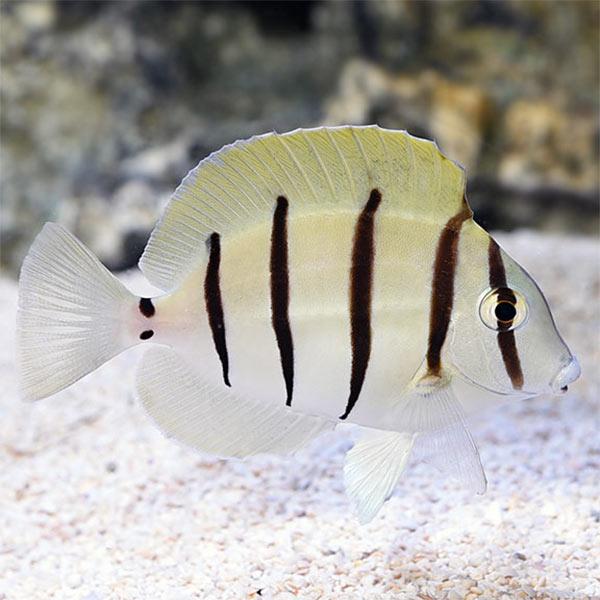
Convict Tang
Scientific Name: Acanthurus triostegus (Convict Tang) Care Level: Moderate Temperament: Semi-aggressive Color Form: White Diet: Herbivore Reef Compatible: Yes Water Conditions: 22-26°C, dKH 6-12, pH 7.8-8.4, sg 1.020-1.025 Max. Size: 20 cm Family: Acanthuridae Minimum Tank Size: 450 litres Overview The Convict Tang, or Convict Surgeonfish, features a striking white to silver body with six bold vertical black bars, making it a visually stunning addition to any reef or fish-only aquarium. The peduncle spines near its tail are relatively small compared to other tangs. A 450-litre or larger tank is required to accommodate its active swimming behaviour. It is best to avoid housing it with other tang species, as they may harass it. However, multiple Convict Tangs can coexist peacefully if introduced at the same time. Distinguishing between male and female Convict Tangs is difficult, and breeding in captivity is rare, as their fry remain in a planktonic stage for months, making them vulnerable to filtration systems. Convict Tangs should be offered plenty of marine-based seaweed and algae to support their immune system, reduce aggression, and improve overall health. Dried seaweed tied to a rock or a veggie clip, offered at least three times a week, is recommended. Ideal products include Sea Veggies, Seaweed Salad, and Ocean Nutrition.
Photos
About This Item
Scientific Name: Acanthurus triostegus (Convict Tang)
Care Level: Moderate
Temperament: Semi-aggressive
Color Form: White
Diet: Herbivore
Reef Compatible: Yes
Water Conditions: 22-26°C, dKH 6-12, pH 7.8-8.4, sg 1.020-1.025
Max. Size: 20 cm
Family: Acanthuridae
Minimum Tank Size: 450 litres
Overview
The Convict Tang, or Convict Surgeonfish, features a striking white to silver body with six bold vertical black bars, making it a visually stunning addition to any reef or fish-only aquarium. The peduncle spines near its tail are relatively small compared to other tangs.
A 450-litre or larger tank is required to accommodate its active swimming behaviour. It is best to avoid housing it with other tang species, as they may harass it. However, multiple Convict Tangs can coexist peacefully if introduced at the same time.
Distinguishing between male and female Convict Tangs is difficult, and breeding in captivity is rare, as their fry remain in a planktonic stage for months, making them vulnerable to filtration systems.
Convict Tangs should be offered plenty of marine-based seaweed and algae to support their immune system, reduce aggression, and improve overall health. Dried seaweed tied to a rock or a veggie clip, offered at least three times a week, is recommended. Ideal products include Sea Veggies, Seaweed Salad, and Ocean Nutrition.
Available Options
RegularSKU: J569867
$110.00
Out of stock
Want to See This in Person?
Visit our store in Eastwood to see this item and many others. Our team can answer all your questions.