IN STOCKFish
Bristletooth Tang
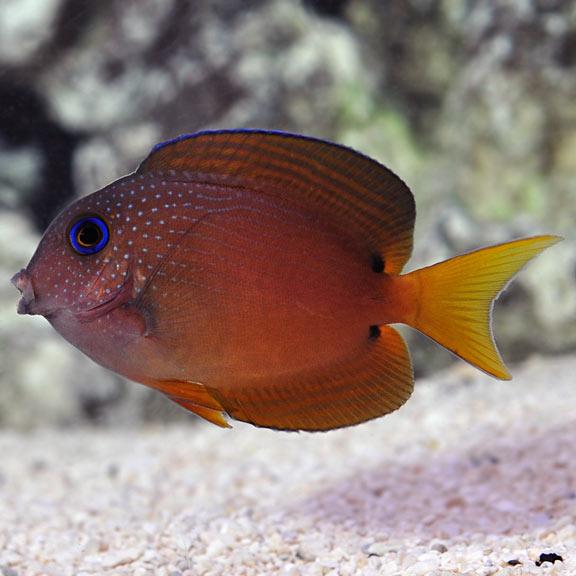
Scientific Name: Ctenochaetus binotatus (Two Spot Bristletooth Tang) Care Level: Moderate Temperament: Semi-aggressive Colour Form: Blue, Tan Diet: Herbivore Reef Compatible: Yes Water Conditions: sg 1.020-1.025, 22-26°C, dKH 6-12, pH 7.8-8.4 Max. Size: 20 cm Family: Acanthuridae Minimum Tank Size: 265 litres Overview The Two Spot Bristletooth Tang is a visually striking fish with its orange-brown body accented by blue lines and blue spots on the head. It features two distinctive black spots at the base of its dorsal and anal fins. This colourful tang makes a beautiful addition to reef aquariums. A tank of at least 265 litres is required to give this tang ample swimming space. While it can be aggressive towards other Tangs, it generally gets along well with other fish species. To maintain its health and reduce aggression, it is crucial to offer a diet rich in marine-based seaweed and algae. Feed dried seaweed tied to a rock or use a veggie clip at least 3 times per week. Sea Veggies, Seaweed Salad, and Ocean Nutrition are excellent choices and are simple to use. Providing these will help ensure the tang’s well-being and reduce its aggression towards tank mates.
Photos
About This Item
Scientific Name: Ctenochaetus binotatus (Two Spot Bristletooth Tang)
Care Level: Moderate
Temperament: Semi-aggressive
Colour Form: Blue, Tan
Diet: Herbivore
Reef Compatible: Yes
Water Conditions: sg 1.020-1.025, 22-26°C, dKH 6-12, pH 7.8-8.4
Max. Size: 20 cm
Family: Acanthuridae
Minimum Tank Size: 265 litres
Overview
The Two Spot Bristletooth Tang is a visually striking fish with its orange-brown body accented by blue lines and blue spots on the head. It features two distinctive black spots at the base of its dorsal and anal fins. This colourful tang makes a beautiful addition to reef aquariums.
A tank of at least 265 litres is required to give this tang ample swimming space. While it can be aggressive towards other Tangs, it generally gets along well with other fish species. To maintain its health and reduce aggression, it is crucial to offer a diet rich in marine-based seaweed and algae.
Feed dried seaweed tied to a rock or use a veggie clip at least 3 times per week. Sea Veggies, Seaweed Salad, and Ocean Nutrition are excellent choices and are simple to use. Providing these will help ensure the tang’s well-being and reduce its aggression towards tank mates.
Available Options
RegularSKU: S420457
$75.00
2 in stock
Want to See This in Person?
Visit our store in Eastwood to see this item and many others. Our team can answer all your questions.