Fish
Blue Flasher Wrasse
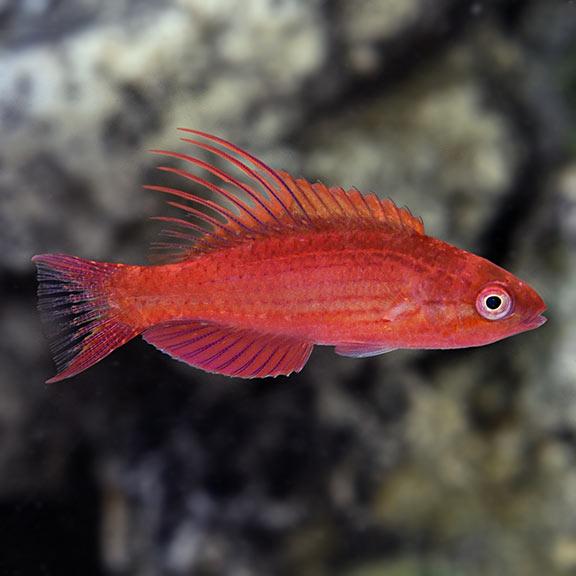
Blue Flasher Wrasse (Paracheilinus cyaneus) Common Names: Peacock Flasher Wrasse Max Size: 3 inches (7.6 cm) Family: Labridae Minimum Tank Size: 55 gallons (200 litres) Reef Compatible: Yes Care Level: Easy Temperament: Peaceful Diet: Carnivore (zooplankton) Water Conditions: sg 1.020-1.025, 72-78°F, dKH 6-12, pH 7.8-8.4 Appearance The Blue Flasher Wrasse showcases vibrant red and blue coloration, with males being particularly dazzling. Males have elongated dorsal fin filaments and a pair of tail filaments, giving them a stunning visual display, especially when displaying to females. Females, on the other hand, exhibit more subdued colours. Habitat In the wild, this wrasse inhabits shallow reef crests and sheltered reefs at depths ranging from 20 to 114 feet. In aquariums, it prefers to swim in the open water column but benefits from rockwork with plenty of caves and crevices for retreating when threatened. They are best kept in small groups, with females introduced before males to avoid aggression. A tight-fitting canopy is essential to prevent jumping. Diet The Blue Flasher Wrasse feeds on zooplankton and should be fed two to three times daily to maintain body weight. A diet of protein-rich foods like vitamin-enriched frozen mysis and brine shrimp, along with marine flake or pellet food, is ideal. Aquarium Care Due to their frequent feeding, a protein skimmer and live sand are recommended to manage nutrient levels and prevent organic build-up. These features help maintain water quality in a reef tank, ensuring long-term success with the species.
Photos
About This Item
Blue Flasher Wrasse (Paracheilinus cyaneus)
Common Names: Peacock Flasher Wrasse
Max Size: 3 inches (7.6 cm)
Family: Labridae
Minimum Tank Size: 55 gallons (200 litres)
Reef Compatible: Yes
Care Level: Easy
Temperament: Peaceful
Diet: Carnivore (zooplankton)
Water Conditions: sg 1.020-1.025, 72-78°F, dKH 6-12, pH 7.8-8.4
Appearance
The Blue Flasher Wrasse showcases vibrant red and blue coloration, with males being particularly dazzling. Males have elongated dorsal fin filaments and a pair of tail filaments, giving them a stunning visual display, especially when displaying to females. Females, on the other hand, exhibit more subdued colours.
Habitat
In the wild, this wrasse inhabits shallow reef crests and sheltered reefs at depths ranging from 20 to 114 feet. In aquariums, it prefers to swim in the open water column but benefits from rockwork with plenty of caves and crevices for retreating when threatened.
They are best kept in small groups, with females introduced before males to avoid aggression. A tight-fitting canopy is essential to prevent jumping.
Diet
The Blue Flasher Wrasse feeds on zooplankton and should be fed two to three times daily to maintain body weight. A diet of protein-rich foods like vitamin-enriched frozen mysis and brine shrimp, along with marine flake or pellet food, is ideal.
Aquarium Care
Due to their frequent feeding, a protein skimmer and live sand are recommended to manage nutrient levels and prevent organic build-up. These features help maintain water quality in a reef tank, ensuring long-term success with the species.
Available Options
RegularSKU: E700816
$95.00
Out of stock
Want to See This in Person?
Visit our store in Eastwood to see this item and many others. Our team can answer all your questions.