Fish
Bimaculatus Anthias
Bimaculatus Anthias (Pseudanthias bimaculatus) Care Level: Moderate Temperament: Peaceful Color Form: Pink, Red, Yellow Diet: Carnivore Reef Compatible: Yes Water Conditions: 24-27°C, dKH 6-12, pH 7.8-8.4, sg 1.020-1.025 Max Size: 13 cm Family: Serranidae Minimum Tank Size: 300 liters Overview The Bimaculatus Anthias (Pseudanthias bimaculatus), also known as the Twospot Anthias, is a striking and elegant fish known for its vibrant coloration and peaceful demeanor. Males exhibit a brilliant mix of red and pink with a yellowish-orange dorsal fin and tail, while females are more subtly colored in shades of pink and orange. Native to the reefs of the Indo-Pacific, these anthias make an excellent addition to reef aquariums due to their beauty and compatibility with other peaceful fish. Behavior and Habitat Bimaculatus Anthias are active, schooling fish that thrive in groups of one male and multiple females. In the wild, they inhabit reef slopes and lagoons, where they feed on plankton carried by currents. They are peaceful and spend much of their time swimming in the open water column. These anthias are protogynous hermaphrodites, meaning that if the dominant male in a group dies, the largest female will transition into a male over time. Tank Requirements A tank of at least 300 liters is recommended for a small group of Bimaculatus Anthias. Provide plenty of open swimming space along with live rock for hiding and resting. Moderate to strong water flow is ideal to replicate their natural habitat. A tight-fitting lid is essential, as these fish are known jumpers. Diet In their natural environment, Bimaculatus Anthias feed on planktonic organisms. In the aquarium, they should be offered a varied diet, including: Frozen or live foods such as mysis shrimp, brine shrimp, and copepods High-quality marine pellets or flakes formulated for carnivores Enriched frozen foods to ensure optimal nutrition Feed small amounts multiple times per day to mimic their natural feeding habits. Care Tips Keep them in a group with one male and several females to reduce stress and encourage natural behavior. Maintain stable water parameters and excellent water quality. Introduce them to the aquarium in a low-stress environment to help them acclimate. Use a UV sterilizer or other disease-prevention measures, as they can be prone to infections when stressed. Reef Compatibility Bimaculatus Anthias are completely reef-safe and will not harm corals, invertebrates, or other reef inhabitants. Their active swimming and vivid coloration make them a beautiful addition to reef displays. Compatibility These anthias are peaceful and compatible with other non-aggressive tank mates such as clownfish, gobies, tangs, and wrasses. Avoid housing them with highly aggressive or predatory fish. When keeping multiple anthias, ensure a proper male-to-female ratio to prevent dominance issues. Final Thoughts The Bimaculatus Anthias is a captivating species that adds vibrant color and dynamic movement to marine aquariums. While they require attentive care, including frequent feeding and stable conditions, their peaceful nature and striking appearance make them a rewarding choice for intermediate and advanced aquarists.
Photos
About This Item
Bimaculatus Anthias (Pseudanthias bimaculatus)
- Care Level: Moderate
- Temperament: Peaceful
- Color Form: Pink, Red, Yellow
- Diet: Carnivore
- Reef Compatible: Yes
- Water Conditions: 24-27°C, dKH 6-12, pH 7.8-8.4, sg 1.020-1.025
- Max Size: 13 cm
- Family: Serranidae
- Minimum Tank Size: 300 liters
Overview
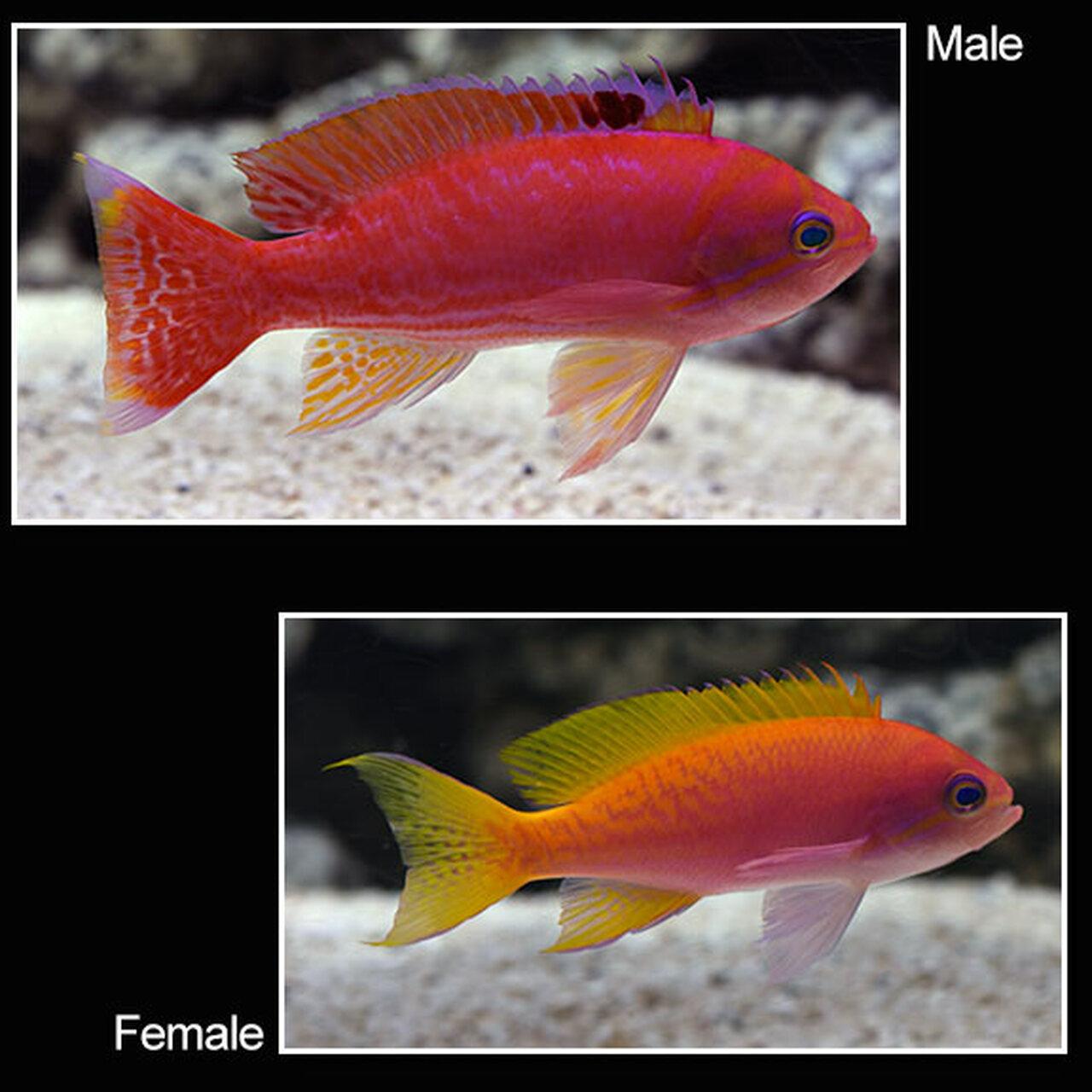
The Bimaculatus Anthias (Pseudanthias bimaculatus), also known as the Twospot Anthias, is a striking and elegant fish known for its vibrant coloration and peaceful demeanor. Males exhibit a brilliant mix of red and pink with a yellowish-orange dorsal fin and tail, while females are more subtly colored in shades of pink and orange. Native to the reefs of the Indo-Pacific, these anthias make an excellent addition to reef aquariums due to their beauty and compatibility with other peaceful fish.
Behavior and Habitat
Bimaculatus Anthias are active, schooling fish that thrive in groups of one male and multiple females. In the wild, they inhabit reef slopes and lagoons, where they feed on plankton carried by currents. They are peaceful and spend much of their time swimming in the open water column.
These anthias are protogynous hermaphrodites, meaning that if the dominant male in a group dies, the largest female will transition into a male over time.
Tank Requirements
A tank of at least 300 liters is recommended for a small group of Bimaculatus Anthias. Provide plenty of open swimming space along with live rock for hiding and resting. Moderate to strong water flow is ideal to replicate their natural habitat. A tight-fitting lid is essential, as these fish are known jumpers.
Diet
In their natural environment, Bimaculatus Anthias feed on planktonic organisms. In the aquarium, they should be offered a varied diet, including:
- Frozen or live foods such as mysis shrimp, brine shrimp, and copepods
- High-quality marine pellets or flakes formulated for carnivores
- Enriched frozen foods to ensure optimal nutrition
Feed small amounts multiple times per day to mimic their natural feeding habits.
Care Tips
- Keep them in a group with one male and several females to reduce stress and encourage natural behavior.
- Maintain stable water parameters and excellent water quality.
- Introduce them to the aquarium in a low-stress environment to help them acclimate.
- Use a UV sterilizer or other disease-prevention measures, as they can be prone to infections when stressed.
Reef Compatibility
Bimaculatus Anthias are completely reef-safe and will not harm corals, invertebrates, or other reef inhabitants. Their active swimming and vivid coloration make them a beautiful addition to reef displays.
Compatibility
These anthias are peaceful and compatible with other non-aggressive tank mates such as clownfish, gobies, tangs, and wrasses. Avoid housing them with highly aggressive or predatory fish. When keeping multiple anthias, ensure a proper male-to-female ratio to prevent dominance issues.
Final Thoughts
The Bimaculatus Anthias is a captivating species that adds vibrant color and dynamic movement to marine aquariums. While they require attentive care, including frequent feeding and stable conditions, their peaceful nature and striking appearance make them a rewarding choice for intermediate and advanced aquarists.
Available Options
RegularSKU: 118554T
$85.00
Out of stock
Want to See This in Person?
Visit our store in Eastwood to see this item and many others. Our team can answer all your questions.