
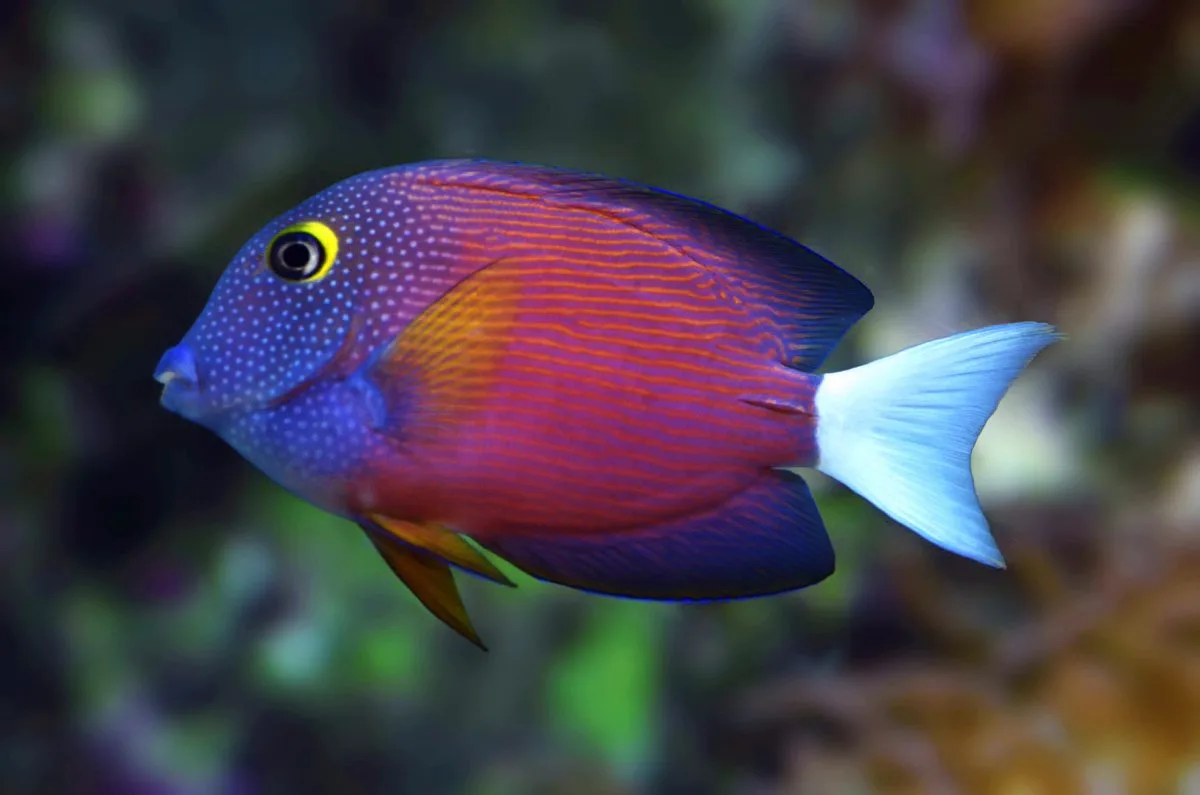
White Tail Bristletooth Tang
Overview
The White Tail Bristletooth Tang is a compact Ctenochaetus species with a dark brown-to-black body, fine light speckling, and a distinctive pale white tail that gives it its common name. Like other bristletooth tangs it uses fine, comb-like teeth to sift detritus and diatoms off rock and sand rather than grazing large algae leaves.
It's one of the hardier and more forgiving tangs available, tolerating a range of tank sizes better than many larger Acanthurus species, and is a solid clean-up contributor as well as an attractive display fish.
Given adequate space and an established tank, it's a low-maintenance, long-lived addition well suited to keepers wanting a manageable first tang.
Compatibility
White Tail Bristletooth Tangs can show territorial aggression toward other tangs, particularly similarly shaped species, so care with stocking order matters in tanks with multiple surgeonfish. They're generally peaceful with unrelated community fish.
This species is fully reef safe and won't bother corals, clams, or invertebrates.
Health & quarantine
As a Ctenochaetus species this is one of the hardier tangs, though it's still susceptible to marine ich like all surgeonfish, so a minimum four-week quarantine is recommended. Good water flow and a varied diet support long-term health and colour.
Frequently asked questions
Is the White Tail Bristletooth Tang a good first tang?
Is the White Tail Bristletooth Tang reef safe?
What does a White Tail Bristletooth Tang eat in a reef tank?
What tank size does a White Tail Bristletooth Tang need?
Can I keep a White Tail Bristletooth Tang with other tangs?
Care guidance is drawn from our own experience — every fish is an individual, so treat it as a starting point, not a guarantee. Not sure if a species suits your tank? Come ask us in store. New to the terms? Read the care-terms glossary.