Overview
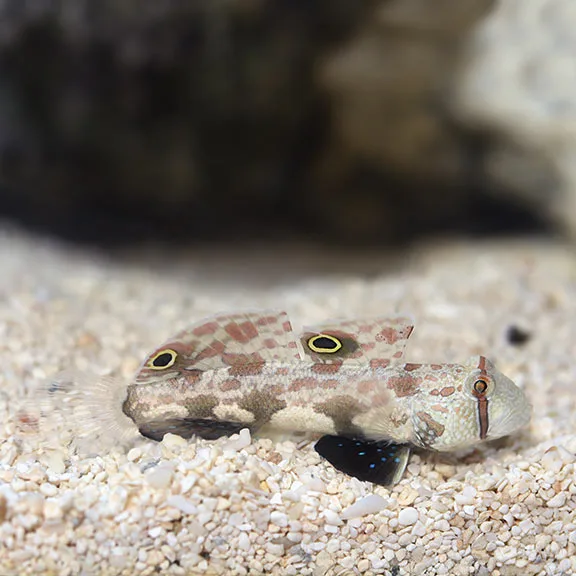
The Two Spot Goby, also called the Twin Spot Goby or Signal Goby, is a small, distinctively patterned fish with two large dark eye-spots on its dorsal fin, used to bluff potential predators. It sifts sand almost constantly through its mouth searching for tiny invertebrates and organic matter, giving it an active, engaging presence low in the tank.
Unfortunately, it has a reputation for being one of the more difficult gobies to keep long-term, largely because it relies heavily on a constant supply of natural sand fauna and can be reluctant to accept prepared foods, leading to slow starvation in tanks without an established deep sand bed.
This is a species best suited to experienced reef keepers with a mature system and realistic expectations about its feeding challenges, rather than a casual or first-time purchase.
Compatibility
Two Spot Gobies are entirely peaceful and reef safe, posing no risk to corals or invertebrates. They can occasionally be outcompeted for food by more assertive bottom feeders, so tankmates should be chosen with this species' feeding challenges in mind.
They do best kept alone or in a compatible pair rather than with other sand-sifting competitors that might reduce the limited natural food supply available.
Health & quarantine
This species carries a genuine risk of slow starvation in aquariums, since many individuals are reluctant to accept anything beyond live or very fresh natural foods, particularly early on. A long, patient quarantine and feeding trial period is strongly recommended before purchase, and buyers should confirm with the supplier that the specific fish is eating reliably on prepared or frozen foods.
Frequently asked questions
Why is the Two Spot Goby considered difficult?
What should I check before buying a Two Spot Goby?
Is the Two Spot Goby reef safe?
What kind of sand bed does a Two Spot Goby need?
Why does my Two Spot Goby have eye-spots on its dorsal fin?
Care guidance is drawn from our own experience — every fish is an individual, so treat it as a starting point, not a guarantee. Not sure if a species suits your tank? Come ask us in store. New to the terms? Read the care-terms glossary.