Overview
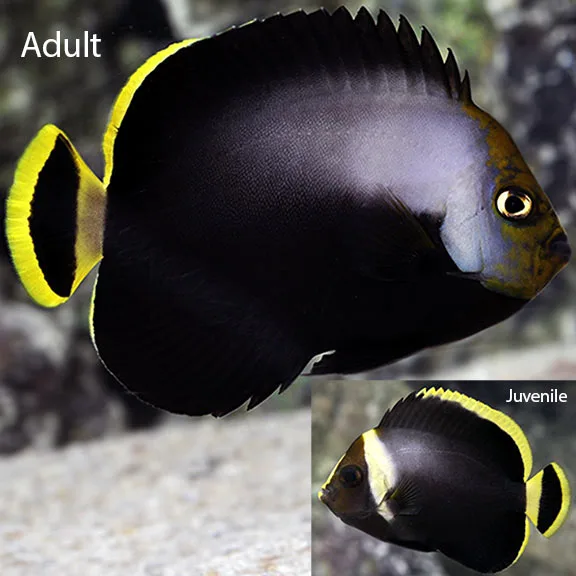
The Poma Angel, also known as the Grey Angelfish or Black-headed Angelfish, is a mid-sized Chaetodontoplus species with a muted grey-to-brown body, a darker head, and a fine yellow trim along the tail and fin edges. It doesn't have the bold, saturated colouration of some other angelfish, but its subtle patterning and calm presence make it an appealing choice for keepers wanting something a little different from the flashier reef angels.
As a true Chaetodontoplus angelfish it sits between the smaller Centropyge dwarf angels and the large Pomacanthus species in both size and care demands, needing more swimming room than a pygmy angel but without quite the scale or feeding challenges of a true large angel.
It's a reasonably hardy species once settled, though as with most mid-sized angelfish, sourcing a specimen that's already feeding confidently makes a real difference to how smoothly it transitions into a new tank.
Compatibility
Poma Angels can be territorial toward other angelfish, particularly similarly sized or shaped species, and are generally best kept as the only angelfish in small to medium tanks. They are usually peaceful toward unrelated community fish such as tangs, wrasses, and gobies.
Reef compatibility is inconsistent between individuals — some leave stony and soft coral alone entirely, while others will pick at LPS polyps, zoanthids, or clam mantles, so this species is rated reef safe with caution rather than fully safe.
Health & quarantine
A minimum four-week quarantine is recommended, with close attention to appetite and breathing in the first two weeks, as this species can be slower than some angelfish to settle and begin feeding confidently after import. Buying from a supplier who has already confirmed the fish is eating well significantly reduces the risk of prolonged stress-related decline. Once established and feeding on a varied diet, it's a reasonably resilient, long-lived aquarium fish.
Frequently asked questions
Is the Poma Angel reef safe?
How big does a Poma Angel get?
What tank size does a Poma Angel need?
Why won't my new Poma Angel eat nori or pellets straight away?
Can I keep a Poma Angel with other angelfish?
Care guidance is drawn from our own experience — every fish is an individual, so treat it as a starting point, not a guarantee. Not sure if a species suits your tank? Come ask us in store. New to the terms? Read the care-terms glossary.