Overview
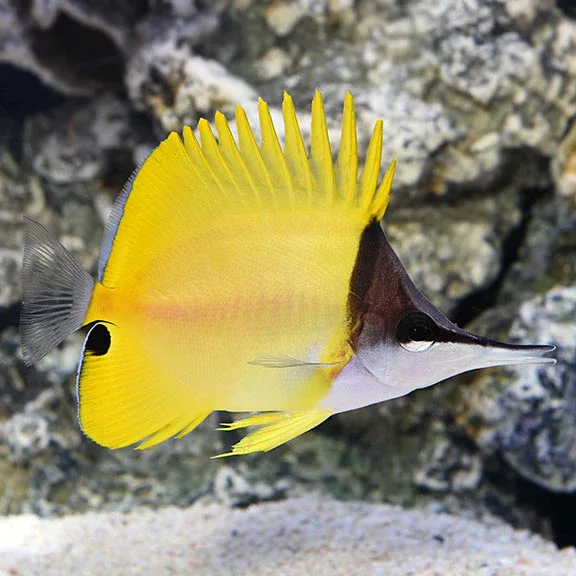
The Long Nose Butterfly is a bright yellow fish with a black facial mask and an elongated, forceps-like snout adapted for picking small invertebrates out of tight crevices in rock and coral. It's one of the more readily available and slightly hardier butterflyfish, with a reasonable track record of transitioning onto prepared foods in captivity.
Its unusual snout shape allows it to feed on small pest invertebrates like tiny bristleworms and pods that other fish can't reach, adding some incidental pest-control value alongside its striking appearance.
As with most butterflyfish, individual behaviour toward coral varies, so this species suits a fish-dominant or lightly stocked coral tank more than a delicate SPS-focused display.
Compatibility
Long Nose Butterflies are peaceful toward other fish and generally coexist well with a wide range of community tankmates, including tangs, wrasses, and gobies. They rarely show aggression toward other species.
Reef compatibility is inconsistent — many individuals leave stony coral alone, but some will nip at LPS polyps, zoanthids, feather dusters, or clam mantles, so this species is rated reef safe with caution.
Health & quarantine
A minimum four-week quarantine is recommended, with attention to appetite in the first week since some individuals can be selective feeders after import. This species tends to be a bit more adaptable than some other butterflyfish, and a varied diet supports long-term health and colour.
Frequently asked questions
Is the Long Nose Butterfly reef safe?
Is the Long Nose Butterfly a good first butterflyfish?
How big does a Long Nose Butterfly get?
What does the long snout help it do?
What tank size does a Long Nose Butterfly need?
Care guidance is drawn from our own experience — every fish is an individual, so treat it as a starting point, not a guarantee. Not sure if a species suits your tank? Come ask us in store. New to the terms? Read the care-terms glossary.