Overview
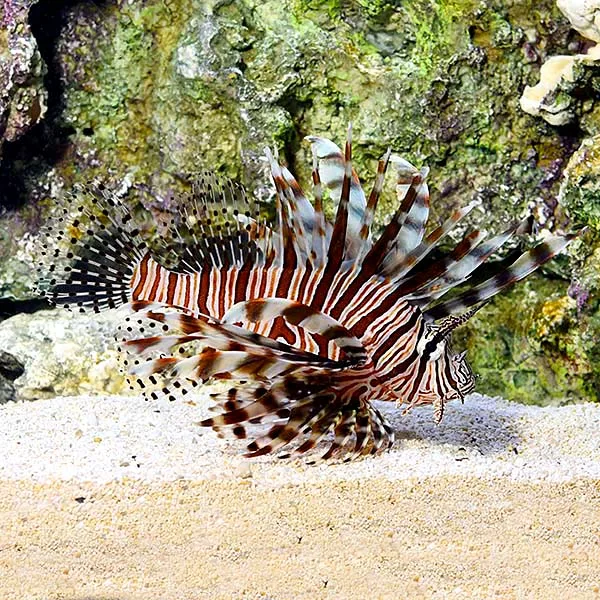
The Lionfish is one of the most visually dramatic marine fish available, with elaborately fan-like fins, bold reddish-brown-and-white banding, and a slow, deliberate swimming style that makes it a genuine showpiece for a larger tank. It's a carnivorous ambush predator that will eat any fish or invertebrate small enough to fit in its mouth, so tankmate selection is critical.
Its long, venomous spines are used purely for defence and deliver a genuinely painful sting to humans if handled or bumped carelessly, requiring real care during any tank maintenance, feeding, or transfer.
Given its predatory nature and eventual size, it needs a large, dedicated tank with appropriately sized tankmates from the outset, since smaller fish and most invertebrates will simply become food over time.
Compatibility
Lionfish are peaceful in temperament but highly predatory, and will eat any fish or shrimp small enough to fit in their mouth, so tankmates need to be chosen based on size compatibility rather than typical aggression concerns. They generally coexist well with larger, robust fish like big angelfish, tangs, or triggers that are too large to be eaten.
This species is rated reef safe with caution — it won't damage coral directly, but it will eat small ornamental fish and crustaceans, making careful stocking essential in a mixed reef tank.
Health & quarantine
The most important health and safety consideration with this species is its venomous spines, which deliver a painful sting requiring immediate medical attention if a person is stung. A minimum four-week quarantine is recommended, and extreme care should be taken during any netting, transfer, or tank maintenance to avoid accidental contact with the spines.
Frequently asked questions
Is a Lionfish sting dangerous to humans?
Will a Lionfish eat my other fish?
Should I feed my Lionfish live feeder fish?
How big does a Lionfish get?
How often should I feed a Lionfish?
Care guidance is drawn from our own experience — every fish is an individual, so treat it as a starting point, not a guarantee. Not sure if a species suits your tank? Come ask us in store. New to the terms? Read the care-terms glossary.