
Overview
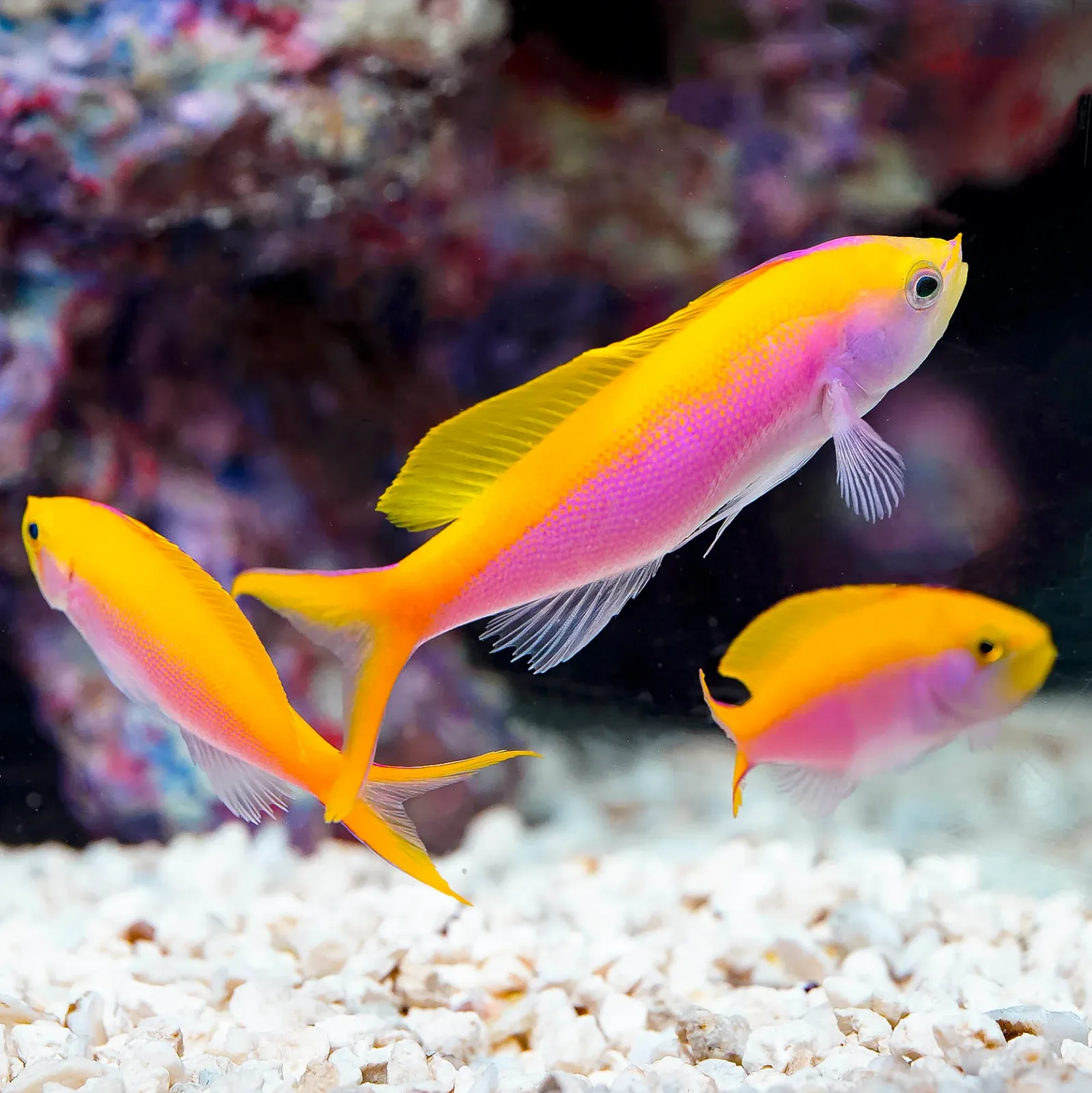
The Bartlett Anthias is a small, vividly coloured anthias with a golden-yellow body and a pink-to-purple wash across the head and upper back, making it one of the more striking small anthias for a reef display. It's a naturally social, shoaling species that shows its best colour and behaviour when kept in a small group rather than alone.
Like other anthias it's a constant, fast-metabolism feeder that needs regular meals of small meaty foods throughout the day, doing best in an established, stable tank with good water flow to support its active planktivorous lifestyle.
Its manageable size and generally hardy nature (for an anthias) make it a good option for keepers wanting anthias colour and movement without stepping up to some of the more delicate deepwater species.
Compatibility
Bartlett Anthias are peaceful and reef safe, ignoring corals and invertebrates entirely. They do best in a group of one male with several females, and can be housed with other peaceful reef fish without issue, though boisterous or aggressive tankmates can outcompete them for food.
Multiple males in a small tank may show aggression toward one another, so stocking ratios matter if keeping a group.
Health & quarantine
As with all anthias, this species can decline quickly if underfed or exposed to unstable water conditions, so a mature, well-established tank and consistent feeding schedule are important. A minimum two-to-four-week quarantine with careful feeding monitoring is recommended, and new arrivals should be watched closely to confirm they're eating within the first few days.
Frequently asked questions
Should I keep Bartlett Anthias alone or in groups?
How often do Bartlett Anthias need to be fed?
Is the Bartlett Anthias reef safe?
What happens if the male in a group dies?
What tank size suits a group of Bartlett Anthias?
Care guidance is drawn from our own experience — every fish is an individual, so treat it as a starting point, not a guarantee. Not sure if a species suits your tank? Come ask us in store. New to the terms? Read the care-terms glossary.