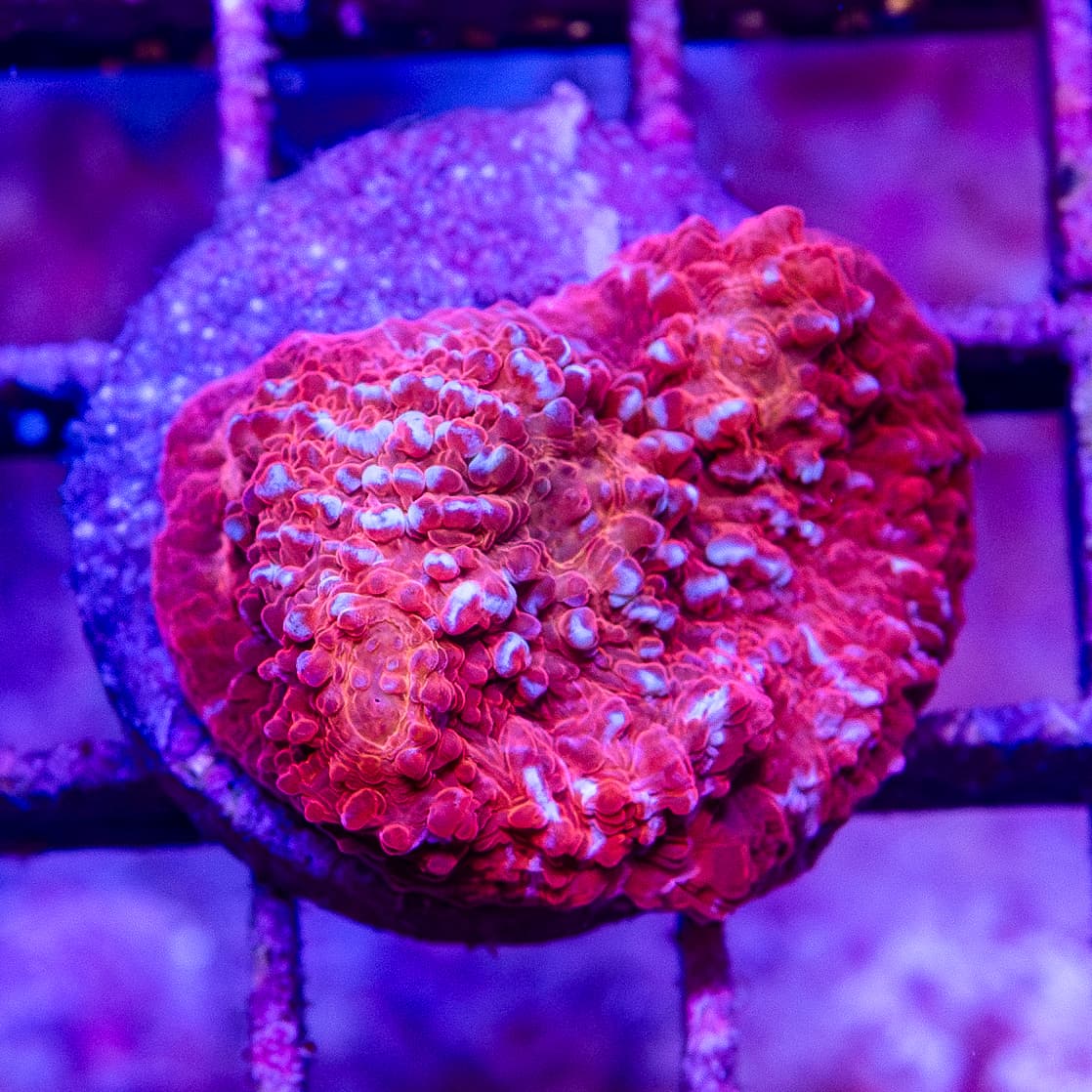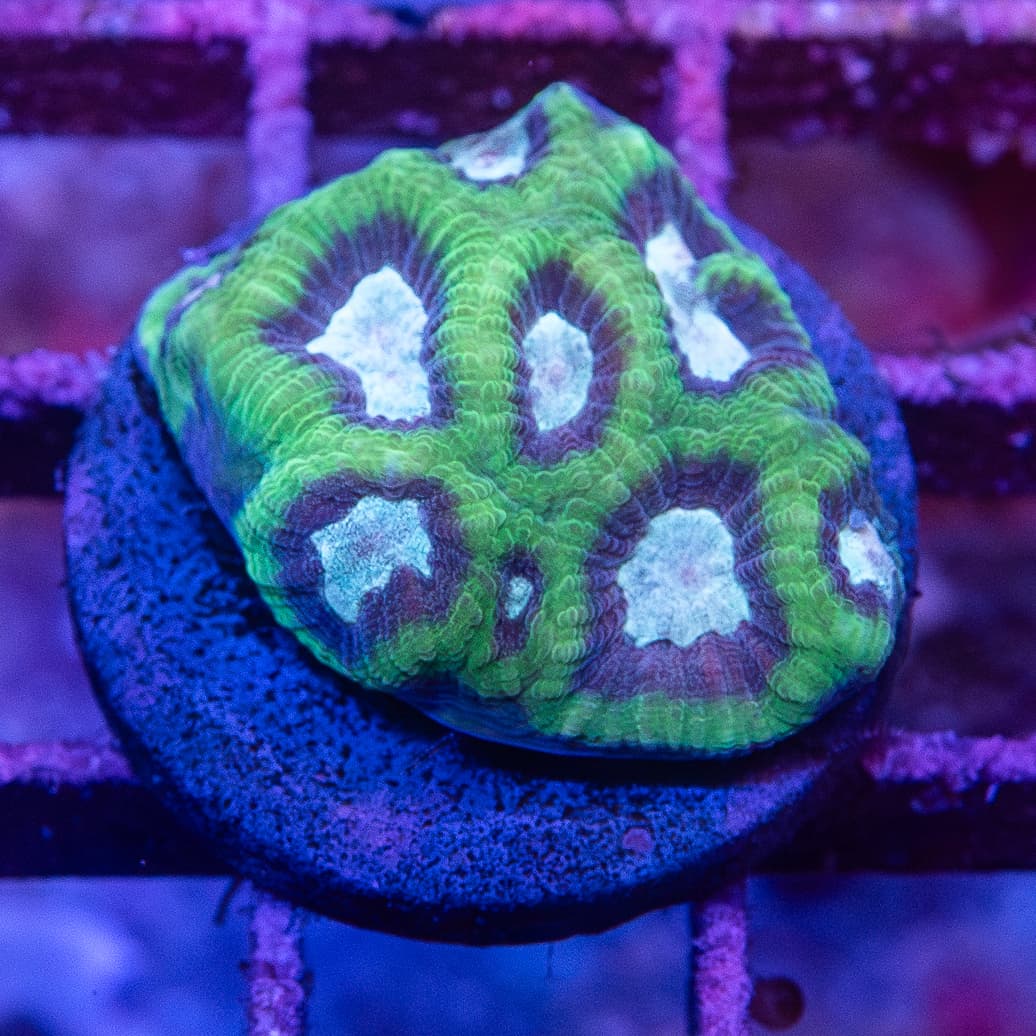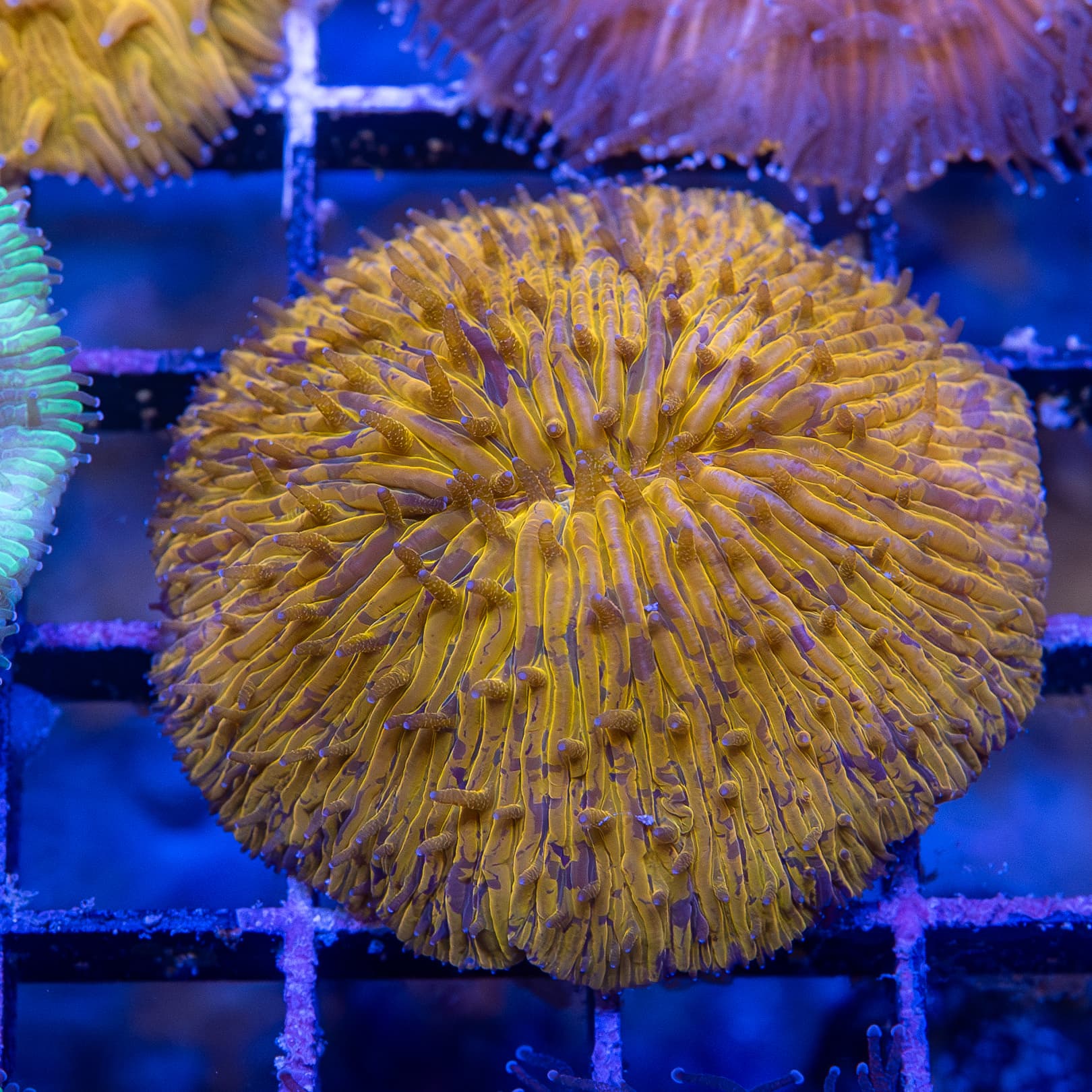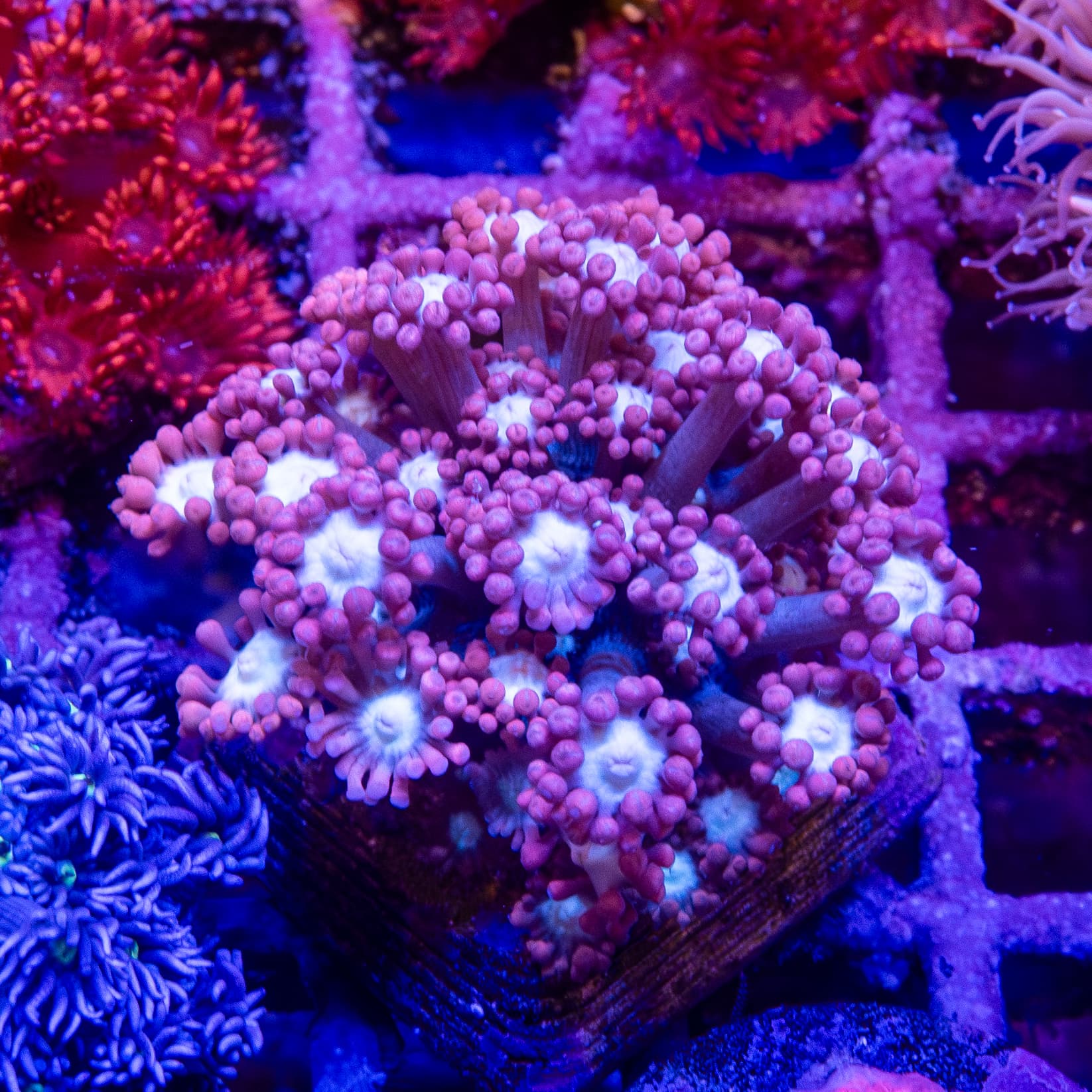
Frag - Zoanthids
Fragged in-houseOur corals are one-of-a-kind WYSIWYG pieces — once a frag finds a home, it's gone. We get fresh corals in constantly, so there's sure to be something similar available now.
Browse available corals →Care & specifications
Zoanthids (Zoanthus spp.)
- Common Names: Zoas, Zoanthids, Button Polyps, Colony Polyps
- Care Level: Easy
- Temperament: Peaceful
- Colour Form: Wide variety of colours, including blue, green, orange, red, purple, and multicoloured variants
- Diet: Photosynthetic and Carnivorous
- Reef Compatible: Yes
- Water Conditions: 24-27°C, dKH 7-12, pH 7.8-8.4, sg 1.023-1.026
- Max Size: Polyp size up to 1.5 cm, forming colonies that can grow extensively
- Family: Zoanthidae
Overview
Zoanthids, commonly known as Zoas, are vibrant soft corals beloved for their dazzling colour patterns and ease of care. They are one of the most popular corals for reef aquariums due to their fast growth, low maintenance requirements, and stunning ability to create colourful mats. Zoas are ideal for beginners and experienced aquarists alike, adding pops of colour and texture to any reefscape.
Behaviour and Habitat
Zoanthids are peaceful and do not possess long sweeper tentacles. They grow in colonies, spreading over live rock or sandy substrate. In the wild, Zoas are found in shallow reefs, thriving in nutrient-rich water with moderate flow and lighting. Their polyps expand during the day, displaying their vivid colours, and retract at night or when disturbed.
Tank Requirements
- Lighting: Moderate lighting; LED or T5 fixtures are ideal. Zoas adapt well to a variety of light levels but may display more vibrant colours under moderate to high lighting.
- Water Flow: Moderate to strong, ensuring good oxygenation and preventing detritus buildup.
- Placement: Zoas can be placed on live rock, frag plugs, or other smooth surfaces. Keep them in areas with sufficient light and flow for optimal growth.
Diet
Zoanthids host symbiotic zooxanthellae, which provide most of their nutritional needs through photosynthesis. However, they can benefit from supplemental feeding to enhance growth and colouration.
- Food Types:
- Phytoplankton
- Zooplankton
- Powdered coral food
- Rotifers
- Feeding Frequency: Target feed once a week, especially for colonies in lower light areas.
Reef Compatibility
Zoas are completely reef-safe and thrive alongside other peaceful corals and invertebrates. They are non-aggressive and do not pose a threat to neighbouring corals.
Compatibility
Care Tips
- Water Quality: Maintain stable water parameters, as Zoas are sensitive to large fluctuations.
- Nutrients: Low nitrate and phosphate levels are recommended to prevent nuisance algae from smothering the colony.
- Pests: Watch for pests like nudibranchs or zoa-eating spiders, which can harm colonies. Inspect new frags before adding them to the tank.
- Fragging: Zoas are easy to propagate by fragging, making them ideal for sharing with fellow reef keepers or creating new colonies.
- Caution: Some Zoanthids produce palytoxin, a potent toxin harmful to humans if ingested or inhaled. Always handle them with gloves and eye protection, and avoid cutting them in enclosed spaces.
Final Thoughts
Zoanthids are a captivating and versatile addition to any reef aquarium. Their vibrant colours and easy care requirements make them a top choice for hobbyists looking to create a lively and diverse coral garden. Whether you’re just starting your reefing journey or are an experienced aquarist, Zoas will thrive and bring dynamic beauty to your underwater world.
If you're looking to enhance your tank further, browse our collection of LPS Corals, SPS Corals, or Soft Corals.
How collection works
Order & pay online
Check out and pay securely. We set it aside and hold it ready for you.
We get it ready
It stays in our system until you come in — usually ready the same day.
Collect in store
Drop in to 280 North Road, Eastwood, and pick it up.