Soft Coral
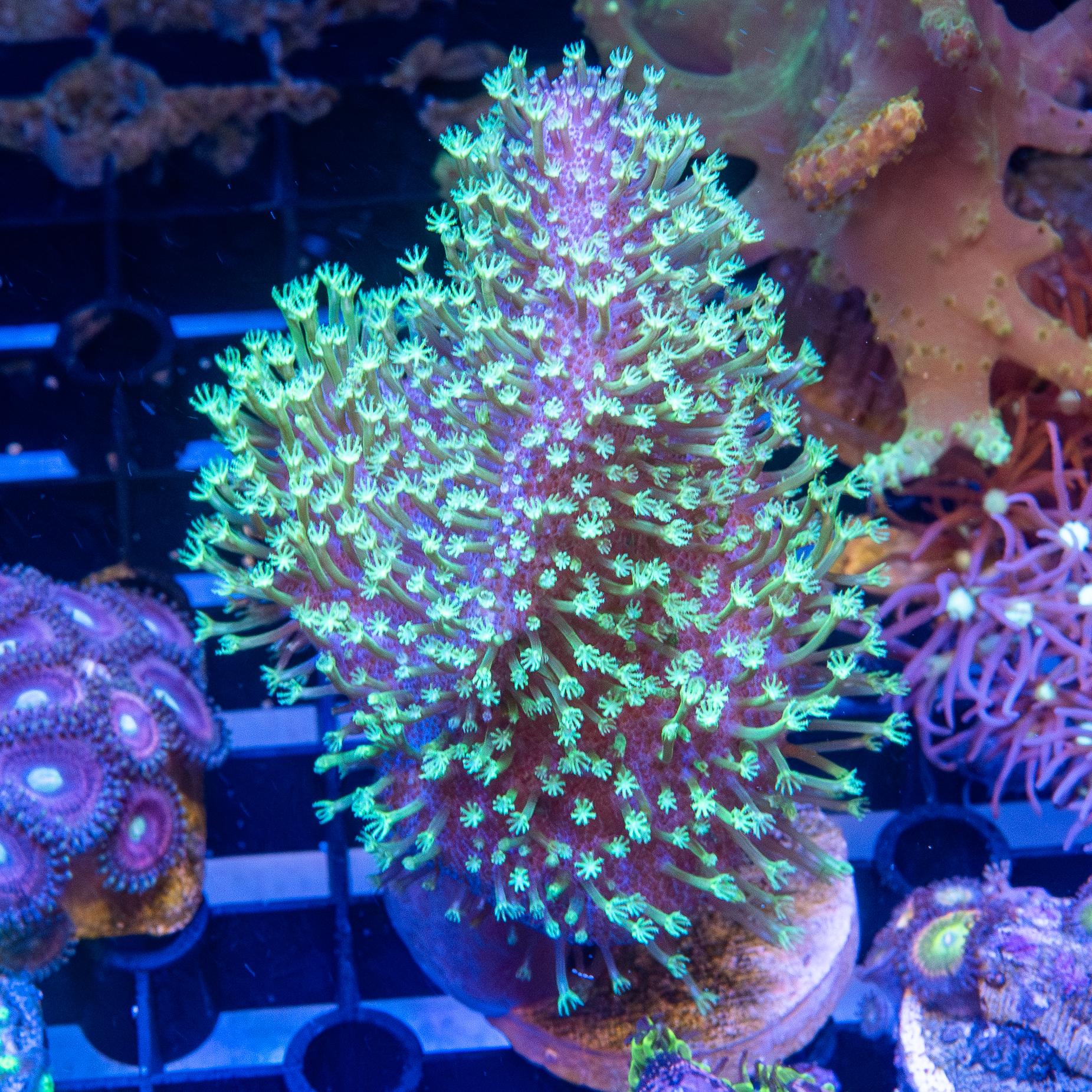
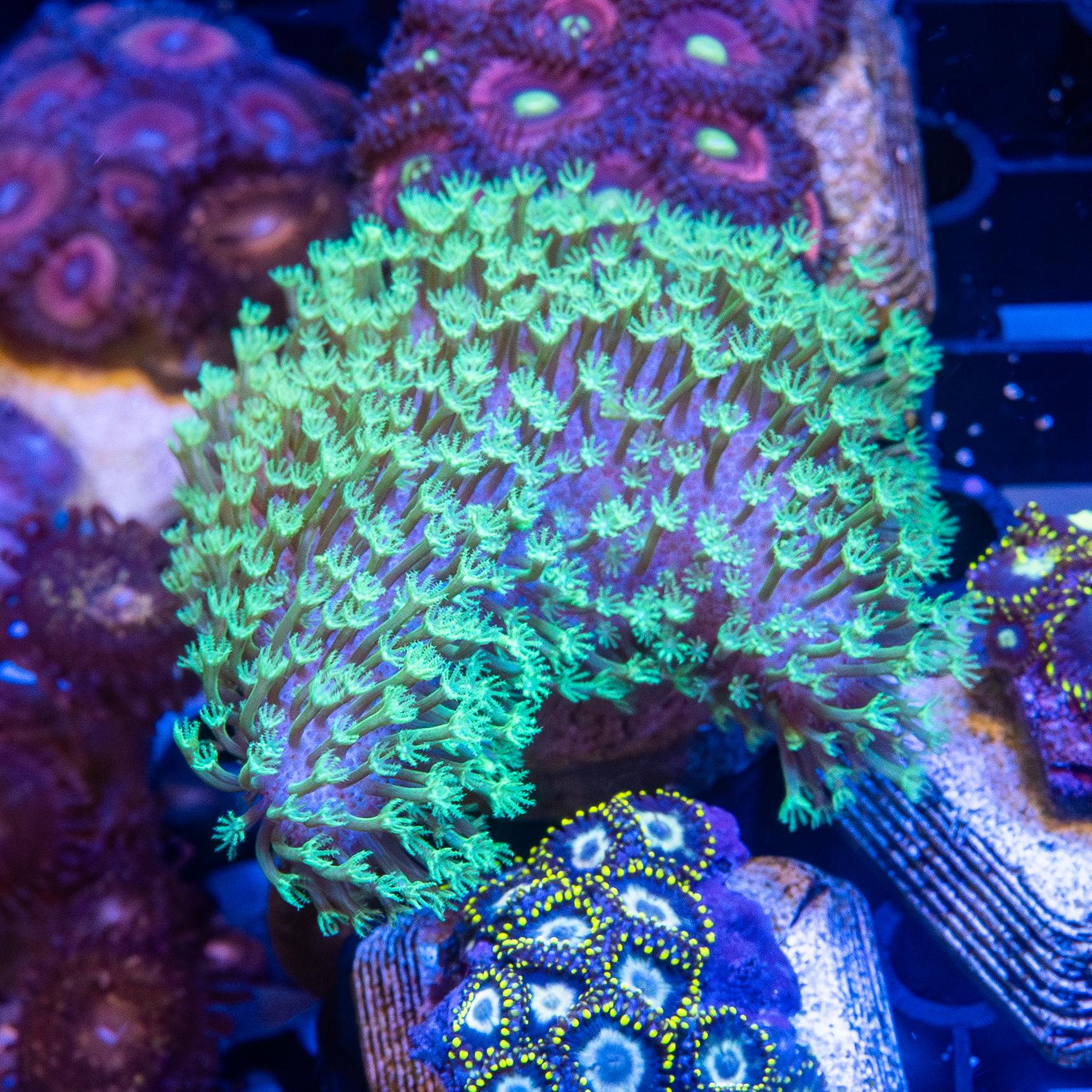
Frag - Toadstool Leather
Toadstool Coral (Sarcophyton spp.) Common Names: Toadstool Coral, Leather Toadstool Coral, Mushroom Leather Coral Care Level: Easy Temperament: Peaceful Colour Form: Cream, Tan, Green, Yellow, with neon or fluorescent polyps Diet: Photosynthetic, some filter-feeding Reef Compatible: Yes Water Conditions: 24-27°C, dKH 7-12, pH 7.8-8.4, sg 1.023-1.026 Max Size: Up to 30-50 cm in diameter (varies by species) Family: Alcyoniidae Overview The Toadstool Coral is a large, soft coral species that is highly sought after in the aquarium hobby for its unique, mushroom-like appearance. Its cap-like body and extended polyps give it a striking look that stands out in any reef tank. Toadstool corals are hardy and easy to care for, making them ideal for both beginners and experienced aquarists. They are photosynthetic and primarily rely on their symbiotic zooxanthellae for energy. However, they can also benefit from occasional supplemental feedings. Behaviour and Habitat Toadstool corals are peaceful and non-aggressive, making them excellent choices for mixed reef setups. Unlike stony corals, they do not have stinging tentacles but may release chemical compounds (allelopathy) to compete with nearby corals. This can be mitigated with activated carbon and good water flow. These corals often inhabit shallow, sunlit reef slopes in the wild, where they thrive under moderate to high lighting and water movement. Tank Requirements Lighting: Moderate to high (LEDs, T5s, or metal halides). Strong lighting encourages vibrant colours and polyp extension. Water Flow: Moderate to strong, ensuring proper oxygenation and detritus removal. Placement: Position in areas with steady water flow to facilitate shedding of their waxy layer. Avoid placing them too close to other corals to prevent chemical competition. Diet Toadstool corals are primarily photosynthetic but can benefit from supplemental feedings to enhance growth and health. Food Types: Phytoplankton Zooplankton Powdered coral food Feeding Frequency: Optional, 1-2 times per week, especially in low-light setups. Reef Compatibility Toadstool corals are reef-safe and make excellent additions to mixed reef tanks. Their peaceful nature means they rarely pose any risk to other corals or invertebrates. However, they should be given sufficient space to account for their size and potential chemical warfare. Compatibility Toadstool corals coexist well with most reef-safe fish and invertebrates, such as: Clownfish (which may host in the coral like an anemone) Gobies Blennies Tangs Cleaner shrimp and snails Avoid placing them with coral-picking fish like large angelfish or butterflyfish. Care Tips Maintain stable water parameters, including calcium (380-450 ppm), magnesium (1250-1350 ppm), and alkalinity (7-12 dKH). Ensure adequate water flow to help the coral shed its waxy protective layer. Use activated carbon to neutralise any allelopathic compounds. Monitor placement to prevent contact with aggressive neighbours or sharp edges. Propagation Toadstool corals are easily propagated through fragging. Simply cut a portion of the cap or stem and attach it to a frag plug or live rock using reef-safe glue or elastic bands. The frag will regenerate into a new colony with proper care. Final Thoughts The Toadstool Coral is a stunning and versatile addition to any reef aquarium. Its vibrant colours, peaceful nature, and low maintenance make it a favourite among aquarists. Whether you're a beginner or a seasoned hobbyist, a healthy toadstool coral can serve as a captivating centrepiece in your tank while also providing shelter for clownfish and other small inhabitants. With proper lighting, flow, and care, this coral will thrive and grow, adding life and movement to your reef. If you're looking to enhance your tank further, browse our collection of LPS Corals, SPS Corals, or Soft Corals.
Photos
About This Item
Toadstool Coral (Sarcophyton spp.)
- Common Names: Toadstool Coral, Leather Toadstool Coral, Mushroom Leather Coral
- Care Level: Easy
- Temperament: Peaceful
- Colour Form: Cream, Tan, Green, Yellow, with neon or fluorescent polyps
- Diet: Photosynthetic, some filter-feeding
- Reef Compatible: Yes
- Water Conditions: 24-27°C, dKH 7-12, pH 7.8-8.4, sg 1.023-1.026
- Max Size: Up to 30-50 cm in diameter (varies by species)
- Family: Alcyoniidae
Overview
The Toadstool Coral is a large, soft coral species that is highly sought after in the aquarium hobby for its unique, mushroom-like appearance. Its cap-like body and extended polyps give it a striking look that stands out in any reef tank. Toadstool corals are hardy and easy to care for, making them ideal for both beginners and experienced aquarists.
They are photosynthetic and primarily rely on their symbiotic zooxanthellae for energy. However, they can also benefit from occasional supplemental feedings.
Behaviour and Habitat
Toadstool corals are peaceful and non-aggressive, making them excellent choices for mixed reef setups. Unlike stony corals, they do not have stinging tentacles but may release chemical compounds (allelopathy) to compete with nearby corals. This can be mitigated with activated carbon and good water flow.
These corals often inhabit shallow, sunlit reef slopes in the wild, where they thrive under moderate to high lighting and water movement.
Tank Requirements
- Lighting: Moderate to high (LEDs, T5s, or metal halides). Strong lighting encourages vibrant colours and polyp extension.
- Water Flow: Moderate to strong, ensuring proper oxygenation and detritus removal.
- Placement:
- Position in areas with steady water flow to facilitate shedding of their waxy layer.
- Avoid placing them too close to other corals to prevent chemical competition.
Diet
Toadstool corals are primarily photosynthetic but can benefit from supplemental feedings to enhance growth and health.
- Food Types:
- Phytoplankton
- Zooplankton
- Powdered coral food
- Feeding Frequency: Optional, 1-2 times per week, especially in low-light setups.
Reef Compatibility
Toadstool corals are reef-safe and make excellent additions to mixed reef tanks. Their peaceful nature means they rarely pose any risk to other corals or invertebrates. However, they should be given sufficient space to account for their size and potential chemical warfare.
Compatibility
Toadstool corals coexist well with most reef-safe fish and invertebrates, such as:
Avoid placing them with coral-picking fish like large angelfish or butterflyfish.
Care Tips
- Maintain stable water parameters, including calcium (380-450 ppm), magnesium (1250-1350 ppm), and alkalinity (7-12 dKH).
- Ensure adequate water flow to help the coral shed its waxy protective layer.
- Use activated carbon to neutralise any allelopathic compounds.
- Monitor placement to prevent contact with aggressive neighbours or sharp edges.
Propagation
Toadstool corals are easily propagated through fragging. Simply cut a portion of the cap or stem and attach it to a frag plug or live rock using reef-safe glue or elastic bands. The frag will regenerate into a new colony with proper care.
Final Thoughts
The Toadstool Coral is a stunning and versatile addition to any reef aquarium. Its vibrant colours, peaceful nature, and low maintenance make it a favourite among aquarists. Whether you're a beginner or a seasoned hobbyist, a healthy toadstool coral can serve as a captivating centrepiece in your tank while also providing shelter for clownfish and other small inhabitants. With proper lighting, flow, and care, this coral will thrive and grow, adding life and movement to your reef.
If you're looking to enhance your tank further, browse our collection of LPS Corals, SPS Corals, or Soft Corals.
Available Options
RegularSKU: 244604W
$35.00
Out of stock
Want to See This in Person?
Visit our store in Eastwood to see this item and many others. Our team can answer all your questions.