Overview
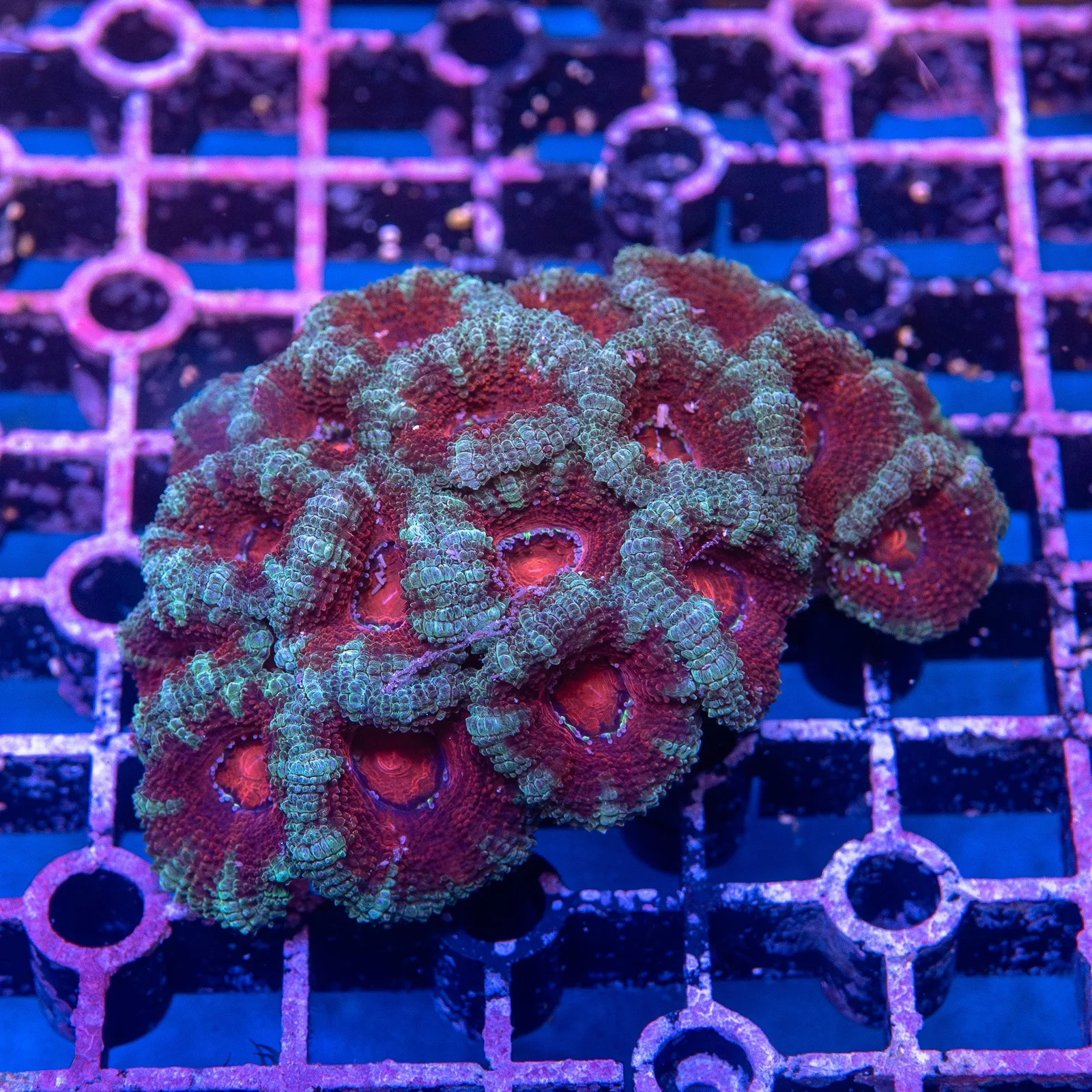
Acan Coral (often still sold under its older name, Acanthastrea lordhowensis) is a highly sought-after LPS known for its densely packed, eye-shaped polyps in dramatic multi-colour patterns. Every colony is genuinely one-of-one, with colour combinations ranging from reds and greens to blues and purples often within a single specimen.
It forms a fleshy, meaty encrusting colony with polyps that inflate significantly when happy, largely obscuring the underlying skeleton. Acans are considered a collector's coral due to the striking colour variety available, though they require a little more attention to placement than easier LPS.
Growth is slow but steady, with the colony spreading outward as an encrusting mass rather than branching upward.
Placement & neighbours
Acan Coral has no significant sweeper tentacles and is peaceful toward neighbours, but it is easily overgrown or shaded by faster-growing corals, so give it clear space and avoid placing anything that will encroach over time. It can be placed relatively close to other peaceful LPS.
Best kept low in the tank on the sand bed or lower rockwork where lighting is gentler and flow is low; strong direct flow can prevent the fleshy polyps from inflating properly.
Health & acclimation
Drip acclimate slowly, as Acans can be sensitive to rapid changes and are known to be susceptible to brown jelly infection following physical damage or stress. A dip on arrival is recommended to check for and remove flatworms, which can specifically target Acan colonies and cause tissue recession if left untreated. Inspect regularly for any signs of tissue loss around the polyp bases, which should be addressed promptly by removing affected tissue.
Frequently asked questions
Why are my Acan's polyps staying deflated?
Is Acan Coral aggressive to neighbours?
What is brown jelly disease and how do I treat it?
Do Acan corals need feeding?
Why do Acans need lower flow than other LPS?
Care guidance is drawn from our own experience — every coral is an individual, so treat it as a starting point, not a guarantee. Not sure if a coral suits your system? Come ask us in store.